






Manila Bulletin
 Philippines
National
'Basyang' to bring heavy rains, may make landfall over eastern Mindanao by February 5
Philippines
National
'Basyang' to bring heavy rains, may make landfall over eastern Mindanao by February 5
Philippines
National
'Basyang' to bring heavy rains, may make landfall over eastern Mindanao by February 5
'Basyang' to bring heavy rains, may make landfall over eastern Mindanao by February 5
Published Feb 4, 2026 11:34 am
|
Updated Feb 4, 2026 01:52 pm


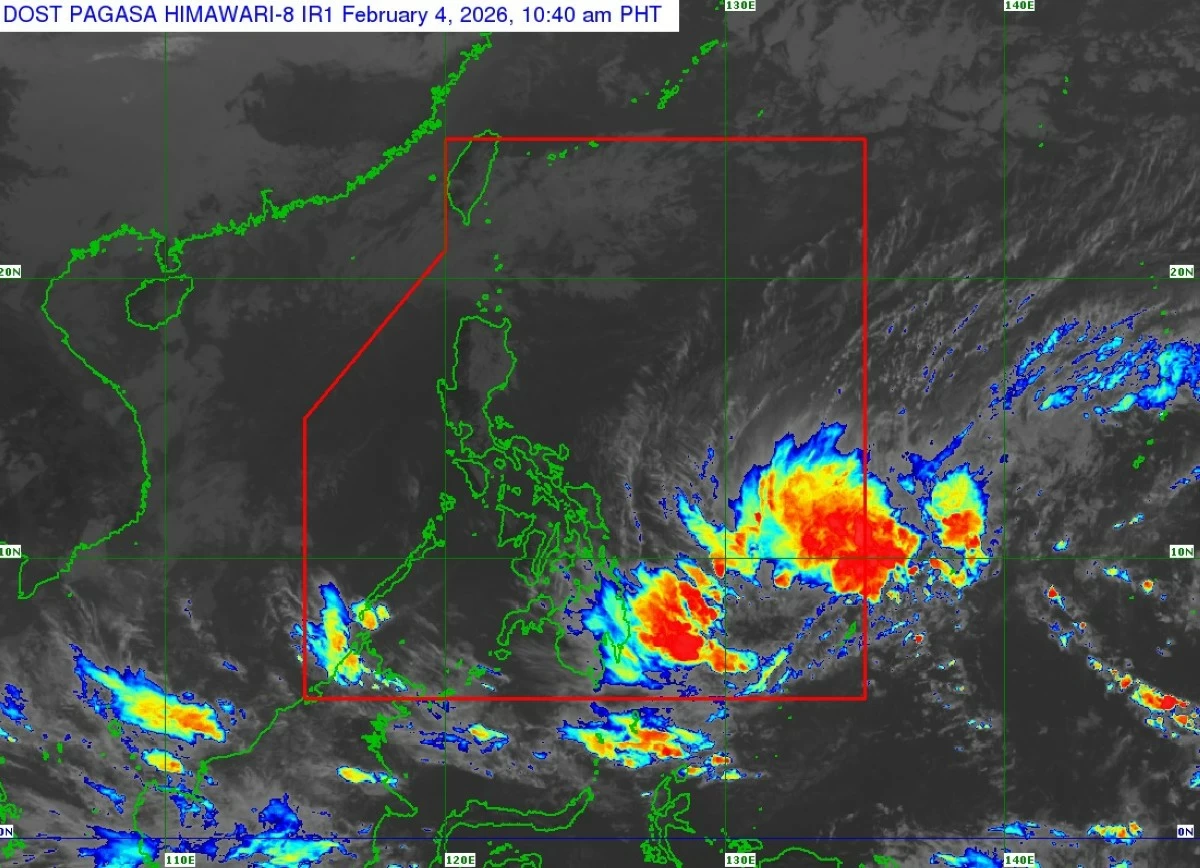
Satellite image of Tropical Depression Basyang (Courtesy of PAGASA)
Tropical Depression Basyang is expected to bring widespread heavy to intense rainfall over Mindanao, Visayas, and Palawan over the next three days, threatening communities with possible flooding and landslides, the Philippine Atmospheric, Geophysical and Astronomical Services Administration (PAGASA) warned on Wednesday, Feb. 4.
The weather disturbance is expected to make landfall over eastern Mindanao between Thursday, Feb. 5, and Friday, Feb. 6, bringing rains that may persist as it moves across the Visayas and northern Palawan before re-emerging over the West Philippine Sea.
PAGASA said Basyang will move generally westward over the next 36 hours before turning west-northwestward beginning Thursday evening.
On its forecast track, the tropical depression will cross northeastern Mindanao and parts of Central and Western Visayas, emerging over the Sulu Sea by Saturday morning, Feb. 7.
By Saturday afternoon or evening, it is expected to cross northern Palawan.
PAGASA said that from Wednesday noon to Thursday noon, 50 to 100 millimeters of rainfall, classified as moderate to heavy, may affect Dinagat Islands, Surigao del Norte, Surigao del Sur, and Davao Oriental.
From Thursday noon to Friday noon, heavy to intense rainfall of 100 to 200 millimeters may prevail over Southern Leyte, Bohol, Dinagat Islands, Surigao del Norte, Surigao del Sur, Agusan del Norte, Agusan del Sur, Camiguin, and Misamis Oriental.
Moderate to heavy precipitation may persist in Eastern Samar, Samar, Leyte, Cebu, Negros Oriental, Siquijor, Misamis Occidental, Lanao del Norte, Bukidnon, Davao del Norte, Davao de Oro, and Davao Oriental.
From Friday noon to Saturday noon, heavy to intense rainfall may continue in Aklan and Antique, while moderate to heavy precipitation may affect Palawan, Oriental Mindoro, Romblon, Capiz, Iloilo, Guimaras, and Negros Occidental.
PAGASA urged residents and local authorities in affected areas to remain vigilant, especially in communities prone to flooding and landslides.