






Manila Bulletin
 Business
The Economy
World Bank's IFC joins Philippine effort to close classroom gap
Business
The Economy
World Bank's IFC joins Philippine effort to close classroom gap
Business
The Economy
World Bank's IFC joins Philippine effort to close classroom gap
World Bank's IFC joins Philippine effort to close classroom gap
Published Feb 3, 2026 10:24 pm


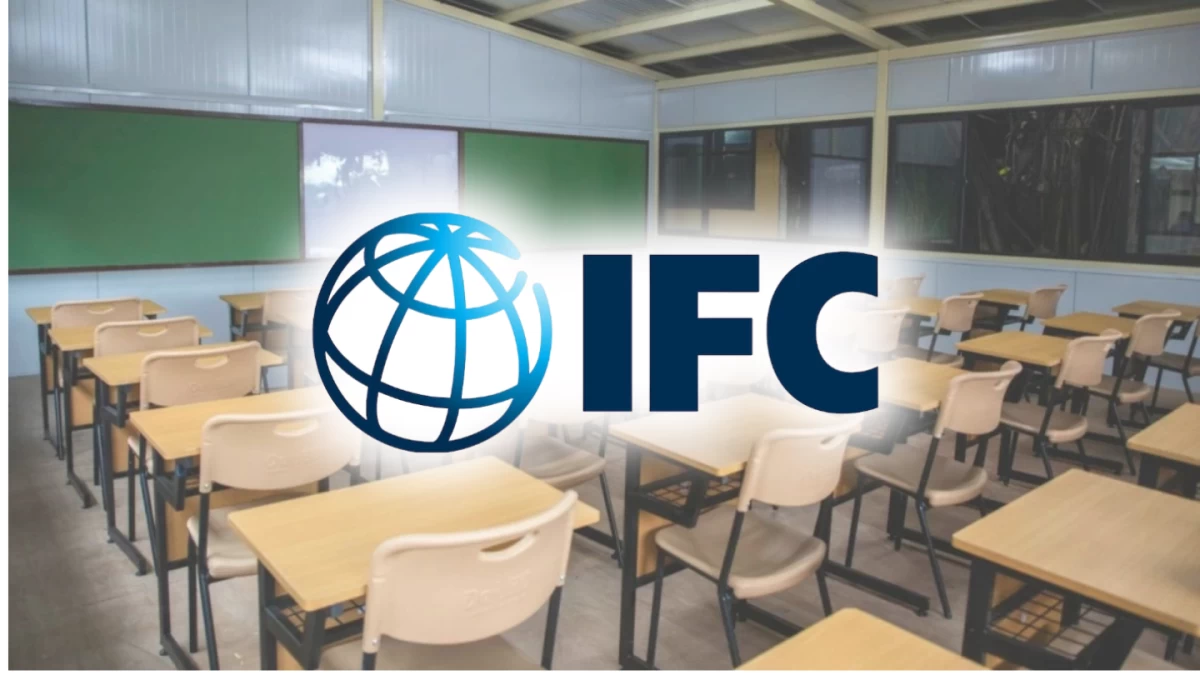
The International Finance Corp. (IFC) has been tapped to guide the Philippine government through the procurement and structuring of its latest large-scale education infrastructure program amid renewed push for private-sector involvement in the nation’s public services.
The private-sector arm of the World Bank Group will serve as the exclusive transaction advisor for the fourth phase of the Public-Private Partnership School Infrastructure Project, known as PSIP IV.
Under a mandate disclosed Monday, Feb. 2, the IFC will oversee the selection process for a private operator to manage the design, financing, and construction of school buildings across Luzon and the Visayas.
The advisory work is being executed under the framework of the Philippines’ recently enacted PPP Code, or Republic Act No. 11966, which streamlines the approval process for joint ventures between the state and the private sector and addresses long-standing bottlenecks in infrastructure development.
The Department of Education, supported by the PPP Center, acts as the primary government proponent for the initiative.
While the IFC approved the advisory project on Oct. 21, 2025, and expects completion by the end of 2027, the total capital expenditure for the infrastructure build-out has not yet been finalized.
The project is intended to bridge significant classroom shortages in provinces that have struggled to keep pace with enrollment growth.
Beyond infrastructure, the IFC is expanding its presence in the Philippine digital economy through a separate ₱32.50 million initiative to green the small business sector. This project, which was approved in late 2024 and is slated for completion in June 2027, focuses on integrating sustainability metrics into mobile payment platforms.
The corporation is partnering with Singapore-based Advanced New Technologies Holding Pte. Ltd. and G-Xchange Inc., the operator of the GCash e-wallet, to develop a Sustainability Impact Scorecard. This tool will allow for the real-time tracking of green and social payment transactions, effectively creating a data-driven pipeline for micro, small, and medium enterprises to access climate-focused financing.
By using advanced technology to monitor environmental and social performance, the IFC aims to incentivize smaller merchants to adopt sustainable business models that were previously difficult to track or finance.
The IFC noted that all advisory activities will remain subject to its internal Performance Standards on Environmental and Social Sustainability. While the Philippine government remains the final decision-maker on procurement outcomes, the IFC's involvement ensures that the projects align with international benchmarks for transparency and risk management.