ADVERTISEMENT

Political will imperative to bring about lasting educational reforms

Published Feb 3, 2026 12:05 am  |  Updated Feb 2, 2026 05:13 pm
Last Friday, the Second Congressional Commission on Education (EDCOM II) handed President Marcos Jr. a landmark document: Turning Point: A Decade of Necessary Reform — the National Education and Workforce Development Plan (NatPlan) 2026-2035. It is the most comprehensive blueprint yet to address what many experts call a learning crisis that has dogged Philippine education for decades.
At its core are bold ambitions. By 2035, 90 percent of students should reach proficiency in key learning milestones: from early literacy in Grade 3 to mastery at senior high school, and education spending should progressively rise to at least five percent of gross domestic product (GDP) to fund these reforms.
These targets serve as stark reminders of how far we still have to go to hurdle a crisis that is defined by data.
The NatPlan does not sugarcoat nor mask reality. Recent assessments show that fewer than half of Grade 3 learners are reading at grade level, and by Grade 12, proficiency plummets to near single digits. This isn’t just poor performance. It’s a systemic failure that consigns too many young Filipinos to a future of limited opportunity. The Philippines’ lagging performance in regional learning assessments underscores this: Filipino learners trail their Southeast Asian peers in basic literacy and numeracy, a gap that ultimately undermines competitiveness and economic inclusion.
So, are the twin metrics, namely, 90 percent proficiency goal and five percent GDP education spending enough? On paper, they align with global benchmarks and represent a significant improvement over current levels. The 2026 budget already broke new ground by allocating the highest education share in recent history at about 4.36 percent of GDP, which is definitely a promising first step. However, determined execution and implementation are imperative.
Raising spending to five percent of GDP will be crucial. More funding can help address the classroom backlog, provide learning materials, and hire more teachers and school leaders. Yet money alone will not bring about the attainment of learning outcomes if it is not deployed with discipline, transparency, and accountability. A decade of consistent investment must be protected from political volatility and inclusion of non-core programs that do little to improve teaching and learning.
The roadmap also wisely calls for ending mass promotion, ensuring that learners advance only with genuine mastery — an important shift from practices that have masked learning deficits. But this must be matched with robust learning support systems, remedial programs, and community engagement to ensure no child is left behind.
If the plan’s overarching targets are to be realized, serious governance improvements are indispensable.
First: Institutional Coherence and Accountability. The NatPlan rightly emphasizes inter-agency alignment among DepEd, CHED, and TESDA to end fragmented efforts and overlap. A unified scorecard and performance metrics at every level, from national leadership to the classroom, will be essential.
Second: Leadership and Professionalization. Recruiting and training high-caliber school leaders must be prioritized; rural and underserved areas should not be afterthoughts. Filling positions of principal and empowering those assigned to manage resources and instruction will strengthen school-level governance.
Third: Data-Driven Policy and Transparency. An open, real-time data system for student learning outcomes, resource allocation, and teacher performance should underpin every decision. Without accurate longitudinal data, reforms will flounder.
Fourth: Strengthening Local Implementation. A more decentralized, whole-of-nation approach — bringing local governments, communities, and civil society into genuine partnership — can energize bottom-up ownership of reforms.
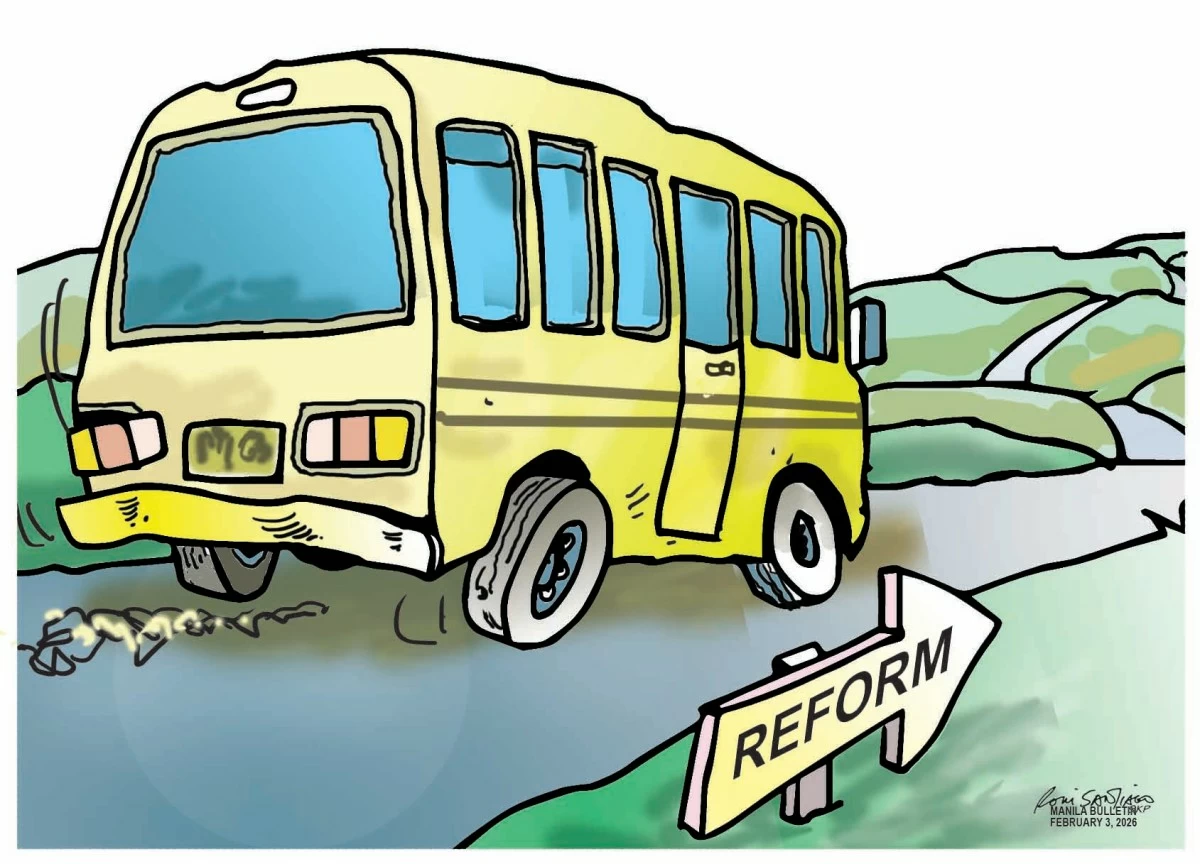
The NatPlan offers a credible national pathway. But targets and funds are not guarantees of transformation. They are milestones, not concrete results. If the Philippines truly intends to bridge its education gaps and finally meet the standards of its ASEAN neighbors, then political will must be unwavering, governance reforms must be authentic, and implementation must be willful.
The roadmap has been laid. Infused with a sense of rightful urgency, our leaders must ensure the attainment of goals such that the ensuing benefits will prosper our schools, students and communities.
ADVERTISEMENT
.most-popular .layout-ratio{ padding-bottom: 79.13%; } @media (min-width: 768px) and (max-width: 1024px) { .widget-title { font-size: 15px !important; } }

{{ articles_filter_1561_widget.title }}

.most-popular .layout-ratio{ padding-bottom: 79.13%; } @media (min-width: 768px) and (max-width: 1024px) { .widget-title { font-size: 15px !important; } }

{{ articles_filter_1562_widget.title }}

.most-popular .layout-ratio{ padding-bottom: 79.13%; } @media (min-width: 768px) and (max-width: 1024px) { .widget-title { font-size: 15px !important; } }

{{ articles_filter_1563_widget.title }}

{{ articles_filter_1564_widget.title }}

.mb-article-details { position: relative; } .mb-article-details .article-body-preview, .mb-article-details .article-body-summary{ font-size: 17px; line-height: 30px; font-family: "Libre Caslon Text", serif; color: #000; } .mb-article-details .article-body-preview iframe , .mb-article-details .article-body-summary iframe{ width: 100%; margin: auto; } .read-more-background { background: linear-gradient(180deg, color(display-p3 1.000 1.000 1.000 / 0) 13.75%, color(display-p3 1.000 1.000 1.000 / 0.8) 30.79%, color(display-p3 1.000 1.000 1.000) 72.5%); position: absolute; height: 200px; width: 100%; bottom: 0; display: flex; justify-content: center; align-items: center; padding: 0; } .read-more-background a{ color: #000; } .read-more-btn { padding: 17px 45px; font-family: Inter; font-weight: 700; font-size: 18px; line-height: 16px; text-align: center; vertical-align: middle; border: 1px solid black; background-color: white; } .hidden { display: none; }
function initializeAllSwipers() { // Get all hidden inputs with cms_article_id document.querySelectorAll('[id^="cms_article_id_"]').forEach(function (input) { const cmsArticleId = input.value; const articleSelector = '#article-' + cmsArticleId + ' .body_images'; const swiperElement = document.querySelector(articleSelector); if (swiperElement && !swiperElement.classList.contains('swiper-initialized')) { new Swiper(articleSelector, { loop: true, pagination: false, navigation: { nextEl: '#article-' + cmsArticleId + ' .swiper-button-next', prevEl: '#article-' + cmsArticleId + ' .swiper-button-prev', }, }); } }); } setTimeout(initializeAllSwipers, 3000); const intersectionObserver = new IntersectionObserver( (entries) => { entries.forEach((entry) => { if (entry.isIntersecting) { const newUrl = entry.target.getAttribute("data-url"); if (newUrl) { history.pushState(null, null, newUrl); let article = entry.target; // Extract metadata const author = article.querySelector('.author-section').textContent.replace('By', '').trim(); const section = article.querySelector('.section-info ').textContent.replace(' ', ' '); const title = article.querySelector('.article-title h1').textContent; // Parse URL for Chartbeat path format const parsedUrl = new URL(newUrl, window.location.origin); const cleanUrl = parsedUrl.host + parsedUrl.pathname; // Update Chartbeat configuration if (typeof window._sf_async_config !== 'undefined') { window._sf_async_config.path = cleanUrl; window._sf_async_config.sections = section; window._sf_async_config.authors = author; } // Track virtual page view with Chartbeat if (typeof pSUPERFLY !== 'undefined' && typeof pSUPERFLY.virtualPage === 'function') { try { pSUPERFLY.virtualPage({ path: cleanUrl, title: title, sections: section, authors: author }); } catch (error) { console.error('ping error', error); } } // Optional: Update document title if (title && title !== document.title) { document.title = title; } } } }); }, { threshold: 0.1 } ); function showArticleBody(button) { const article = button.closest("article"); const summary = article.querySelector(".article-body-summary"); const body = article.querySelector(".article-body-preview"); const readMoreSection = article.querySelector(".read-more-background"); // Hide summary and read-more section summary.style.display = "none"; readMoreSection.style.display = "none"; // Show the full article body body.classList.remove("hidden"); } document.addEventListener("DOMContentLoaded", () => { let loadCount = 0; // Track how many times articles are loaded const offset = [1, 2, 3, 4, 5, 6, 7, 8, 9, 10]; // Offset values const currentUrl = window.location.pathname.substring(1); let isLoading = false; // Prevent multiple calls if (!currentUrl) { console.log("Current URL is invalid."); return; } const sentinel = document.getElementById("load-more-sentinel"); if (!sentinel) { console.log("Sentinel element not found."); return; } function isSentinelVisible() { const rect = sentinel.getBoundingClientRect(); return ( rect.top < window.innerHeight && rect.bottom >= 0 ); } function onScroll() { if (isLoading) return; if (isSentinelVisible()) { if (loadCount >= offset.length) { console.log("Maximum load attempts reached."); window.removeEventListener("scroll", onScroll); return; } isLoading = true; const currentOffset = offset[loadCount]; window.loadMoreItems().then(() => { let article = document.querySelector('#widget_1690 > div:nth-last-of-type(2) article'); intersectionObserver.observe(article) loadCount++; }).catch(error => { console.error("Error loading more items:", error); }).finally(() => { isLoading = false; }); } } window.addEventListener("scroll", onScroll); });

Sign up by email to receive news.