







Diosdado Banatao: Global hero of the knowledge age
Published Feb 3, 2026 12:05 am
|
Updated Feb 2, 2026 05:23 pm


By FEDERICO M. MACARANAS, PH.D.
The Philippines should honor a Filipino whose work quietly reshape billions of lives in the modern world today — a man whose innovations sit inside every computer we touch, every device we depend on, and every digital interaction that defines our age.
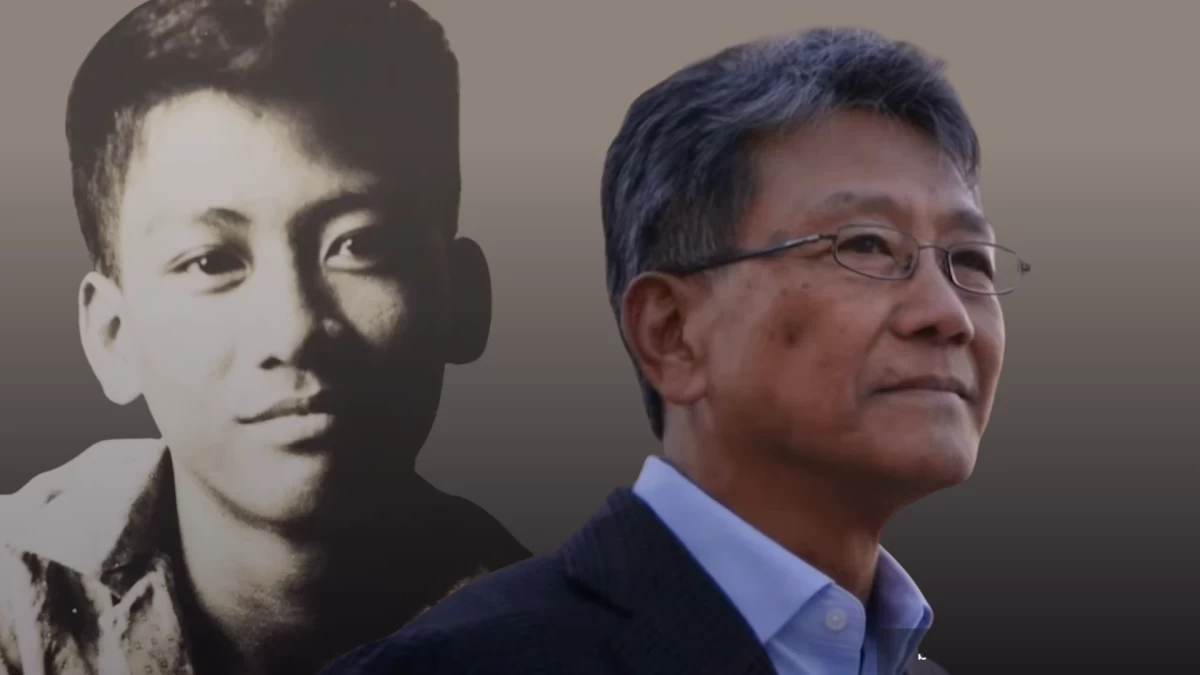
No other Filipino has touched billions of lives in the planet than Diosdado “Dado” Banatao, an engineer, inventor, entrepreneur, and one of the true pillars of the modern personal computer.
Inventing hardware for the software revolution
Many call him the Bill Gates of the Philippines — not because he wrote software, but because he built the hardware foundations that made the software revolution possible. If Gates opened the door to the digital world, Banatao built the hinges, the locks, and the circuitry that allowed that door to swing open for most people in the planet today, as industry experts avow.
I was privileged to have heard of the roots of Dado’s dramatic impact on the hardware segment of the personal computing industry from Bill Gates himself. With Mr. Gates seated beside me, as arranged by the US host, I discovered this deep insight on Dado’s nascent contribution at a small official Asia -Pacific Economic Cooperation (APEC) dinner in Seattle in 1993. The US was then hosting the 18-member regional grouping’s first meeting of economic leaders.
Our dinner conversation was most memorable as it prepared for the future hosting of other APEC annual economic leaders’ meetings (Indonesia 1994, Japan 1995, Philippines 1996). I opened with the question to Mr. Gates on the possibility of a $100 personal computer by the year 2000. Mr. Gates noted that it was most probable- a Filipino graduate from Stanford University has a revolutionary innovative hardtech work he was following. He was very effusive about the unnamed Filipino as I was as proud of being from the same home country of this quiet game-changer.
By then, I knew that it was Dado Banatao. A few years earlier, Dado invited me to his Atherton, California home to discuss assistance to the Philippines through his technology knowhow and networks.
But to understand the magnitude of Dado’s contribution, we must first understand the evolution of heroism across human history.
Dado Banatao is a hero of the knowledge age who unlocks possibilities by expanding human capability, not by annexing land and defending territories in the agricultural age for survival. Nor building separate nations in the industrial age through engines of productivity through internal resources and trade with the rest of the world.
Heroes of the 21st C and beyond do not raise armies — they raise standards, aspirations, and entire generations for the survival of humankind.
First Philippine internet link
The timeline of Dado’s reconnection to the Philippines highlights the evolution of his humble civic leadership.
First, as head of the Silicon Valley-based chapter of DFA’s Science and Technology Advisory Council (STAC) in the early 1990s, he was very actively engaged in diaspora discussions in setting up the first internet connection of the Philippines (March 1994). STACs in the USA under his influence concentrated on the strategic rather than operational aspects, shaping policy direction, legitimizing the project, and bridging the Philippines to global Internet pioneers.
While the US was the source of the Philippines’ first full Internet connection via a 64 kbps link, the technical guidance of STAC Sweden was considered instrumental in shaping the architecture of the first Philippine internet link, Sweden being an early internet adopter since 1984. Dr. Ramon “Mon” C. Barredo’s team consisting of Filipino IT professionals in Scandinavia helped design early connectivity models in the early 1990s.
Second, as his own companies thrived after learning from an early failure, Dado innovated a globally coordinated diaspora science diplomacy platform backed by his own company Tallwood Ventures Capital. This was incorporated after the Banataos set up the Brain Gain Network, the Philippine Development Foundation, and several education support programs. Collectively, these leveraged both Filipino expertise and funding to advance national innovation and development through tech-based business startups.
This strategy was at the heart of a top management program at the Asian Institute of Management with a focus on all Philippine engineering school education reform for practical development of technology-driven entrepreneurs for home-based problems. AIM also started an MS Innovation in Business and set up the AIM Banatao Incubator which has funded 70 successful startup ventures in less than a decade.
A Filipino story, a global impact
Born in the rural Iguig, Cagayan, he walked to school barefoot, studied by kerosene lamp, and grew up in a community where opportunity was scarce but imagination was abundant. From such humble beginnings, he went on to design technologies that transformed the world.
Three innovations (Banatao DNA) made PCs faster, cheaper, and accessible to ordinary people from his inventions (single chip for a calculator, old PC motherboard with many chips simplified to a board with one highlighted chipset, and the graphics accelerator chip useful not only for gaming but also for climate simulations, creative industries, design and engineering.)
These breakthroughs did not simply improve computers. They democratized computing itself. Every time a student opens a laptop, every time a small business runs its operations, every time a scientist models a new discovery — there is a trace of Banatao’s genius inside that machine.
This is Filipino excellence embedded in the circuitry of the world.
(Dr. Macaranas , Ph.D. in economics, Purdue University (Krannert Graduate School of Industrial Administration,1975) founded the STAC at DFA in the late1980s, after research at Harvard Institute for International Development on the impact of authoritarian regimes on economic performance.)