







Pac-Atlantic's pivot to consistency
The paper-digital CEO:
Published Feb 2, 2026 12:01 am


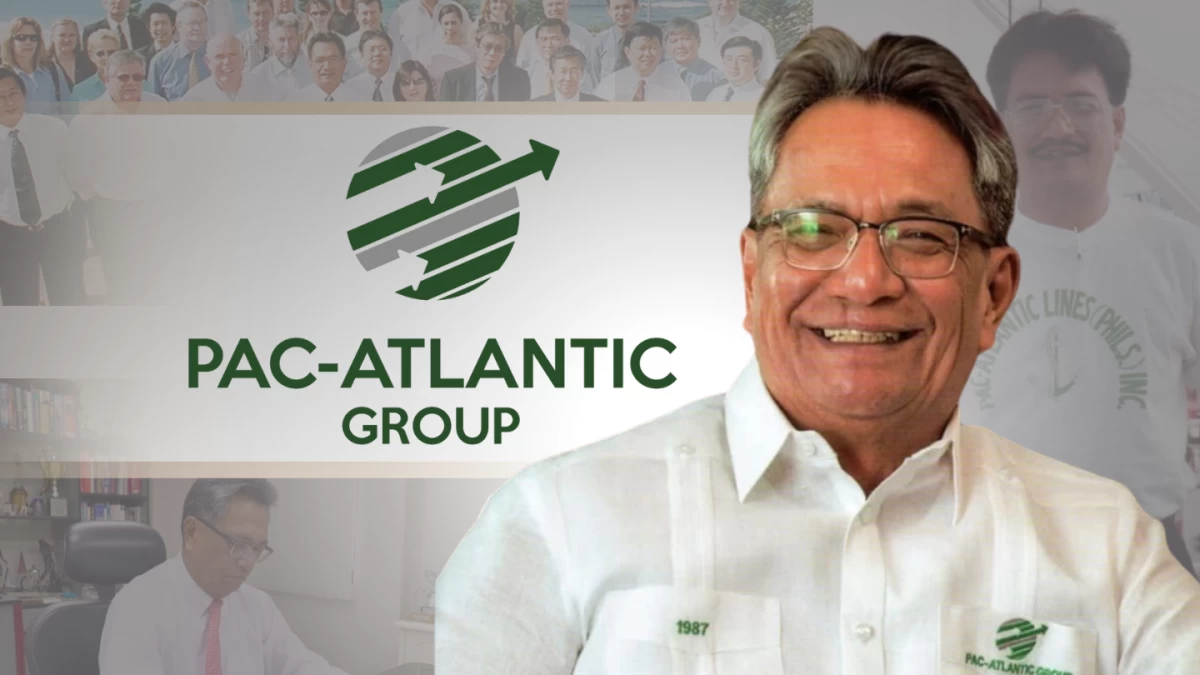
For Ramon De Leon, the scent of morning coffee remains incomplete without the tactile friction of the Manila Bulletin.
Despite long-standing predictions of a shift away from traditional media, the Chairman of Pac-Atlantic Group still begins his day by scanning a physical broadsheet. It is a habit rooted in a provincial childhood, where a single copy of the Bulletin was a neighborhood treasure, passed from hand to hand until the ink faded.
In 2026, De Leon transformed this nostalgia into a high-speed management tool. By leveraging the QR codes now embedded in the paper’s stories, he has bridged the gap between 20th-century tradition and the split-second demands of global logistics. This integration, pioneered by the Manila Bulletin as the first in the Philippine industry to implement a systematic “scan-and-share” model in print, has fundamentally altered the information workflow for executives.
The Manila Bulletin was the first to recognize that the broadsheet is no longer a static product but a gateway to an expansive digital ecosystem. By placing QR codes alongside printed stories, the publication effectively turned paper into a high-fidelity data portal.
For De Leon, this shift replaced a cumbersome legacy process; in previous decades, sharing industry news required a physical intervention where articles were cut out with shears, filed by a secretary, and manually distributed.
Today, the process is instantaneous. De Leon uses his smartphone to capture the code, which immediately unlocks the digital version of the story for immediate dissemination via internal messaging platforms.
This “scan-and-share” capability has redefined how De Leon mentors his team. He no longer merely provides information; he provides the direct link to the source, allowing his executives to delve into related articles or real-time updates that a static page cannot hold. This speed ensures that Pac-Atlantic’s leadership remains agile, pivoting as quickly as the global trade lanes they manage.
Navigating period of recalibration
The global logistics landscape in 2026 is defined by a complex, multi-speed adjustment. Capacity, pricing, and routing are shifting at different rates across markets, moving away from the frantic surges of the early 2020s toward a more sustainable equilibrium. Reliability has become the primary metric of success.
For Pac-Atlantic, this means keeping a close eye on the “new normals” of trade, such as regionalization—where nearshoring and reshoring strategies accelerate to hedge against tariff policy uncertainty—and infrastructure shifts driven by the rapid expansion of data centers. Additionally, the energy transition is driving a surge in "project cargo” for large-scale renewable energy endeavors across Oceania, Asia, and Europe.
In the Philippines, the challenges are local, but the impact is global. Port congestion and climate-related disruptions remain the primary headwinds. De Leon’s strategy for resilience is found not in radical pivots, but in “disciplined operations” and the strengthening of local partnerships where consistency is still possible.
While De Leon appreciates the “flesh” of a newspaper, he is unsentimental about the need for digital integration within Pac-Atlantic Lines. The group is currently embedding advanced tracking and performance-monitoring systems to reduce the excess use of time, fuel, and materials.
He views technology as an “ongoing capability,” building it into operations where it clearly improves efficiency and transparency.
However, he remains a staunch believer that technology should serve the human element, not replace it. In his view, the most sophisticated route-planning software is only as effective as the human trust behind the shipment. This philosophy informs his approach to leadership in a tech-saturated market.
“The rapid tech advances can make ‘young guns’ feel like they can bypass soft skills, when in fact, these become their competitive edge,” De Leon notes.
He points to the “old school” Filipino values of pakikisama (camaraderie) and walang nasasagasaan (moving forward without stepping on others) as the ultimate differentiators in a world of automated transactions. For the next generation of logistics founders, De Leon argues that integrity remains the only currency that does not depreciate.
Neutral perspective on the future
In a fractured media environment, De Leon credits the Manila Bulletin’s longevity to its neutral and independent stance. This objectivity has shaped his perspective, enabling him to navigate the volatile maritime industry with a steady hand.
He believes the publication will continue to shape Filipino perspectives by providing a grounded, factual foundation for national discourse.
When asked what headline he hopes to scan in 2031, he envisions a front page that validates the nation’s steady climb: “Five Years of Steady Economic Gains Lift Philippine Competitiveness.”
For De Leon, the story is always about human potential. “Filipinos are world-class,” he says. “We can compete with anybody due to hard work, dedication, and integrity.”
As he finishes his coffee and scans one last article for his team, De Leon proves that the most effective leaders are not just those who embrace the digital future, but those who know how to anchor it in the enduring values of the past.