







Mayon effusive eruption continues; lava descends 3 gullies
Published Feb 2, 2026 10:35 am
|
Updated Feb 2, 2026 01:49 pm


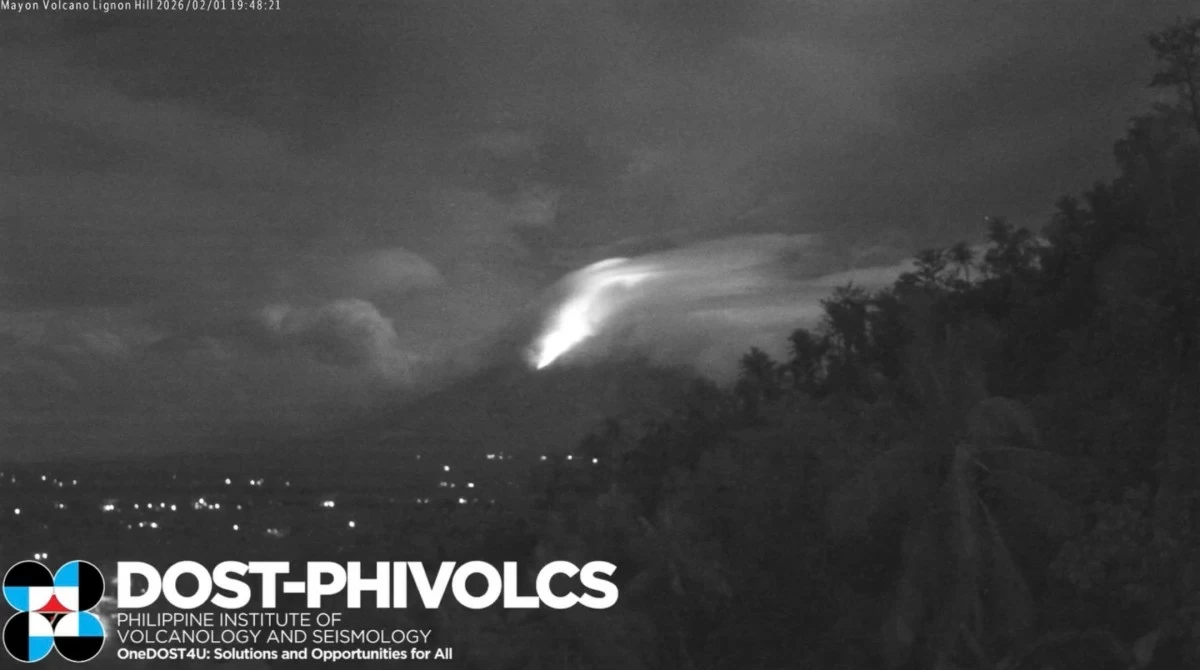
Lava flows from Mayon Volcano continue down Basud, Bonga, and Mi-isi gullies on Feb. 1, 2026. Alert Level 3 remains in effect. (Philippine Institute of Volcanology and Seismology)
Mayon Volcano’s effusive eruption continues for the 27th consecutive day, with the generation of incandescent lava flows, pyroclastic density currents (PDC), locally known as “uson,” and rockfalls, the Philippine Institute of Volcanology and Seismology (Phivolcs) reported on Monday, Feb. 2.
As of Feb. 1, lava flows reached approximately 3.7 kilometers in Basud (east) gully, 1.6 kilometers in Bonga (southeast), and 1.3 kilometers in Mi-isi (south), based on Phivolcs’ footage from the VMLH (Ligñon Hill) IP Camera.
Monitoring from 12 a.m. on Feb. 1 to 12 a.m. on Feb. 2 recorded 317 rockfall events, 30 pyroclastic density currents, and five earthquakes.
A fair crater glow was also visible to the naked eye.
Mayon remains under Alert Level 3, which shows an intensified magmatic unrest and the potential for hazardous eruptions.
Phivolcs reminded the public that entry into the six-kilometer permanent danger zone is strictly prohibited, while those in the extended danger zone should exercise heightened vigilance.
Authorities warned that even light ashfall may pose health risks, reduce visibility on roads, and disrupt aircraft operations.
Volcanic hazards include lava flows, rockfalls, landslides or avalanches, ballistic fragments, lava fountaining, moderate explosions, pyroclastic density currents, and lahars during periods of heavy or prolonged rainfall.