

ADVERTISEMENT

Senate panel to remove unnecessary requirements, politicking in gov't aid

Published Feb 1, 2026 02:24 pm

At A Glance

  • The Senate Committee on Social Justice, Welfare and Rural Development is keen on institutionalizing accessible government aid distribution, removing unnecessary requirements and politicking usually associated in government assistance programs.
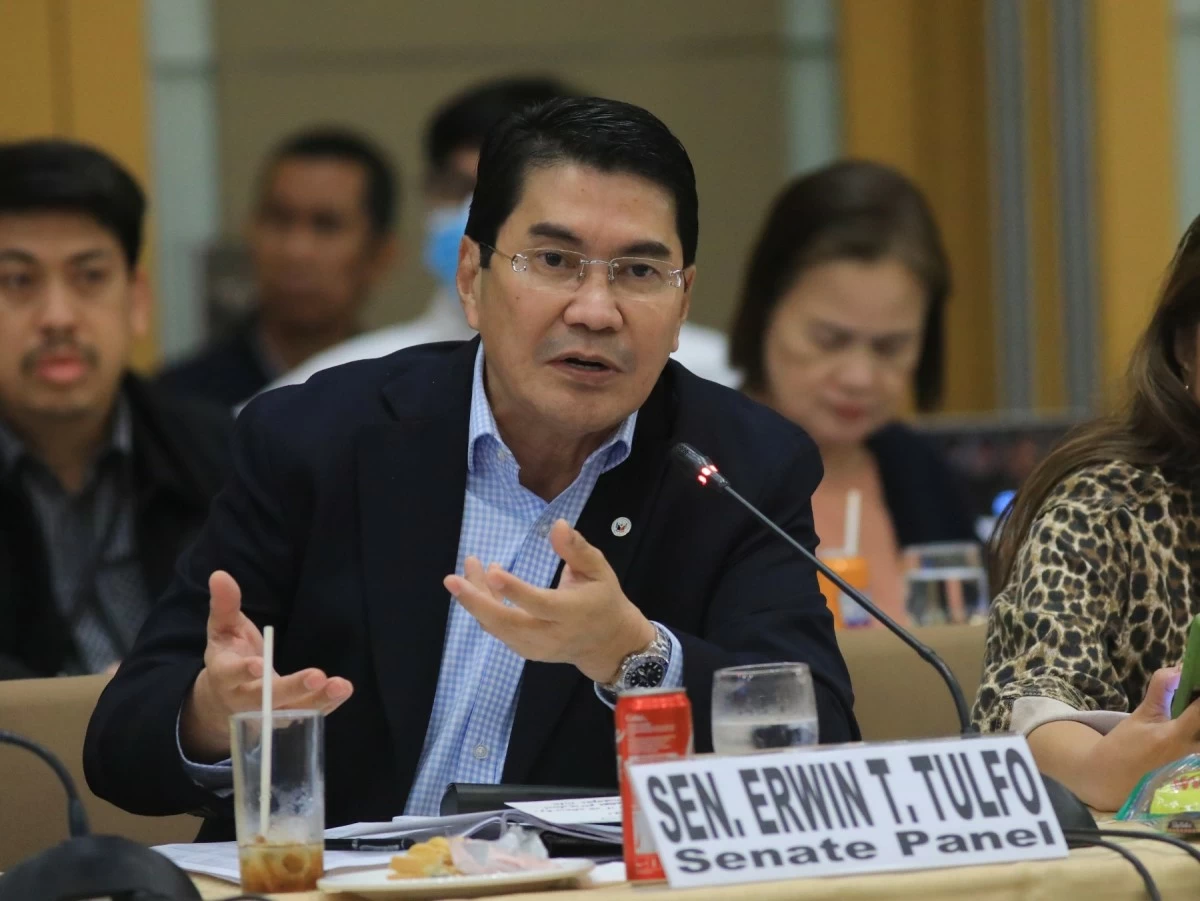

The Senate Committee on Social Justice, Welfare and Rural Development is keen on institutionalizing accessible government aid distribution, removing unnecessary requirements and politicking usually associated in government assistance programs.

Senator Erwin Tulfo (Senate PRIB photo)

Sen. Erwin Tulfo made the commitment during a recent hearing on the bill seeking to institutionalize the Assistance to Individuals in Crisis Situation (AICS) program of the Department of Social Welfare and Development (DSWD).

“What we will do is limit the requirements to two. We will ensure that unnecessary requirements, such as barangay indigency forms and marriage contracts, are removed,” said Tulfo who chairs the social justice panel.

“If you need medical assistance, for example, you will only need to provide a valid ID and a hospital bill,” he said.

He said making government aid more accessible prevents politicians from intervening in the distribution process.

“Truthfully, this is where politics comes in. When a Filipino needs aid, they often have no choice but to ask for an indigency form plastered with the faces and names of barangay officials,” the neophyte senator pointed out.

“This is currently a requirement; otherwise, they have no chance of getting help,” he said.

Currently, to access aid, Filipinos must secure a valid ID, a Certificate of Indigency, a Barangay Clearance, a notarized affidavit, a Social Case Study Report, and, in some cases, a marriage certificate.

Should the AICS bill become law, the DSWD said it plans to elevate the program into a bureau to improve staffing patterns and implementation.

With this, Tulfo then instructed the Department of the Interior and Local Government (DILG) to hasten the dissemination of information clarifying that politicians cannot intervene in aid distribution.

“The 2026 General Appropriations Act (GAA) clearly states that the presence of politicians in aid distribution is not allowed. Act on it quickly because elections are approaching, and our fellow citizens fear aid will be used for politicking again,” the Senator remarked.

The DILG said it heeded the call by issuing Memorandum Circular No. 2026-066, ordering that no names or photos of public officials appear on any government-funded projects.

Related Tags

Erwin Tulfo AICS government assistance
ADVERTISEMENT
.most-popular .layout-ratio{ padding-bottom: 79.13%; } @media (min-width: 768px) and (max-width: 1024px) { .widget-title { font-size: 15px !important; } }

{{ articles_filter_1561_widget.title }}

.most-popular .layout-ratio{ padding-bottom: 79.13%; } @media (min-width: 768px) and (max-width: 1024px) { .widget-title { font-size: 15px !important; } }

{{ articles_filter_1562_widget.title }}

.most-popular .layout-ratio{ padding-bottom: 79.13%; } @media (min-width: 768px) and (max-width: 1024px) { .widget-title { font-size: 15px !important; } }

{{ articles_filter_1563_widget.title }}

{{ articles_filter_1564_widget.title }}

.mb-article-details { position: relative; } .mb-article-details .article-body-preview, .mb-article-details .article-body-summary{ font-size: 17px; line-height: 30px; font-family: "Libre Caslon Text", serif; color: #000; } .mb-article-details .article-body-preview iframe , .mb-article-details .article-body-summary iframe{ width: 100%; margin: auto; } .read-more-background { background: linear-gradient(180deg, color(display-p3 1.000 1.000 1.000 / 0) 13.75%, color(display-p3 1.000 1.000 1.000 / 0.8) 30.79%, color(display-p3 1.000 1.000 1.000) 72.5%); position: absolute; height: 200px; width: 100%; bottom: 0; display: flex; justify-content: center; align-items: center; padding: 0; } .read-more-background a{ color: #000; } .read-more-btn { padding: 17px 45px; font-family: Inter; font-weight: 700; font-size: 18px; line-height: 16px; text-align: center; vertical-align: middle; border: 1px solid black; background-color: white; } .hidden { display: none; }
function initializeAllSwipers() { // Get all hidden inputs with cms_article_id document.querySelectorAll('[id^="cms_article_id_"]').forEach(function (input) { const cmsArticleId = input.value; const articleSelector = '#article-' + cmsArticleId + ' .body_images'; const swiperElement = document.querySelector(articleSelector); if (swiperElement && !swiperElement.classList.contains('swiper-initialized')) { new Swiper(articleSelector, { loop: true, pagination: false, navigation: { nextEl: '#article-' + cmsArticleId + ' .swiper-button-next', prevEl: '#article-' + cmsArticleId + ' .swiper-button-prev', }, }); } }); } setTimeout(initializeAllSwipers, 3000); const intersectionObserver = new IntersectionObserver( (entries) => { entries.forEach((entry) => { if (entry.isIntersecting) { const newUrl = entry.target.getAttribute("data-url"); if (newUrl) { history.pushState(null, null, newUrl); let article = entry.target; // Extract metadata const author = article.querySelector('.author-section').textContent.replace('By', '').trim(); const section = article.querySelector('.section-info ').textContent.replace(' ', ' '); const title = article.querySelector('.article-title h1').textContent; // Parse URL for Chartbeat path format const parsedUrl = new URL(newUrl, window.location.origin); const cleanUrl = parsedUrl.host + parsedUrl.pathname; // Update Chartbeat configuration if (typeof window._sf_async_config !== 'undefined') { window._sf_async_config.path = cleanUrl; window._sf_async_config.sections = section; window._sf_async_config.authors = author; } // Track virtual page view with Chartbeat if (typeof pSUPERFLY !== 'undefined' && typeof pSUPERFLY.virtualPage === 'function') { try { pSUPERFLY.virtualPage({ path: cleanUrl, title: title, sections: section, authors: author }); } catch (error) { console.error('ping error', error); } } // Optional: Update document title if (title && title !== document.title) { document.title = title; } } } }); }, { threshold: 0.1 } ); function showArticleBody(button) { const article = button.closest("article"); const summary = article.querySelector(".article-body-summary"); const body = article.querySelector(".article-body-preview"); const readMoreSection = article.querySelector(".read-more-background"); // Hide summary and read-more section summary.style.display = "none"; readMoreSection.style.display = "none"; // Show the full article body body.classList.remove("hidden"); } document.addEventListener("DOMContentLoaded", () => { let loadCount = 0; // Track how many times articles are loaded const offset = [1, 2, 3, 4, 5, 6, 7, 8, 9, 10]; // Offset values const currentUrl = window.location.pathname.substring(1); let isLoading = false; // Prevent multiple calls if (!currentUrl) { console.log("Current URL is invalid."); return; } const sentinel = document.getElementById("load-more-sentinel"); if (!sentinel) { console.log("Sentinel element not found."); return; } function isSentinelVisible() { const rect = sentinel.getBoundingClientRect(); return ( rect.top < window.innerHeight && rect.bottom >= 0 ); } function onScroll() { if (isLoading) return; if (isSentinelVisible()) { if (loadCount >= offset.length) { console.log("Maximum load attempts reached."); window.removeEventListener("scroll", onScroll); return; } isLoading = true; const currentOffset = offset[loadCount]; window.loadMoreItems().then(() => { let article = document.querySelector('#widget_1690 > div:nth-last-of-type(2) article'); intersectionObserver.observe(article) loadCount++; }).catch(error => { console.error("Error loading more items:", error); }).finally(() => { isLoading = false; }); } } window.addEventListener("scroll", onScroll); });

Sign up by email to receive news.