






Manila Bulletin
 Philippines
National
Learners, teachers not to blame for comprehension crisis--Romulo
Philippines
National
Learners, teachers not to blame for comprehension crisis--Romulo
Philippines
National
Learners, teachers not to blame for comprehension crisis--Romulo
Learners, teachers not to blame for comprehension crisis--Romulo
Published Feb 1, 2026 11:26 pm


At A Glance
- Pasig City lone district Rep. Roman Romulo is calling for immediate, aggressive, and sustained interventions inside classrooms to address problems in reading comprehension among Filipino pupils.
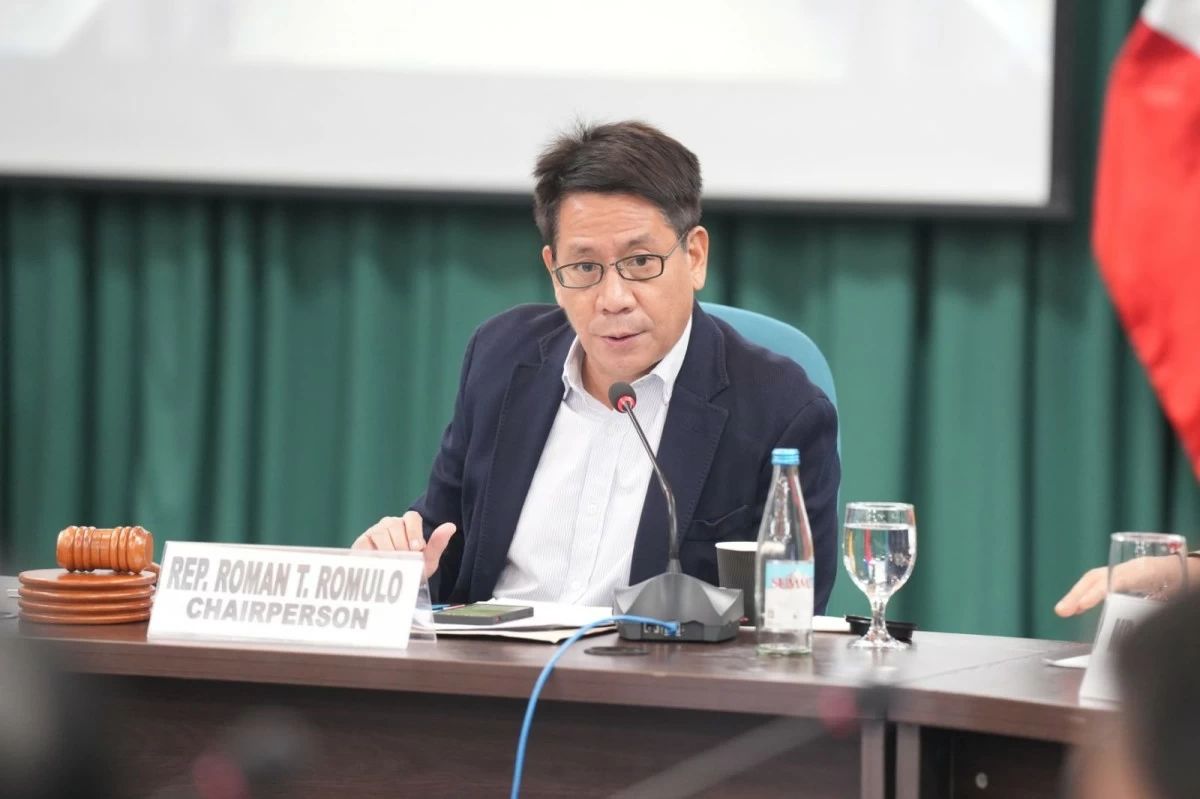
Pasig City lone district Rep. Roman Romulo (PPAB)
Pasig City lone district Rep. Roman Romulo is calling for immediate, aggressive, and sustained interventions inside classrooms to address problems in reading comprehension among Filipino pupils.
Romulo, chairman of the House Committee on Basic Education, made this appeal over the weekend on the heels of the release of the final report of the Second Congressional Commission on Education (EDCOM II).
According to the veteran solon, country’s long-running reading comprehension crisis reflects a breakdown in how the education system has been designed and implemented over decades.
He refused to place any blame on the children or the teachers in connection with this problem.
“Kasi hindi kasalanan ng bata, nung learner. Hindi rin kasalanan ng teacher. Kasi it was the system that required na pasa tayo ng pasa (Because ultimately, it is neither the fault of the child, the learner. Nor is it the fault of the teacher. It was the system that required us to keep promoting students),” Romulo stressed in a news forum in Quezon City.
He pushed for decisive remediation through the Aral Program and similar efforts that respond to learning gaps the moment they are detected rather than waiting for summer breaks.
Recent findings show persistently low reading and numeracy levels among Filipino students, a problem that has surfaced repeatedly in assessments and official reviews and that lawmakers now acknowledge cannot be solved by blame but by restructuring how learning support is delivered inside classrooms.
“Ngayon po na nandito na tayo sa K-12. Alam natin ang totoo, mayron ngang hindi grade-level proficient. Para sa amin, ‘yung kasalukuyang nasa K-12, gamitin natin ‘yung Aral Program. Gumamit tayo ng aggressive interventions para matulungan ‘yung mga bata along the way,” Romulo explained.
(Now that we are under K-12, we know the truth: there are indeed learners who are not grade-level proficient. For us, with the current K-12, we should use the Aral Program. We must employ aggressive interventions to help the children along the way.)
He went on to frame the issue as one of responsibility at the system level as he pointed out that promotion policies in the past often allowed students to move forward without mastering core skills.
This reality has compounded learning gaps over time, Romulo reckoned. And he said It's time to move on.
“Meaning ‘yung mga padating, ‘yung future. Pero ‘yung mga nandito na interventions, strong aggressive interventions. ‘Pag nakita natin Grade 4, ‘yung reading level niya hindi Grade 4, siguraduhin natin, pa-catch-up natin kaagad. Huwag na tayo maghintay ng summer classes. Dun palang siguraduhin natin interventions, very aggressive interventions, Aral Program is that,” he underscored.
(Meaning, for those coming in, the future cohorts. But the interventions we have, these are strong, aggressive interventions. If we see, for example, a Grade 4 student whose reading level is not at Grade 4, we must immediately provide catch-up support. Let us not wait for summer classes. Right then and there, we must ensure interventions—very aggressive interventions. That is what the Aral Program is for.)
The discussion came amid renewed attention to the findings of the EDCOM 2, which traced the roots of the reading crisis far deeper than recent disruptions. This reinforced the argument that reforms must be sustained over time rather than introduced as short-term fixes that fade with each change in administration.
“1925 pa lang ‘yung unang Monroe survey ang sinabi na po doon reading comprehension ang problema ng ating mga mag-aaral. Dumating po yung EDCOM, mga 1990’s po ata ‘yun, ‘yun rin po ‘yung sinabi nila, reading comprehension is a problem. Ngayon nandidito na po tayo,” Romulo noted.
(As early as 1925, the first Monroe Survey already noted that reading comprehension was a problem among our learners. Then came EDCOM, sometime in the 1990s, and they said the same thing: reading comprehension is a problem. And now, here we are.)
“Nung pumasok kasi yung K-12, napakaraming subjects, napakaraming competencies, sa totoo po talagang na bugbog po ang bata pati po ang teachers sa dami ng kailangang pag-aralan,” he recalled.
(When K-12 was introduced, there were too many subjects, too many competencies. In truth, both the children and the teachers were overwhelmed by the sheer volume of what had to be studied.)
Romulo detailed how the revised structure narrowed learning priorities in the lower grades, with reading comprehension taking center stage alongside mathematics and the reintroduction of good manners and right conduct as a formal subject.
“Kung maalala po ninyo dati po pag-apak ng Grade 3 ng isang bata, nine subjects na po ang kailangan nyang matutunan. Binaba na po natin ‘yan… ‘yung five subjects po natuon po sila sa reading comprehension para masigurado natin na natututukan na marunong magbasa at naiintindihan ‘yung binabasa,” he pointed out.
(If you recall, back then, when a child entered Grade 3, they already had nine subjects to learn. We have since reduced that… focusing on five subjects, with emphasis on reading comprehension, to ensure that learners are taught to read and to understand what they are reading.)