







The Beloveds' Kitchen
Where 'pagkaing laya' is the specialty, and volunteerism the norm
Published Jan 31, 2026 08:01 am


It was a kitchen built for their “beloveds” – health frontliners, inmates from five city jails, patients, doctors, and nurses in the emergency room of the Philippine General Hospital (PGH), including its OB-GYN department, and foundations supporting children with cerebral palsy.
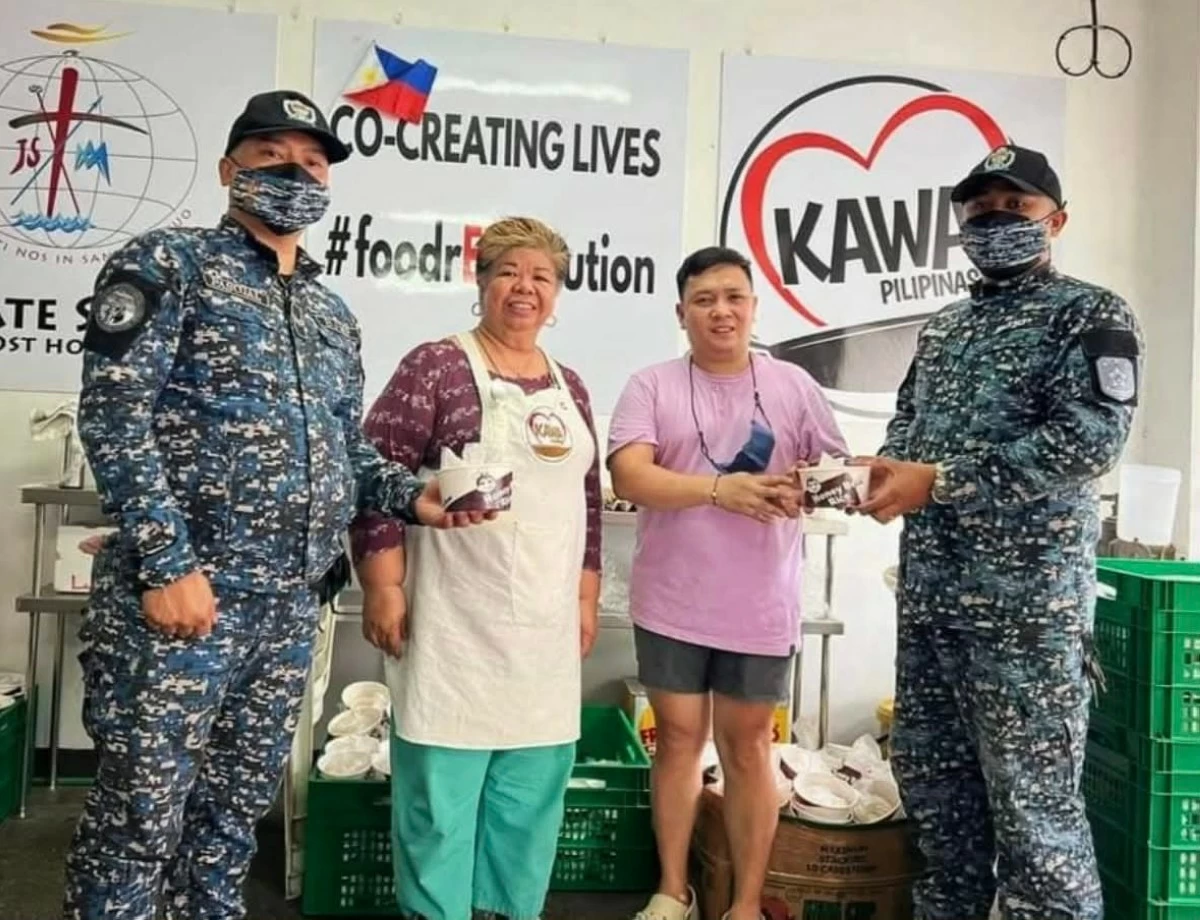
Chef Hernan Christian De Jesus and KAWA Pilipinas co-founder Mae Paner or "Juana Change" (Photo courtesy of Chef Hernan Christian De Jesus)
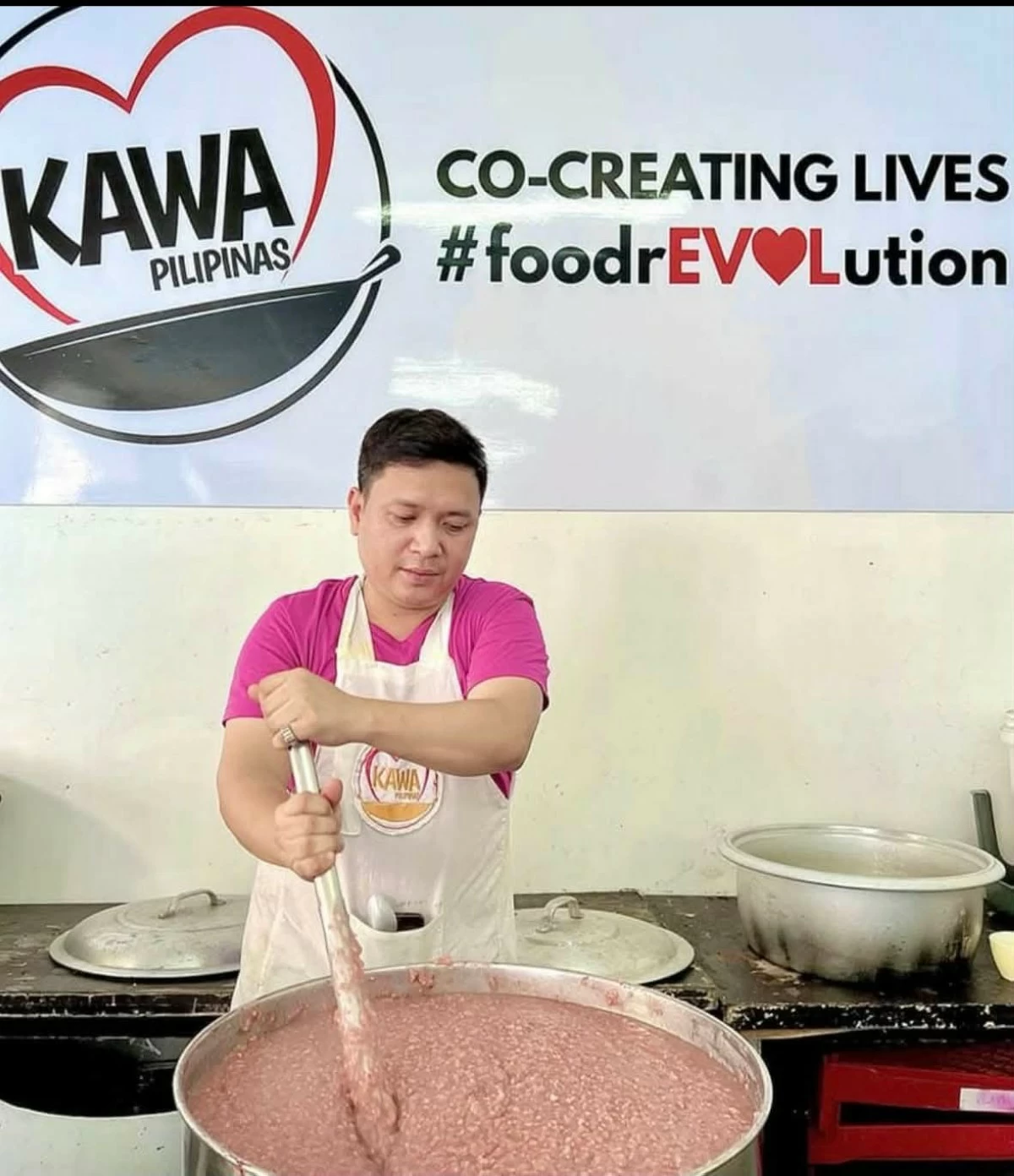
Chef Chris cooking for their "Beloveds" (Photo courtesy of Chef Hernan Christian De Jesus)
During the early pandemic lockdown in April 2020, Chef Hernan Christian De Jesus or Chef Chris, co-founded KAWA Pilipinas with activist, political satirist, and actress Mae Paner, also known as “Juana Change” in response to a call for volunteers at Baclaran Church.
“Mae Paner called me na; chef baka pwede tayong tumulong sa Baclaran Church. Kasi may kaibigan kami doon na mga brothers na naghahanap ng volunteers dahil marami silang mga raw ingredients or in-kind donations na dapat lutuin (Mae Paner called me and asked me if we could help Baclaran Church. Because we have friends there who are brothers who are looking for volunteers because they have a lot of raw ingredients or in-kind donations that need to be cooked),” he said.
“Noong una, it was the frontliners from PGH. So basically, mga doktor na hindi nakakapagbaon, walang food. Tapos pag may natira, then binibigay sa checkpoint ng mga police along the roads (At first it was the frontliners from PGH. So basically, doctors. Then if there were extra food packs, we give them to those manning the police checkpoints),” he added.
They also distributed food packs to the homeless along Roxas Boulevard.
From its humble beginnings in a small garage in Makati, KAWA Pilipinas evolved into a highly organized operation.
Every Saturday, a team of 20 to 30 volunteers, mostly students, prepares thousands of meals for their “Beloveds” as they call their beneficiaries.
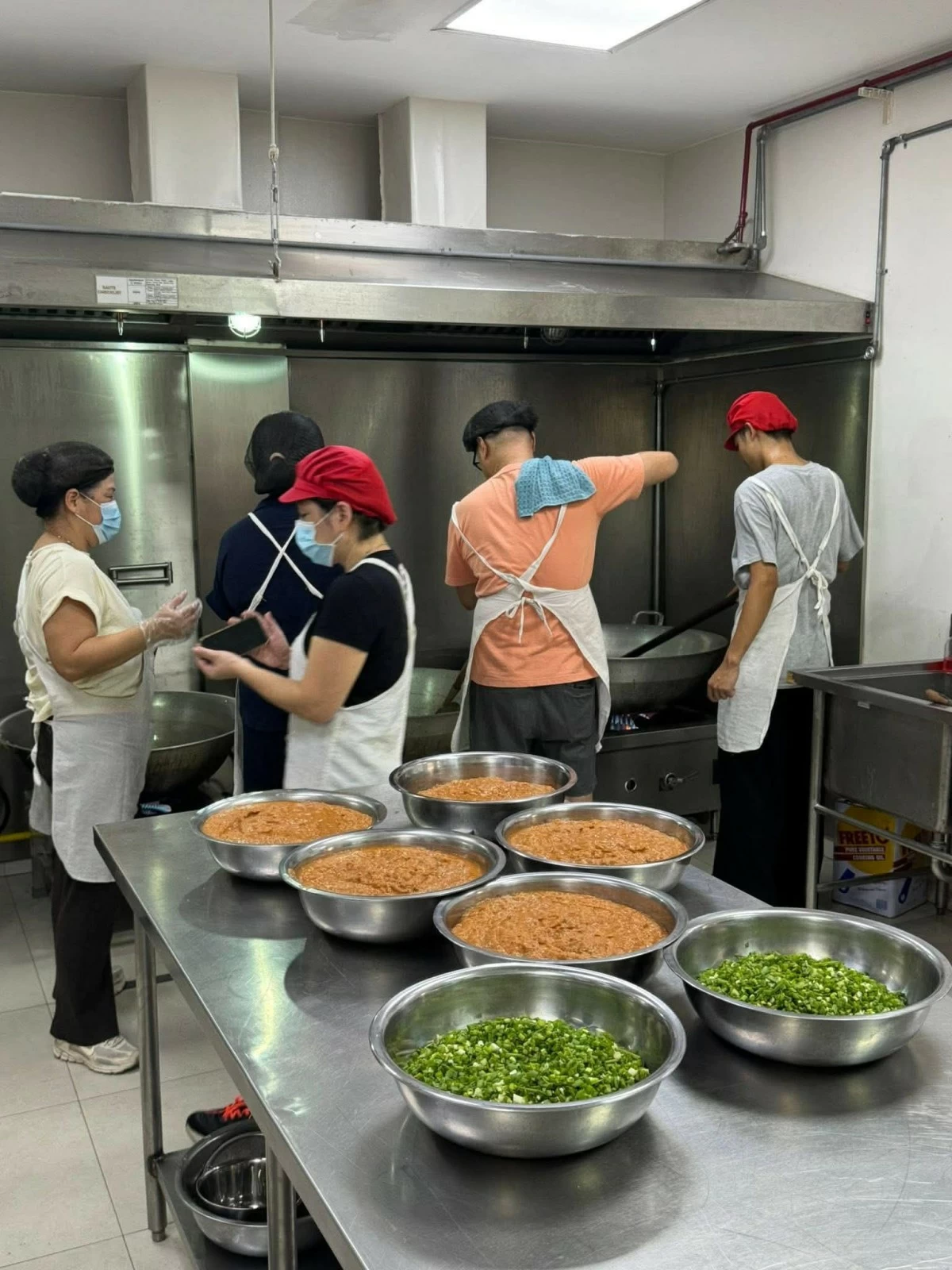
Volunteers prepare food packs for beneficiaries (Photo courtesy of Kawa Pilipinas facebook page)
The group now produces up to 5,000 food packs per week, serving not just five city jails, but also emergency areas of PGH, including OB-GYN department, and foundations supporting children with cerebral palsy.
The meals are carefully prepared to ensure proper nutritional value, complete with vegetables, protein, and other essential ingredients.
“When you cook for the president or VIPs, it’s one thing. But kapag nagluluto ka para sa pinakamababang antas sa community, lalo na yung mga preso, yan ang ‘pagkaing laya (When you cook for the president or VIPs, that’s one thing. But when you cook for those belonging to the edges of society, especially prisoners…you call it ‘food for freedom’,” he said.
“That’s very moving…Every time we serve meals, they call our food ‘pagkaing laya,” he added.
Chef Chris also emphasized the importance of inspiring young volunteers.
“So, what inspires young people? Siyempre umpisa yan sa pag-volunteer nila. Nakikita nila kung ano yung essence ng ginagawa nilang pagvo-volunteer. Not just to show that they are helping and to post on their social media (So what inspires young people? Of course, it starts with their volunteering. They see the essence of what they are doing. Not just to show that they are helping and to post on their social media),” he said.
“Masaya sila kahit pag nag-volunteer sila mag-uwi lang sila ng dalawa, tatlong food packs that they can share with their families. Regular na sila nag-volunteer kasi bihira yan sa mga batang nag-aaral na yung kanilang araw na hindi pagpasok ivo-volunteer mo pa sa KAWA (They are happy even though when they volunteer, they only get to take home two or three food packs that they can share with their families. They volunteer regularly because it is rare for school children to volunteer for KAWA on their days off),” he added.
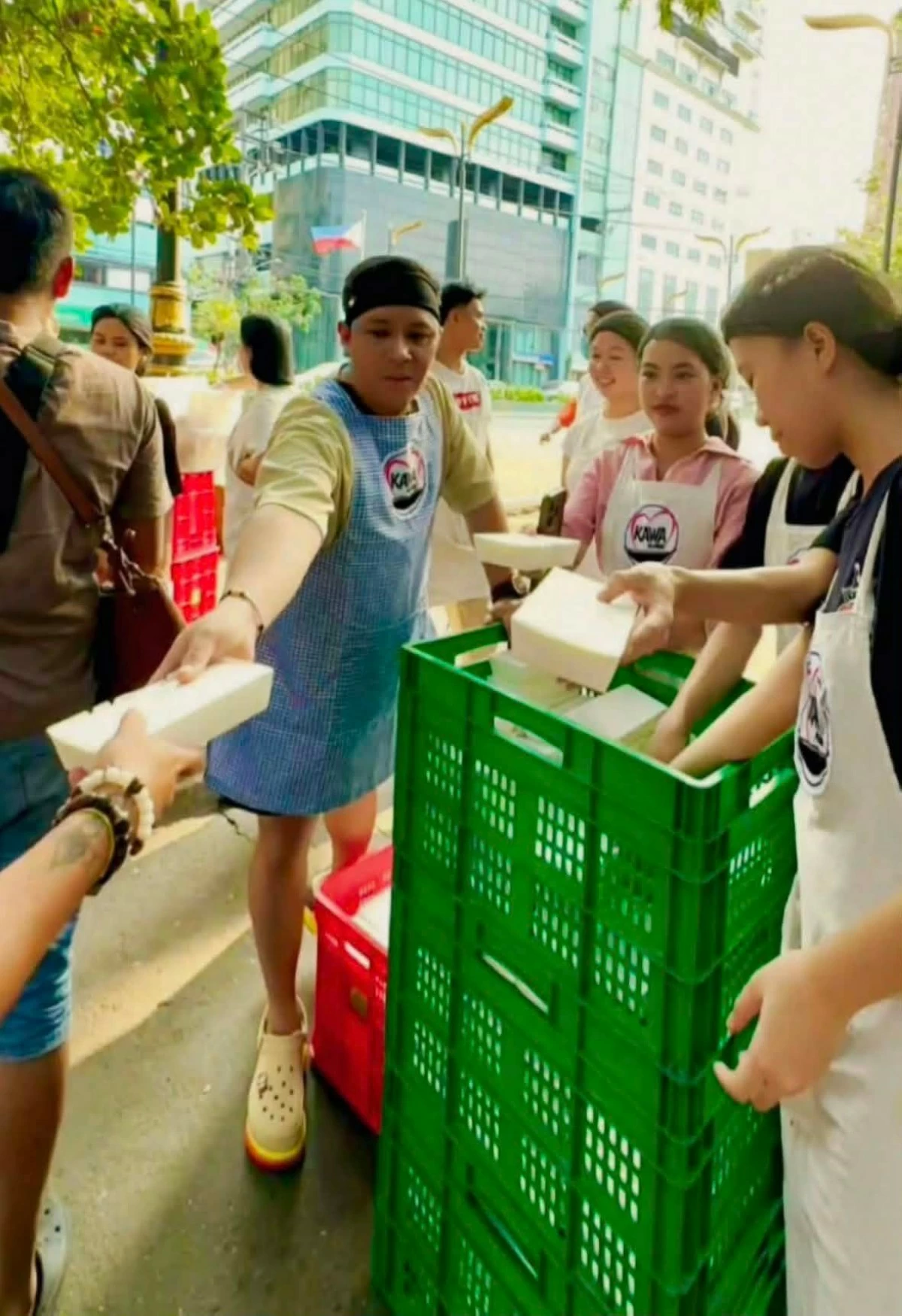
Chef Chris distributes food packs to the "Beloveds" or beneficiaries. (Photo courtesy of Chef Hernan Christian De Jesus)
Beyond volunteering, Chef Chris also encouraged young chefs to share their skills for a greater cause.
“Dun sa mga aspiring young chefs, they should also try to find a way to share their skills by helping others or helping yung institution gaya ng KAWA (Aspiring young chefs should also try to find a way to share their skills by helping others or helping institutions such as KAWA),” he said, noting that similar advocacy programs exist under the DSWD and other organizations.
While his advocacy reached a number of beneficiaries, there were also attendant challenges along the way.
“As much as possible kung kaya ng oras, kasi oras ang kalaban mo dyan…Kung may konting kita, pwedeng magbigay kasi talagang kailangan ng financial help aside from ang daming lulutuin. Wala ka naman gas pangluto. How will you operate? (As much as possible if time allows, because time is your enemy there…If I have a little income, I can give because the advocacy really needs financial help. If you don’t have gas, how can you cook? How will you operate,” he said.
KAWA Pilipinas continues to operate and explore ways to be sustainable, including selling merchandise or meals to support the mission.
Chef Chris personally oversees operations, turning donated ingredients from farms, foundations, and partners like Jollibee Food Foundation into creative, nutritious dishes. “Hindi ka basta pwede magluto. There was a time I created strawberry champorado,” he shared, recalling the ingenuity required to feed so many people.
His work has inspired young volunteers and culinary students, demonstrating that cooking can be a tool for service and social impact.
“I hope aspiring chefs and young Filipinos will see that volunteering and using your skills to help the community is as important as running a successful restaurant,” he adds.
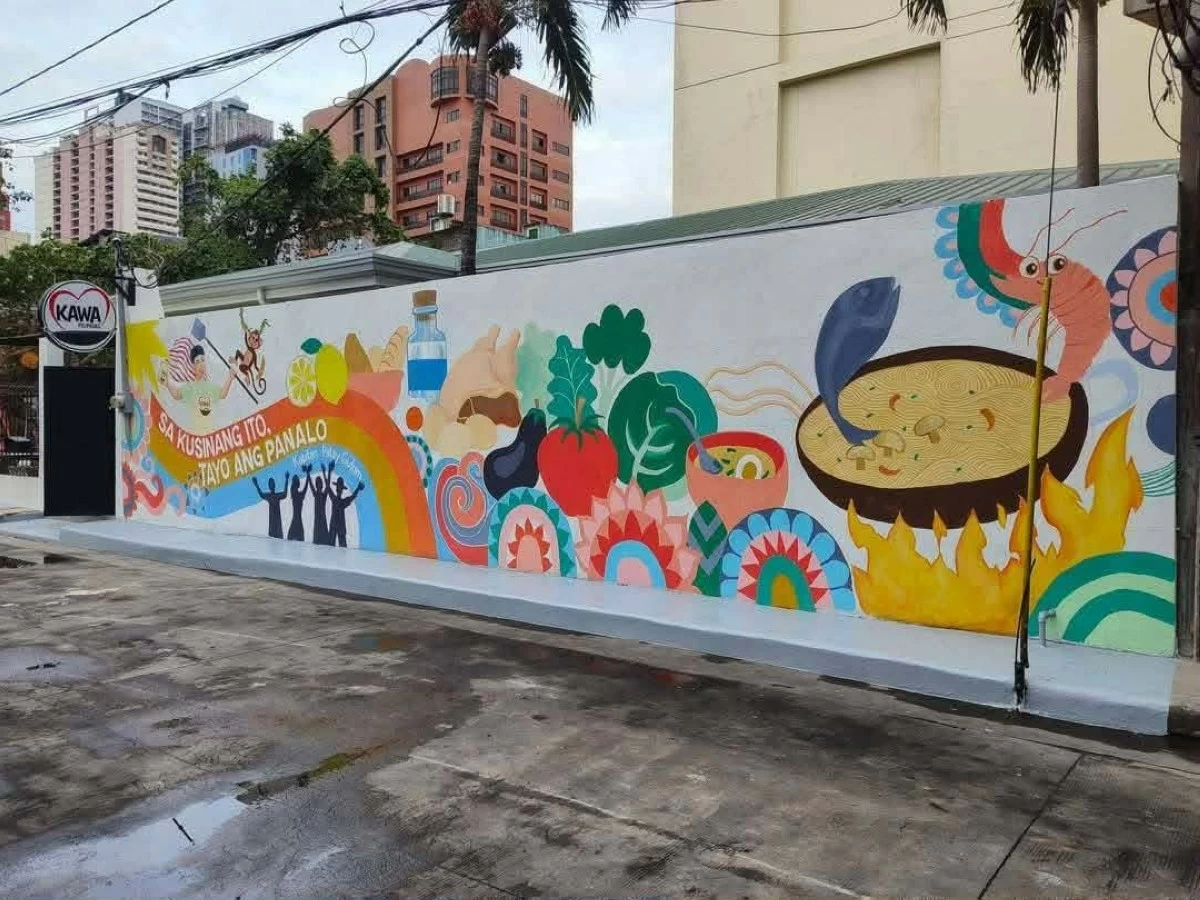
The Kawa Pilipinas headquarters. (Photo courtesy of Kawa Pilipinas facebook page)
For Chef Chris, the kitchen is more than a place to cook—it is a platform for cultural preservation, service, and transformation.
Chef Chris was born in Vigan, Ilocos Sur where he learned his way around the kitchen. His growing up years revolved around his passion for Filipino cuisine and his advocacy to feed people in need.
His lifelong mission is to preserve and promote regional Filipino cuisine, from Ilocano favorites like papaitan and igado to Ilonggo specialties.
His love for regional dishes extended outside the Philippine borders and reached as far as Guangzhou, China where he promoted Filipino cuisine.
“We did for the first time the Filipino food festival for Shangri-La in Guangzhou. It lasted for 15 days but the main objective is to add Filipino dishes to their Southeast Asian restaurant,” he said.
“We learned in November last year na they included Filipino dishes to their menu at the Southeast Asian restaurant which are Humba, Kilawin, and Kare-Kare,” he said.