






Manila Bulletin
 Philippines
National
Brian Poe says people-first AI strategy a must at Global AI Council's State of the Nation in AI
Philippines
National
Brian Poe says people-first AI strategy a must at Global AI Council's State of the Nation in AI
Philippines
National
Brian Poe says people-first AI strategy a must at Global AI Council's State of the Nation in AI
Brian Poe says people-first AI strategy a must at Global AI Council's State of the Nation in AI
Published Jan 31, 2026 11:26 pm
|
Updated Feb 1, 2026 01:44 pm


At A Glance
- When FPJ Panday Bayanihan Party-list Rep. Brian Poe thinks of artificial intelligence (AI), it's not super advanced robots or smart gadgets that comes to his mind. Instead, it's the people.
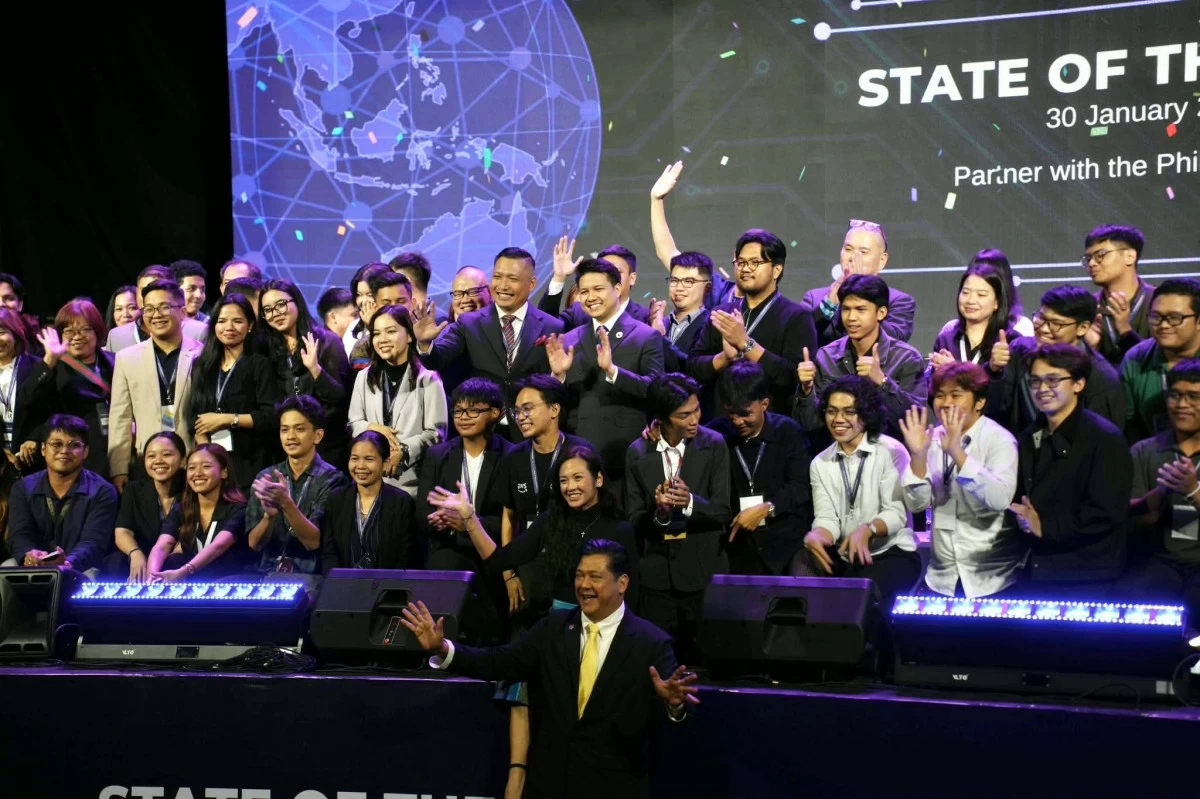
FPJ Panday Bayanihan Party-list Rep. Brian Poe (center, top row) (Rep. Poe's office)
When FPJ Panday Bayanihan Party-list Rep. Brian Poe thinks of artificial intelligence (AI), it's not super advanced robots or smart gadgets that comes to his mind. Instead, it's the people.
The neophyte congressman hammered home this point in his closing address at the State of the Nation on AI (SONAI) 2026, as he called for a people-first AI strategy that sought to protect workers, empower small businesses, and strengthen public services.
This, as Poe envisioned the Philippines as the leader in Southeast Asia in terms of responsible and inclusive innovation.
“When we talk about [AI], we are ultimately talking about people workers navigating change, small businesses trying to stay competitive, and communities that need government to work better and faster,” Poe said.
Addressing the summit’s diverse audience, Poe urged leaders to move beyond pilot projects and policy papers toward measurable, real-world outcomes.
He emphasized that the Philippine AI Report and SONAI discussions must serve as implementation tools rather than shelf documents.
“This cannot be just a vision document or another set of recommendations. It must be a tool something that sets ownership, timelines, and delivers real, positive impact,” the Pangasinan-based lawmaker said.
Poe framed the summit not merely as a technology conference but as a national stock-taking of the country’s readiness for the AI era that brought together lawmakers, regulators, startup founders, educators, and global investors to align policy with execution.
Fresh from engagements at the World Economic Forum, Poe shared that global investors increasingly view the Philippines as a serious destination for digital and emerging technologies. He described the country’s AI roadmap as an open invitation for international partners to help build a competitive, future-ready ecosystem anchored in clear governance and strong institutions.
Throughout SONAI, stakeholders identified concrete applications where AI can immediately improve daily life strengthening fraud detection in finance, accelerating disaster response systems, modernizing micro, small, and medium enterprises, and enabling the IT-BPM sector to shift toward higher-value, AI-augmented services.
For Poe, these are not abstract opportunities but governance priorities that Congress must support with law, funding, and institutional reform inside the House of Representatives of the Philippines.
From the legislative side, he outlined two key measures already being advanced. He said the Artificial Intelligence Development Authority Bill would establish a coherent national framework to ensure AI governance is coordinated, risk-based, and aligned across agencies, giving both regulators and businesses clarity.
He also highlighted the Career Transition Assistance Bill. It is designed to protect Filipino workers as industries modernize by funding reskilling programs, job matching, and pathways into emerging technology sectors.
“AI adoption without worker transition is not progress — it’s disruption,” Poe said. “If we modernize our systems, we must modernize opportunities for our people at the same time.”
Poe added that innovation in the Philippines rarely fails because of talent or ideas, but because accountability is fragmented and policies move too slowly to keep pace with industry.
“Technology does not fail in this country due to lack of ideas. It fails when responsibility is unclear and when policy lags behind industry.”
Organized with the support of the Global AI Council Philippines, SONAI has emerged as one of the country’s leading multi-sector platforms for AI governance and industry coordination.
The council’s Board of Trustees is led by Dr. Donald Lim as chairman, with Catz Jalandoni as president, alongside trustees lawyer Mark Gorriceta and Anton Mauricio, and Executive Director Mack Comandante.