ADVERTISEMENT

Manila LGU gears up for 'The Big One'; holds Intramuros-wide earthquake drill

Published Jan 30, 2026 02:44 pm
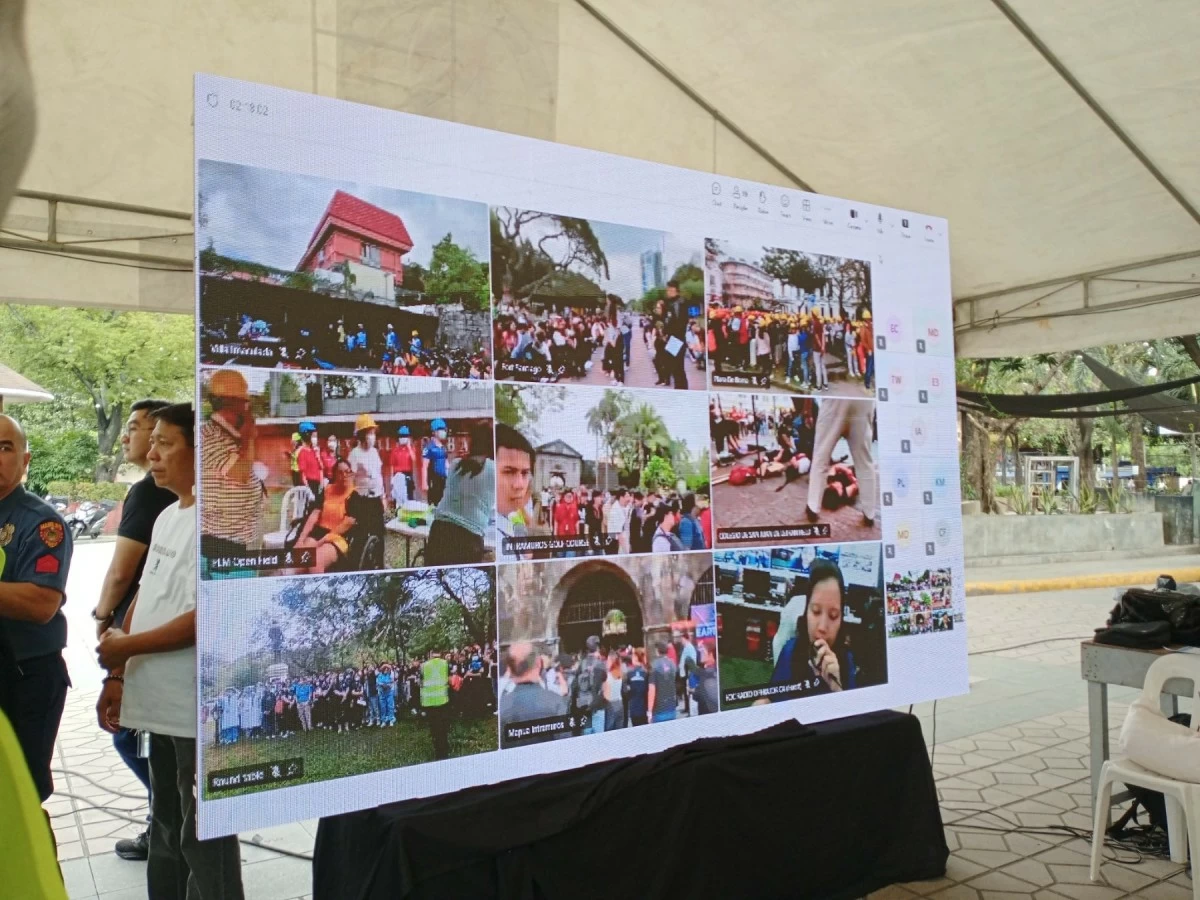
Schools, businesses, and government offices located within Intramuros, Manila, participate in the Intramuros-wide Earthquake Drill spearheaded by the Manila City Government on Friday, Jan. 30. (Photo by Patrick Ely Garcia)

The Manila City Government held an Intramuros-wide earthquake drill on Friday, Jan. 30, to test its readiness in times of disasters and calamities, particularly the dreaded 7.2 magnitude quake dubbed "The Big One" that is predicted to hit Metro Manila earlier or later than 2058 that could cause catastrophic damage and deaths.

Manila Mayor Francisco "Isko Moreno" Domagoso led the drill together with Vice Mayor Chi Atienza, Manila Disaster Risk Reduction and Management Office (MDRRMO) head Arnel Angeles, and other city officials.

During the drill, schools, businesses, and government offices located within Intramuros participated in the earthquake drill aimed at preparing residents and establishments for the Big One.

“We thank our partners, the Intramuros Administration, for the earthquake preparation for the residents of Manila. Scientists are saying that there will be a big one; thus, we have to prepare activities such as this one citywide,” Domagoso said, adding that the exercise took two months of preparation and coordination together with input from experts.

“Hindi po ito ganito kadali kasi we have to prepare a large number of people for this large exercise para maging safe ang mga tao (This is not easy to execute because we have to prepare a large number of people for this large exercise to ensure the safety of the public)," he noted.

Meanwhile, the MDRRMO underscored the importance of conducting such drills to prepare the community in case of disasters.

"Ito ay isang mahalagang gawain na naglalayong ihanda ang buong komunidad sa posibleng pagharap sa isang malakas na lindol. Ang mga ganitong uri ng earthquake drill ay mahalaga sapagkat nagbibigay ito ng sapat na kaalaman at praktikal na karanasan sa tamang kilos at hakbang na dapat gawin bago, habang, at pagkatapos ng isang lindol. Bagama’t walang katiyakan kung kailan tatama ang isang lindol, hindi rin imposibleng makaranas nito ang Lungsod ng Maynila dahil sa lokasyon nito at sa aktibidad ng mga fault line sa bansa (This is an important activity that aims to prepare the entire community for the possible occurrence of a strong earthquake. These types of earthquake drills are important because they provide sufficient knowledge and practical experience on the correct actions and steps to take before, during, and after an earthquake. Although there is no certainty when an earthquake will strike, it is not impossible for the City of Manila to experience one due to its location and the activity of the fault lines in the country)," the office stressed.

"Bilang paalala, noong nakaraang taon ay napaulat ang isang malakas na lindol sa Cebu na may lakas na magnitude 6.9, na nagdulot ng pinsala sa mga ari-arian at naglagay sa panganib sa maraming buhay. Ang ganitong mga pangyayari ang nagsisilbing babala sa atin kung gaano kahalaga ang pagiging handa. Ang pangunahing layunin ng earthquake drill na ito ay maiwasan ang malawakang pinsala at pagkawala ng buhay sakaling may tumamang malakas na lindol sa ating lugar (As a reminder, last year, a strong earthquake measuring 6.9 magnitude was reported in Cebu, causing damage to properties and endangering many lives. Such incidents serve as a reminder to us of the importance of being prepared. The main purpose of this earthquake drill is to prevent widespread damage and loss of life in the event of a strong earthquake striking our area)," it added.

Related Tags

THE BIG ONE MANILA CITY METRO NEWS EARTHQUAKE DRILL INTRAMUROS ISKO MORENO DOMAGOSO MDRRMO
ADVERTISEMENT
.most-popular .layout-ratio{ padding-bottom: 79.13%; } @media (min-width: 768px) and (max-width: 1024px) { .widget-title { font-size: 15px !important; } }

{{ articles_filter_1561_widget.title }}

.most-popular .layout-ratio{ padding-bottom: 79.13%; } @media (min-width: 768px) and (max-width: 1024px) { .widget-title { font-size: 15px !important; } }

{{ articles_filter_1562_widget.title }}

.most-popular .layout-ratio{ padding-bottom: 79.13%; } @media (min-width: 768px) and (max-width: 1024px) { .widget-title { font-size: 15px !important; } }

{{ articles_filter_1563_widget.title }}

{{ articles_filter_1564_widget.title }}

.mb-article-details { position: relative; } .mb-article-details .article-body-preview, .mb-article-details .article-body-summary{ font-size: 17px; line-height: 30px; font-family: "Libre Caslon Text", serif; color: #000; } .mb-article-details .article-body-preview iframe , .mb-article-details .article-body-summary iframe{ width: 100%; margin: auto; } .read-more-background { background: linear-gradient(180deg, color(display-p3 1.000 1.000 1.000 / 0) 13.75%, color(display-p3 1.000 1.000 1.000 / 0.8) 30.79%, color(display-p3 1.000 1.000 1.000) 72.5%); position: absolute; height: 200px; width: 100%; bottom: 0; display: flex; justify-content: center; align-items: center; padding: 0; } .read-more-background a{ color: #000; } .read-more-btn { padding: 17px 45px; font-family: Inter; font-weight: 700; font-size: 18px; line-height: 16px; text-align: center; vertical-align: middle; border: 1px solid black; background-color: white; } .hidden { display: none; }
function initializeAllSwipers() { // Get all hidden inputs with cms_article_id document.querySelectorAll('[id^="cms_article_id_"]').forEach(function (input) { const cmsArticleId = input.value; const articleSelector = '#article-' + cmsArticleId + ' .body_images'; const swiperElement = document.querySelector(articleSelector); if (swiperElement && !swiperElement.classList.contains('swiper-initialized')) { new Swiper(articleSelector, { loop: true, pagination: false, navigation: { nextEl: '#article-' + cmsArticleId + ' .swiper-button-next', prevEl: '#article-' + cmsArticleId + ' .swiper-button-prev', }, }); } }); } setTimeout(initializeAllSwipers, 3000); const intersectionObserver = new IntersectionObserver( (entries) => { entries.forEach((entry) => { if (entry.isIntersecting) { const newUrl = entry.target.getAttribute("data-url"); if (newUrl) { history.pushState(null, null, newUrl); let article = entry.target; // Extract metadata const author = article.querySelector('.author-section').textContent.replace('By', '').trim(); const section = article.querySelector('.section-info ').textContent.replace(' ', ' '); const title = article.querySelector('.article-title h1').textContent; // Parse URL for Chartbeat path format const parsedUrl = new URL(newUrl, window.location.origin); const cleanUrl = parsedUrl.host + parsedUrl.pathname; // Update Chartbeat configuration if (typeof window._sf_async_config !== 'undefined') { window._sf_async_config.path = cleanUrl; window._sf_async_config.sections = section; window._sf_async_config.authors = author; } // Track virtual page view with Chartbeat if (typeof pSUPERFLY !== 'undefined' && typeof pSUPERFLY.virtualPage === 'function') { try { pSUPERFLY.virtualPage({ path: cleanUrl, title: title, sections: section, authors: author }); } catch (error) { console.error('ping error', error); } } // Optional: Update document title if (title && title !== document.title) { document.title = title; } } } }); }, { threshold: 0.1 } ); function showArticleBody(button) { const article = button.closest("article"); const summary = article.querySelector(".article-body-summary"); const body = article.querySelector(".article-body-preview"); const readMoreSection = article.querySelector(".read-more-background"); // Hide summary and read-more section summary.style.display = "none"; readMoreSection.style.display = "none"; // Show the full article body body.classList.remove("hidden"); } document.addEventListener("DOMContentLoaded", () => { let loadCount = 0; // Track how many times articles are loaded const offset = [1, 2, 3, 4, 5, 6, 7, 8, 9, 10]; // Offset values const currentUrl = window.location.pathname.substring(1); let isLoading = false; // Prevent multiple calls if (!currentUrl) { console.log("Current URL is invalid."); return; } const sentinel = document.getElementById("load-more-sentinel"); if (!sentinel) { console.log("Sentinel element not found."); return; } function isSentinelVisible() { const rect = sentinel.getBoundingClientRect(); return ( rect.top < window.innerHeight && rect.bottom >= 0 ); } function onScroll() { if (isLoading) return; if (isSentinelVisible()) { if (loadCount >= offset.length) { console.log("Maximum load attempts reached."); window.removeEventListener("scroll", onScroll); return; } isLoading = true; const currentOffset = offset[loadCount]; window.loadMoreItems().then(() => { let article = document.querySelector('#widget_1690 > div:nth-last-of-type(2) article'); intersectionObserver.observe(article) loadCount++; }).catch(error => { console.error("Error loading more items:", error); }).finally(() => { isLoading = false; }); } } window.addEventListener("scroll", onScroll); });

Sign up by email to receive news.