

ADVERTISEMENT

Israel reopening Gaza's border crossing with Egypt on Sunday after long closure

Published Jan 30, 2026 08:26 pm
JERUSALEM (AP) — Israel said Friday that it will reopen the pedestrian border crossing between the Gaza Strip and Egypt in both directions over the weekend, marking an important step forward for U.S. President Donald Trump's Gaza ceasefire plan.
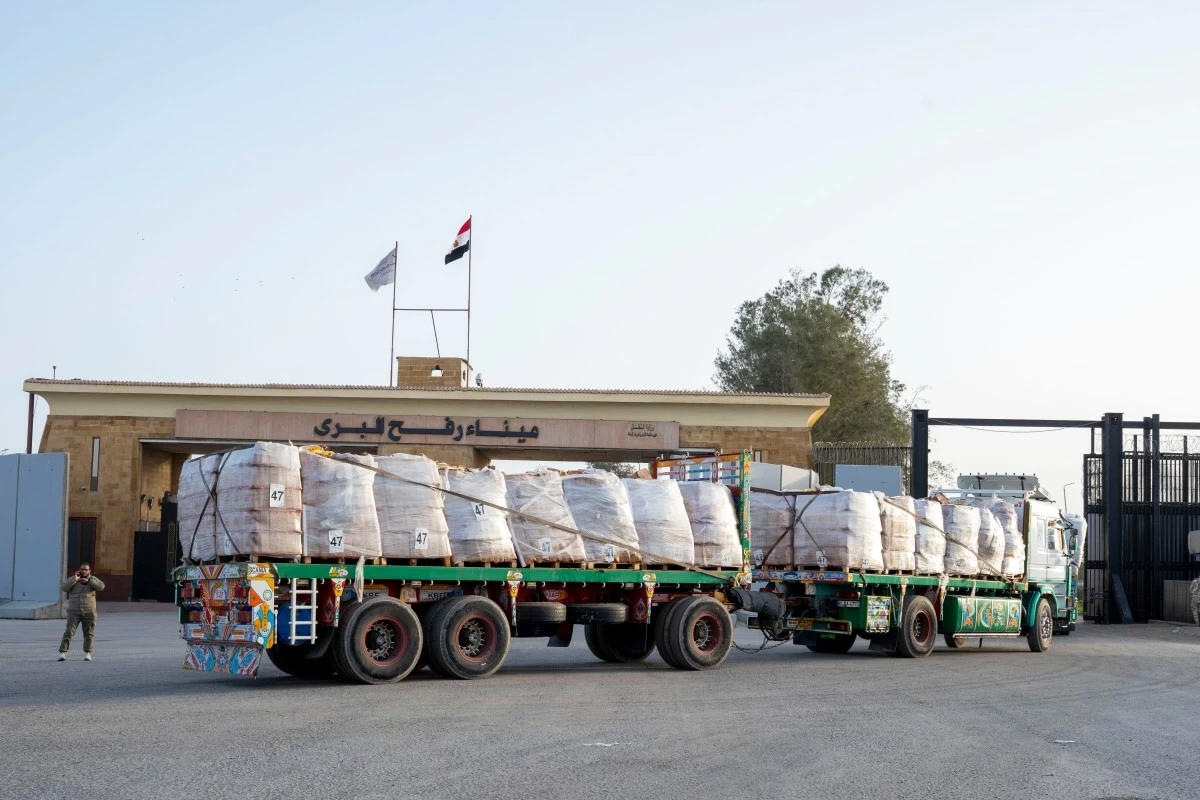
A truck enters the Egyptian gate of the Rafah crossing, heading for inspection by Israeli authorities before entering the Gaza Strip, Tuesday, Jan. 27, 2026. (AP Photo/Mohamed Arafat)
COGAT, the Israeli military body in charge of coordinating aid to Gaza, said in a statement that starting on Sunday a "limited movement of people only" would be allowed through the Rafah crossing, Gaza's main gateway to the outside world.
The announcement followed statements from Israeli Prime Minister Benjamin Netanyahu and Ali Shaath, newly appointed to head the Palestinian administrative committee governing Gaza's daily affairs, that it would likely open soon.
COGAT said both Israel and Egypt will vet individuals for exit and entry through the crossing, which will be supervised by European Union border patrol agents. In addition to screenings at the crossing, Palestinians leaving and returning will be screened by Israel in the adjacent corridor, which remains under Israeli military control.
The crossing has been under a near complete closure since Israel seized it in May 2024, saying the step was part of a strategy to halt cross-border arms smuggling by Hamas. It was briefly opened for the evacuation of medical patients during a short-lived ceasefire in early 2025.
Israel had resisted reopening the crossing, but the recovery of the remains of the last hostage in Gaza on Monday cleared the way to move forward.
A day later, Netanyahu said the crossing would soon open in a limited and controlled fashion.
An Israeli official who spoke on condition of anonymity in accordance with policy told The Associated Press that dozens of Palestinians would initially be allowed through each way, starting with medical evacuees and Palestinians who fled during the war.
They said 50 medical evacuees would be permitted to exit, and 50 returnees permitted to enter. It remains unclear if the medical evacuees will be accompanied by escorts like caretakers as they have been other times throughout the war.
Thousands of Palestinians inside Gaza are trying to leave the war-battered territory, while many others who fled the territory during the heaviest fighting say they want to return home. Egypt alone is hosting tens of thousands of Palestinians from Gaza.
Roughly 20,000 sick and wounded Palestinians need treatment outside Gaza, according to the territory's health ministry. In the past, those prioritized for evacuation have been mostly children, cancer patients and people suffering from physical trauma. Most received treatment in Egypt.
At least 30,000 Palestinians have registered with the Palestinian Embassy in Cairo for return to Gaza, according to an embassy official, speaking on condition of anonymity because details of the reopening remain under discussion.
The reopening is one of the first steps in the second phase of last year's U.S.-brokered ceasefire agreement, which includes challenging issues ranging from demilitarizing Gaza to putting in place an alternative government to oversee rebuilding the mostly destroyed enclave.
Gaza's health system was decimated in the war, rendering advanced surgical procedures out of reach. According to the health ministry, more than 18,000 Palestinian patients are wounded and require treatment abroad.
Before the war, Rafah faced heavy restrictions, yet was still the main crossing for people moving in and out of Gaza, while also handling trade between Egypt and the territory.
In 2022, the United Nations recorded more than 133,000 entries and 144,000 exits through Rafah, though many involved the same people crossing multiple times. Egyptian authorities allowed imports on 150 days of the year, and more than 32,000 trucks of goods entered.
Although Gaza has four other border crossings, the rest are shared with Israel, and only Rafah links the territory with another country.
Netanyahu said this week that Israel's focus is on disarming Hamas and destroying its remaining tunnels. Without these steps, he said that there would be no reconstruction in Gaza, a stance that could make Israel's control over Rafah a key point of leverage.

Related Tags

World news
ADVERTISEMENT
.most-popular .layout-ratio{ padding-bottom: 79.13%; } @media (min-width: 768px) and (max-width: 1024px) { .widget-title { font-size: 15px !important; } }

{{ articles_filter_1561_widget.title }}

.most-popular .layout-ratio{ padding-bottom: 79.13%; } @media (min-width: 768px) and (max-width: 1024px) { .widget-title { font-size: 15px !important; } }

{{ articles_filter_1562_widget.title }}

.most-popular .layout-ratio{ padding-bottom: 79.13%; } @media (min-width: 768px) and (max-width: 1024px) { .widget-title { font-size: 15px !important; } }

{{ articles_filter_1563_widget.title }}

{{ articles_filter_1564_widget.title }}

.mb-article-details { position: relative; } .mb-article-details .article-body-preview, .mb-article-details .article-body-summary{ font-size: 17px; line-height: 30px; font-family: "Libre Caslon Text", serif; color: #000; } .mb-article-details .article-body-preview iframe , .mb-article-details .article-body-summary iframe{ width: 100%; margin: auto; } .read-more-background { background: linear-gradient(180deg, color(display-p3 1.000 1.000 1.000 / 0) 13.75%, color(display-p3 1.000 1.000 1.000 / 0.8) 30.79%, color(display-p3 1.000 1.000 1.000) 72.5%); position: absolute; height: 200px; width: 100%; bottom: 0; display: flex; justify-content: center; align-items: center; padding: 0; } .read-more-background a{ color: #000; } .read-more-btn { padding: 17px 45px; font-family: Inter; font-weight: 700; font-size: 18px; line-height: 16px; text-align: center; vertical-align: middle; border: 1px solid black; background-color: white; } .hidden { display: none; }
function initializeAllSwipers() { // Get all hidden inputs with cms_article_id document.querySelectorAll('[id^="cms_article_id_"]').forEach(function (input) { const cmsArticleId = input.value; const articleSelector = '#article-' + cmsArticleId + ' .body_images'; const swiperElement = document.querySelector(articleSelector); if (swiperElement && !swiperElement.classList.contains('swiper-initialized')) { new Swiper(articleSelector, { loop: true, pagination: false, navigation: { nextEl: '#article-' + cmsArticleId + ' .swiper-button-next', prevEl: '#article-' + cmsArticleId + ' .swiper-button-prev', }, }); } }); } setTimeout(initializeAllSwipers, 3000); const intersectionObserver = new IntersectionObserver( (entries) => { entries.forEach((entry) => { if (entry.isIntersecting) { const newUrl = entry.target.getAttribute("data-url"); if (newUrl) { history.pushState(null, null, newUrl); let article = entry.target; // Extract metadata const author = article.querySelector('.author-section').textContent.replace('By', '').trim(); const section = article.querySelector('.section-info ').textContent.replace(' ', ' '); const title = article.querySelector('.article-title h1').textContent; // Parse URL for Chartbeat path format const parsedUrl = new URL(newUrl, window.location.origin); const cleanUrl = parsedUrl.host + parsedUrl.pathname; // Update Chartbeat configuration if (typeof window._sf_async_config !== 'undefined') { window._sf_async_config.path = cleanUrl; window._sf_async_config.sections = section; window._sf_async_config.authors = author; } // Track virtual page view with Chartbeat if (typeof pSUPERFLY !== 'undefined' && typeof pSUPERFLY.virtualPage === 'function') { try { pSUPERFLY.virtualPage({ path: cleanUrl, title: title, sections: section, authors: author }); } catch (error) { console.error('ping error', error); } } // Optional: Update document title if (title && title !== document.title) { document.title = title; } } } }); }, { threshold: 0.1 } ); function showArticleBody(button) { const article = button.closest("article"); const summary = article.querySelector(".article-body-summary"); const body = article.querySelector(".article-body-preview"); const readMoreSection = article.querySelector(".read-more-background"); // Hide summary and read-more section summary.style.display = "none"; readMoreSection.style.display = "none"; // Show the full article body body.classList.remove("hidden"); } document.addEventListener("DOMContentLoaded", () => { let loadCount = 0; // Track how many times articles are loaded const offset = [1, 2, 3, 4, 5, 6, 7, 8, 9, 10]; // Offset values const currentUrl = window.location.pathname.substring(1); let isLoading = false; // Prevent multiple calls if (!currentUrl) { console.log("Current URL is invalid."); return; } const sentinel = document.getElementById("load-more-sentinel"); if (!sentinel) { console.log("Sentinel element not found."); return; } function isSentinelVisible() { const rect = sentinel.getBoundingClientRect(); return ( rect.top < window.innerHeight && rect.bottom >= 0 ); } function onScroll() { if (isLoading) return; if (isSentinelVisible()) { if (loadCount >= offset.length) { console.log("Maximum load attempts reached."); window.removeEventListener("scroll", onScroll); return; } isLoading = true; const currentOffset = offset[loadCount]; window.loadMoreItems().then(() => { let article = document.querySelector('#widget_1690 > div:nth-last-of-type(2) article'); intersectionObserver.observe(article) loadCount++; }).catch(error => { console.error("Error loading more items:", error); }).finally(() => { isLoading = false; }); } } window.addEventListener("scroll", onScroll); });

Sign up by email to receive news.