







How Jeremy de Leon is building science for everyone
Two years after being named a Manila Bulletin Newsmaker, the young engineer reflects on growth, credibility, and building innovation that reaches last-mile communities
Published Jan 30, 2026 01:59 pm


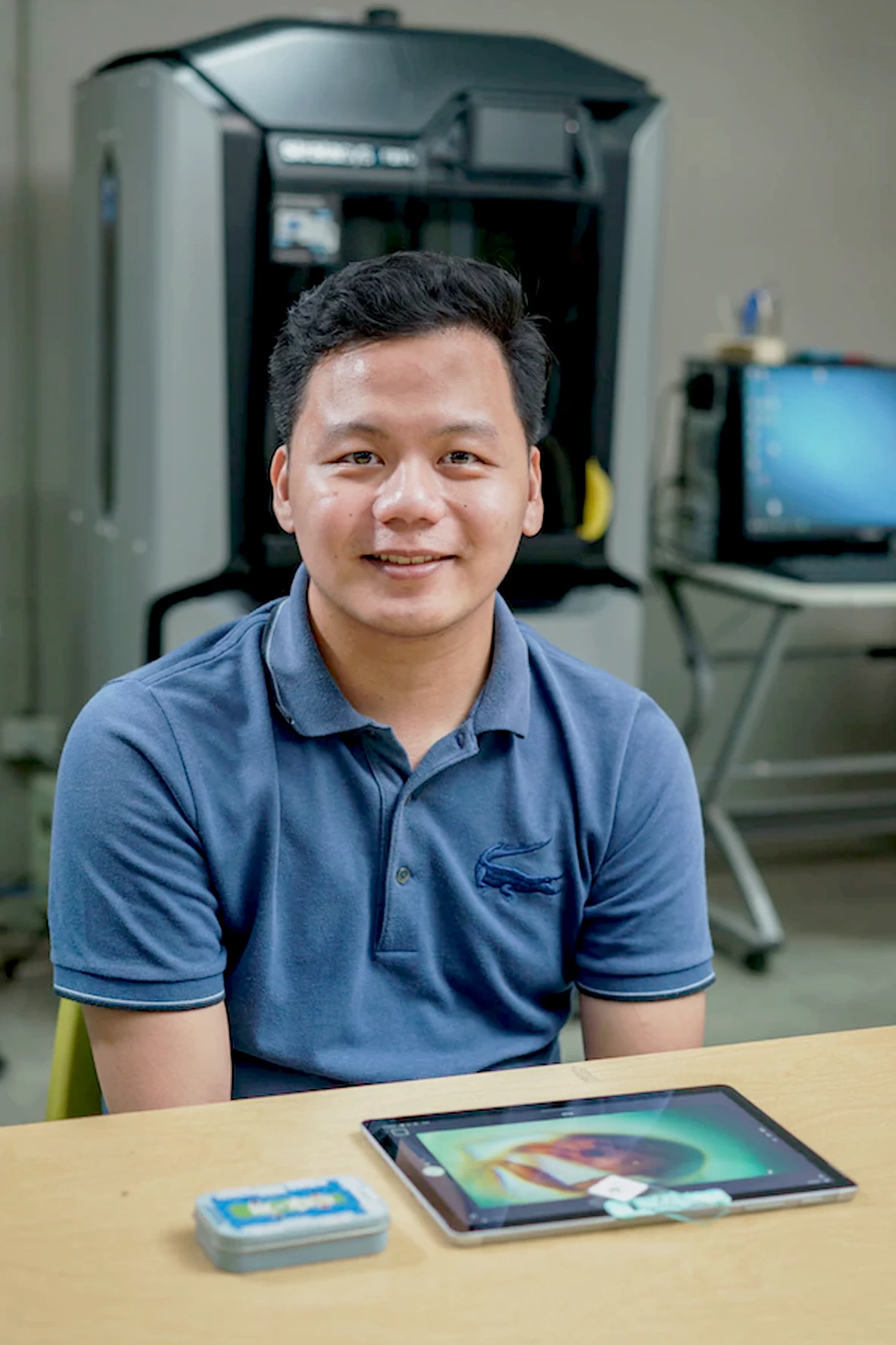
In 2023, Manila Bulletin introduced readers to Jeremy de Leon, then a fresh Manufacturing Engineering graduate from Mapua University, whose curiosity turned into a nationally recognized invention. That year, he won the Philippine leg of the James Dyson Award for Make-roscope, a portable keychain microscope that works with smartphones and tablets, giving students an affordable window into the microscopic world.
The invention soon found its way to public schools across the country, supported by the Department of Science and Technology (DOST) and distributed especially to communities with limited access to laboratory equipment. In 2024, Jeremy’s growing impact earned him another milestone when he was named one of Manila Bulletin’s Newsmakers of the Year.
The ripple effect
Two years later, the young inventor is no longer just tinkering with ideas. He is building a company, leading a team, and redefining what innovation looks like when rooted in everyday Filipino realities.
Jeremy admits that early on, his path seemed straightforward. Like many engineering graduates, he felt the pull toward an eight-to-five job, possibly even working abroad, a direction his parents initially hoped for. The recognition he received, first from the James Dyson Award and later from Manila Bulletin, changed that trajectory.
“A direction happened,” he shared, explaining how he moved into the startup and innovation space, where he now builds and experiments full-time. What once felt like a series of projects became a long-term venture. From searching for work online, he now finds himself hiring people to work with him.
The Newsmaker recognition also changed how institutions responded to him. Jeremy noticed it in the simplest detail, the bio-note he sends when invited to talks or meetings. Adding “Manila Bulletin Newsmaker of the Year” carried credibility.
“Conversations with schools, government agencies, and other institutions became easier, more open, and more collaborative,” he said in Filipino. “What was once seen as a youth invention featured in the news began to be treated as a serious solution to national problems. Seeing the microscope in action, and not just reading about it, solidified trust and opened doors that are often closed to young startups.”
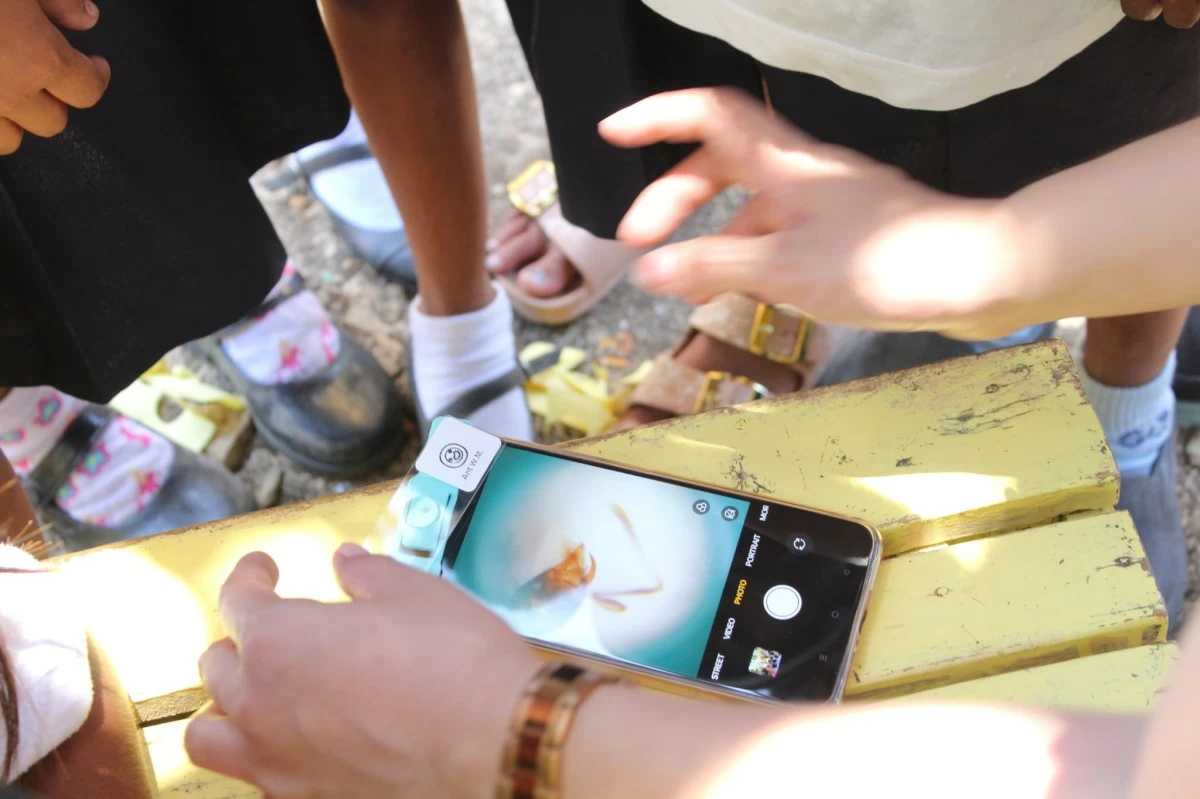
CLOSER LOOK An ant sample viewed using the Make-roscope
What’s next
Today, Jeremy’s work goes beyond hardware. While make-roscope remains central to his mission, he and his team are now developing an app focused on citizen science. The idea is to turn ordinary users into contributors to a greater scientific effort. Using the make-roscope and a smartphone, users can identify specimens through an app powered by artificial intelligence, save them in a digital collection, and contribute data that may indicate environmental or behavioral changes. A specimen spotted in one area could signal agricultural concerns, such as the presence of pests, with data potentially routed to relevant government agencies.
“It’s like Pokedex, but with real-world consequences,” he said. “Students, teachers, and everyday citizens can take part, while schools will have access to ready-made worksheets tailored to grade levels.”
The first version of the app is set to launch by December 2026. While talks with education partners are just beginning, funding for the app’s development has already been secured. For Jeremy, this marks a shift toward a system that connects education, government, and the private sector, showing that science is not just theory but something that contributes on a national scale.

Keeping himself grounded
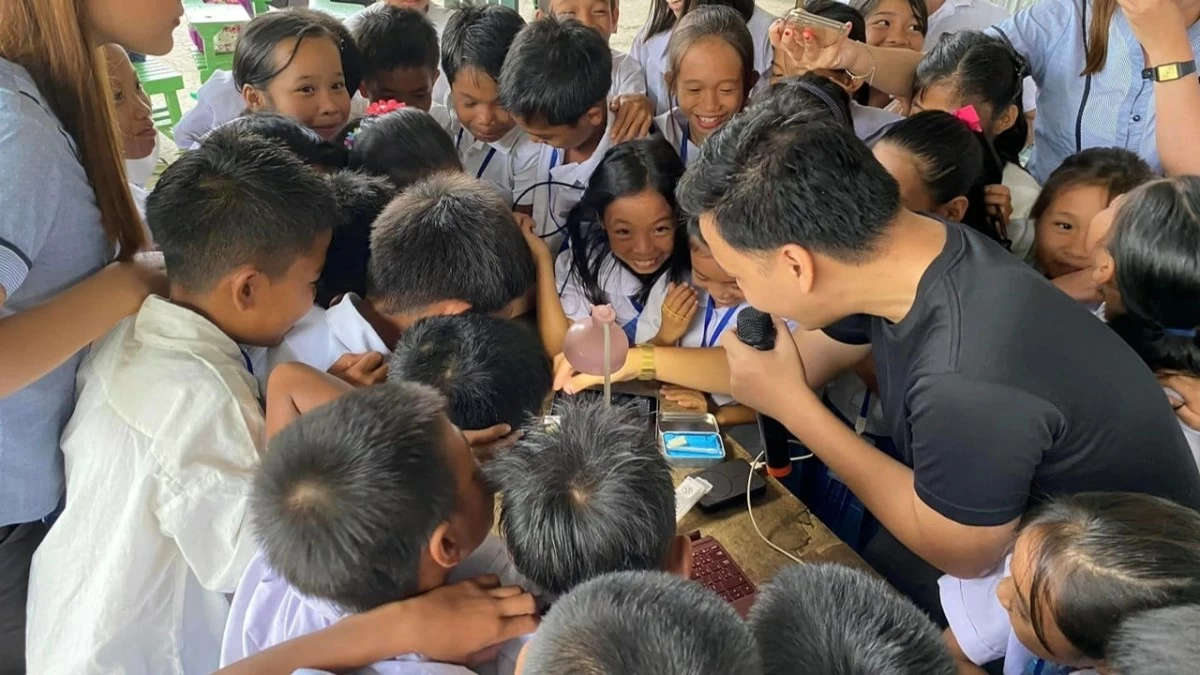
Despite his growing role as a startup founder, Jeremy keeps himself grounded by staying close to the communities he serves. His days are filled with emails, administrative work, and legwork that takes him to city halls and meetings. But what truly anchors him are his visits to last-mile schools. He recalls trekking for hours in Antique, traveling to Dumaguete, and taking boats to coastal communities just to deliver make-roscopes. These trips remind him that innovation must reach people who cannot easily access online platforms or marketplaces.
One moment stands out. In a remote school where students had never experienced hands-on experiments, Jeremy conducted a simple activity using the Make-roscope. A child approached him and said he wanted to become a doctor, a scientist. The moment felt both joyful and bittersweet. Inspiring a dream was fulfilling, yet it also underscored the challenges those children face. “Masarap sa pakiramdam, pero alam mo rin ’yung situation nila (It felt good, but we know the reality of their situation)," he said.
It reinforced Jeremy’s commitment to give back. To date, more than 12,000 make-roscopes have been distributed across different provinces, and he hopes to donate at least 1,000 pieces every year.
Looking back, the biggest lesson he learned is timing. No matter how prepared one is, some things only work when the moment is right. He also learned to worry less about what he cannot control, trusting that if a path is meant for him, help and opportunities will follow. For aspiring innovators, his advice is practical.
“Be mentally prepared, learn to adapt, and understand that innovation involves patience, permits, and persistence,” he said. “Impact grows over time, like a seed that needs care before it bears fruit.”
Jeremy may not yet claim he is fully on the right path, but he is choosing to treat it as one worth committing to. Each night, he sleeps knowing that his decisions affect more than just himself. For now, that seems reason enough to keep going.