ADVERTISEMENT

How Filipino art has changed over the years

Looking at how far local artistry has evolved

Published Jan 30, 2026 07:02 pm
Even before facing the grasp of colonization, the local artistry of Filipinos was rich with creativity and culture. Though traces of our pre-colonial past are not as abundant as we would like them to be, remnants of our history show how our creativity managed to shine even then. As The Manila Bulletin celebrates its 126th anniversary, let us look over just how far our local artistry has evolved over the years.
Pre-colonial times
Early artworks in the Philippines can be traced as far back as the Neolithic period. That’s about 2,000 years before the estimated birth of Jesus Christ. These were cave markings discovered along the boundaries of Angono and Binangonan in Rizal. It was found by chance in 1965 by National Artist Carlos “Botong” Francisco, after joining boy scouts on a field trip. He was resting with the scouts at a World War II (WWII) shelter when he noticed etched lines along the rock wall. Upon closer inspection, he discovered the etched lines formed shapes of humans.
It is also vital that we pay respect to our indigenous peoples, as they are the sole carriers of our ancient practices. Perhaps the most widespread of their artistic influence these days is the intricate patterns we find on their handwoven products. Aside from weaving, our early ancestors were also known for adorning their own bodies with art through tattoos. We’ve already seen how this practice gained a resurgence in popularity after the story of Kalinga mambabatok Apo Whang-od became widespread.
Under the colonizers
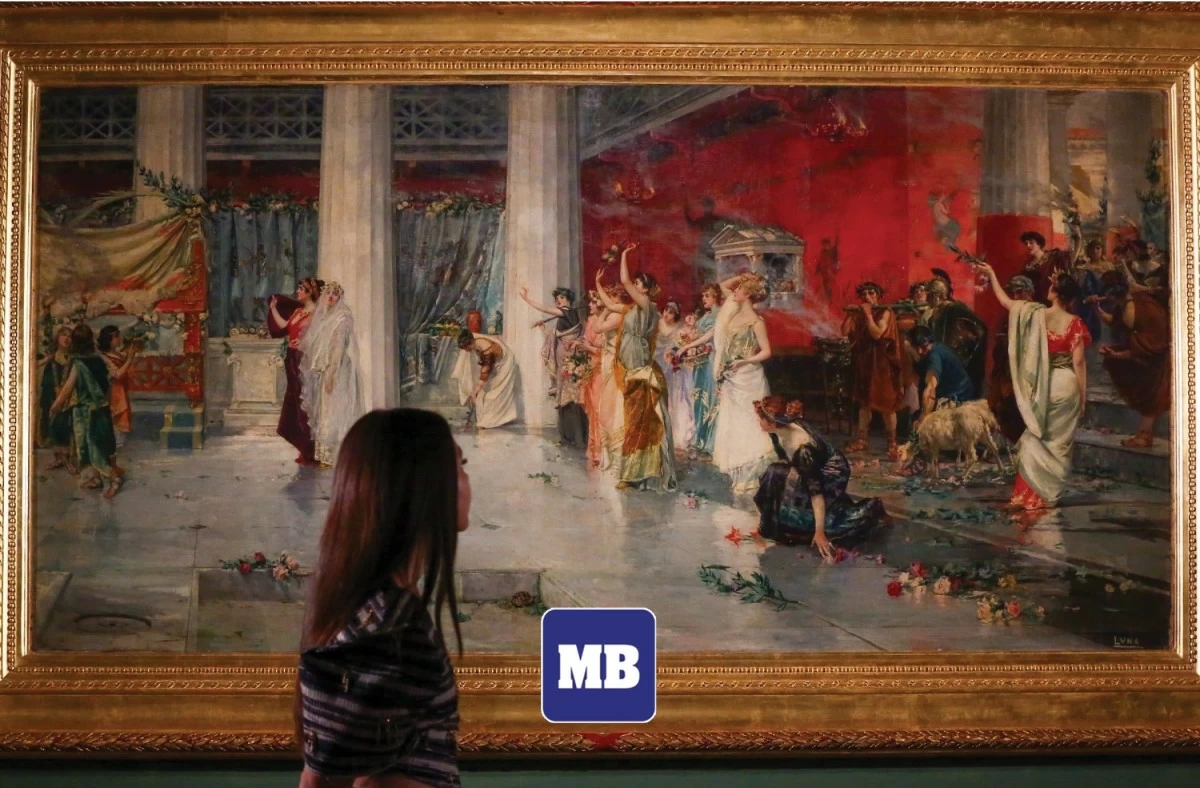
With the Spanish stronghold on our country for over 300 years, we found an influx of European and Catholic imagery inspiring our artists. There are several paintings from the 1800s with religious themes, mostly of the holy family, saints, and other religious figures. Even the churches we put up have unique looks, like the Gothic influence of San Sebastian Church, the coral stones that make up Barcelona’s St. Joseph Parish Church, or the all-steel Minor Basilica and Parish of San Sebastian, to name a few. Artists like José Honorato Lozano would also show us a glimpse of the daily Filipino’s life through his watercolor paintings done in his pioneering style of letras y figuras, where letters are formed using human figures, animals, and objects. As the injustices of colonization went on, the likes of Juan Luna and Dr. Jose Rizal showed how the illustrados of the time used the arts as a way to show just how harshly treated we were. In Europe, Juan Luna’s famed “Spoliarium” depicted the grim display of gladiators’ remains being dragged on the floor. It won the gold prize at the Madrid Exposition in 1884, whilst fellow Filipino Félix Resurrección Hidalgo took home silver for his painting “Las Virgenes Cristianas Expuestas al Populacho (The Christian Virgins Exposed to the Populace).” Then, just a few years later, Rizal’s “Noli Me Tangere” and “El Filibusterismo” would be the works that helped inspire the formation of the Philippine Revolution.
After Spain handed us over to the US, there was a craving for new types of artworks that strayed away from the abundant Spanish influence at the time. For those present in the 1900s, it was an exciting time as Filipino artists started to form unique styles to stand out from one another. Imagine being around the likes of Fernando Amorsolo and those who made up the famed 13 Modern Artists (Arsenio Capili, Bonifacio Cristobal, Demetrio Diego, Victorio Edades, Carlos “Botong” Francisco, Cesar Legaspi, Diosdado Lorenzo, Anita Magsaysay-Ho, Vicente Manansala, Galo Ocampo, Hernando “H.R.” Ocampo, Jose Pardo, and Ricarte Puruganan). These artists helped solidify the Philippine art scene, making waves through their creativity and challenging the norm with their unique styles.
Making way for the modern Filipino artist
Fast forward to today, we live in a time where anyone can create as they please with so many tools readily available. There are so many exciting genres and art movements to take inspiration from when creating new works. Several spaces, like The Manila Bulletin’s own HATCH series and Sketchfest contests, showcase the unlimited potential of local artists. We also have books focusing on artists, such as the “Filipino Artists in their Studios” series, created with the help of photojournalist Pinggot Zulueta. Cemented as well are the stories of modern contemporary artists through “The Manila Bulletin Compendium,” an art book series focusing on the lives of Filipino artists. Its inaugural edition starts with the story of Roy Veneracion, a key advocate of aesthetic synchronism—a philosophy that blends diverse artistic, cultural, and historical elements through fearless experimentation. Even with the looming threat of generative artificial intelligence (AI) sullying creative spaces, there are still many skilled Filipino creatives who aren’t afraid to pick up a pencil and imagine endless possibilities. And as we witness the new era of Filipino artists taking their step forward, we hope to cement their stories on our pages.

Related Tags

MB126 Arts and Culture
ADVERTISEMENT
.most-popular .layout-ratio{ padding-bottom: 79.13%; } @media (min-width: 768px) and (max-width: 1024px) { .widget-title { font-size: 15px !important; } }

{{ articles_filter_1561_widget.title }}

.most-popular .layout-ratio{ padding-bottom: 79.13%; } @media (min-width: 768px) and (max-width: 1024px) { .widget-title { font-size: 15px !important; } }

{{ articles_filter_1562_widget.title }}

.most-popular .layout-ratio{ padding-bottom: 79.13%; } @media (min-width: 768px) and (max-width: 1024px) { .widget-title { font-size: 15px !important; } }

{{ articles_filter_1563_widget.title }}

{{ articles_filter_1564_widget.title }}

.mb-article-details { position: relative; } .mb-article-details .article-body-preview, .mb-article-details .article-body-summary{ font-size: 17px; line-height: 30px; font-family: "Libre Caslon Text", serif; color: #000; } .mb-article-details .article-body-preview iframe , .mb-article-details .article-body-summary iframe{ width: 100%; margin: auto; } .read-more-background { background: linear-gradient(180deg, color(display-p3 1.000 1.000 1.000 / 0) 13.75%, color(display-p3 1.000 1.000 1.000 / 0.8) 30.79%, color(display-p3 1.000 1.000 1.000) 72.5%); position: absolute; height: 200px; width: 100%; bottom: 0; display: flex; justify-content: center; align-items: center; padding: 0; } .read-more-background a{ color: #000; } .read-more-btn { padding: 17px 45px; font-family: Inter; font-weight: 700; font-size: 18px; line-height: 16px; text-align: center; vertical-align: middle; border: 1px solid black; background-color: white; } .hidden { display: none; }
function initializeAllSwipers() { // Get all hidden inputs with cms_article_id document.querySelectorAll('[id^="cms_article_id_"]').forEach(function (input) { const cmsArticleId = input.value; const articleSelector = '#article-' + cmsArticleId + ' .body_images'; const swiperElement = document.querySelector(articleSelector); if (swiperElement && !swiperElement.classList.contains('swiper-initialized')) { new Swiper(articleSelector, { loop: true, pagination: false, navigation: { nextEl: '#article-' + cmsArticleId + ' .swiper-button-next', prevEl: '#article-' + cmsArticleId + ' .swiper-button-prev', }, }); } }); } setTimeout(initializeAllSwipers, 3000); const intersectionObserver = new IntersectionObserver( (entries) => { entries.forEach((entry) => { if (entry.isIntersecting) { const newUrl = entry.target.getAttribute("data-url"); if (newUrl) { history.pushState(null, null, newUrl); let article = entry.target; // Extract metadata const author = article.querySelector('.author-section').textContent.replace('By', '').trim(); const section = article.querySelector('.section-info ').textContent.replace(' ', ' '); const title = article.querySelector('.article-title h1').textContent; // Parse URL for Chartbeat path format const parsedUrl = new URL(newUrl, window.location.origin); const cleanUrl = parsedUrl.host + parsedUrl.pathname; // Update Chartbeat configuration if (typeof window._sf_async_config !== 'undefined') { window._sf_async_config.path = cleanUrl; window._sf_async_config.sections = section; window._sf_async_config.authors = author; } // Track virtual page view with Chartbeat if (typeof pSUPERFLY !== 'undefined' && typeof pSUPERFLY.virtualPage === 'function') { try { pSUPERFLY.virtualPage({ path: cleanUrl, title: title, sections: section, authors: author }); } catch (error) { console.error('ping error', error); } } // Optional: Update document title if (title && title !== document.title) { document.title = title; } } } }); }, { threshold: 0.1 } ); function showArticleBody(button) { const article = button.closest("article"); const summary = article.querySelector(".article-body-summary"); const body = article.querySelector(".article-body-preview"); const readMoreSection = article.querySelector(".read-more-background"); // Hide summary and read-more section summary.style.display = "none"; readMoreSection.style.display = "none"; // Show the full article body body.classList.remove("hidden"); } document.addEventListener("DOMContentLoaded", () => { let loadCount = 0; // Track how many times articles are loaded const offset = [1, 2, 3, 4, 5, 6, 7, 8, 9, 10]; // Offset values const currentUrl = window.location.pathname.substring(1); let isLoading = false; // Prevent multiple calls if (!currentUrl) { console.log("Current URL is invalid."); return; } const sentinel = document.getElementById("load-more-sentinel"); if (!sentinel) { console.log("Sentinel element not found."); return; } function isSentinelVisible() { const rect = sentinel.getBoundingClientRect(); return ( rect.top < window.innerHeight && rect.bottom >= 0 ); } function onScroll() { if (isLoading) return; if (isSentinelVisible()) { if (loadCount >= offset.length) { console.log("Maximum load attempts reached."); window.removeEventListener("scroll", onScroll); return; } isLoading = true; const currentOffset = offset[loadCount]; window.loadMoreItems().then(() => { let article = document.querySelector('#widget_1690 > div:nth-last-of-type(2) article'); intersectionObserver.observe(article) loadCount++; }).catch(error => { console.error("Error loading more items:", error); }).finally(() => { isLoading = false; }); } } window.addEventListener("scroll", onScroll); });

Sign up by email to receive news.