







DA extends rice emergency to keep retail prices stable
Published Jan 30, 2026 02:22 pm


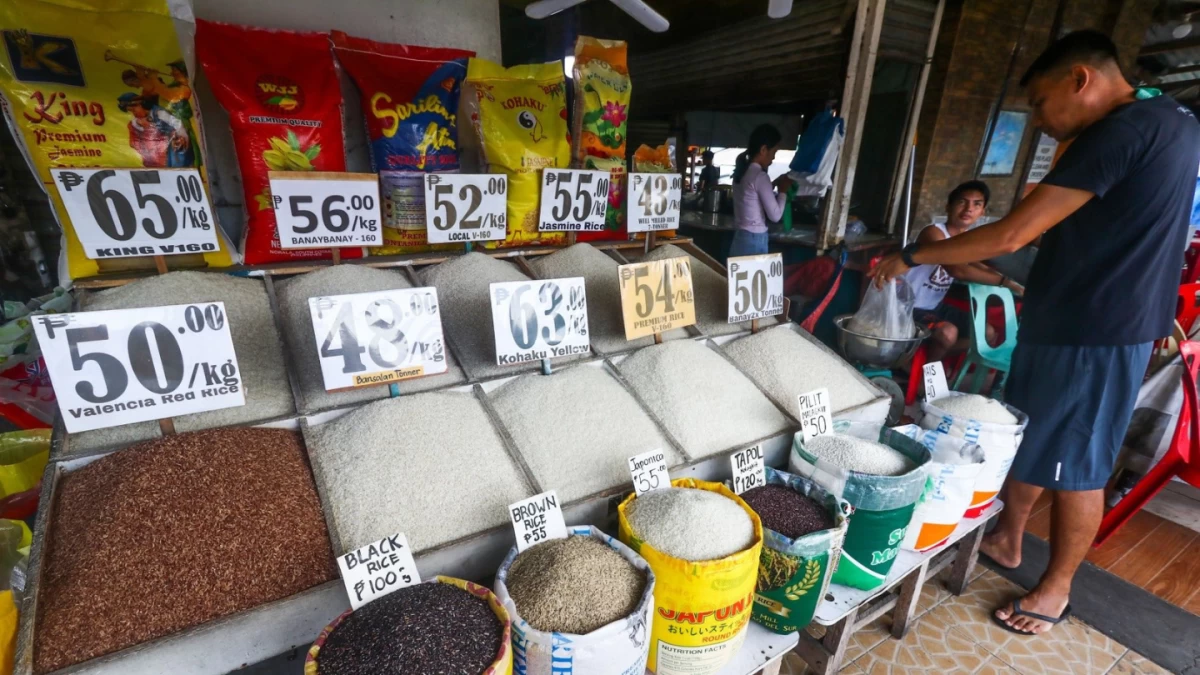
Nearly a year after its declaration, the Department of Agriculture (DA) is maintaining the nationwide food security emergency on rice to keep rice prices stable.
“As of the moment, while the RICE Act is not yet in place, I think it should remain in effect,” Agriculture Secretary Francisco Tiu Laurel said in a chance interview on Friday, Jan. 30.
“We need to carefully manage our rice supply in relation to supply and demand,” he added.
Tiu Laurel is referring to the Rice Industry and Consumer Empowerment bill, or the proposed RICE Act, which seeks to reinstate the powers of the National Food Authority (NFA).
The legislative measure, authored by former House Speaker and Leyte 1st district Rep. Martin Romualdez, is still pending the approval of Congress.
The RICE Act is yet another amendment to the Rice Tariffication Law (RTL) aimed at restoring the NFA’s capability to intervene in the rice market.
Under the RTL and its subsequent amendment, the grains agency has been reduced to buffer-stocking and purchasing rice from farmers for emergency use.
Through the RICE Act, the NFA will regain its authority to register and license grain warehouses, conduct inspections, and sell rice directly to the public.
Acting on the recommendations of the National Price Coordinating Council (NPCC), the DA declared a food security emergency on rice on Feb. 3, prompted by an “extraordinary” hike in local retail prices of rice.
Through the emergency declaration, the NFA is allowed to release buffer stocks held by the National Food Authority (NFA) to stabilize prices and ensure that supply remains ample.
These stocks are distributed to the Kadiwa ng Pangulo (KNP) program, local government units (LGUs), and other government agencies.
This scheme paved the way for the implementation of the government’s ₱20-per-kilo rice program, which are sourced from NFA’s aging stocks.
The food security emergency also expands the NFA’s buying power as it offloads stocks from its warehouses, allowing the grains agency to procure more rice from local farmers, improving farmgate prices in the process.
The NFA’s buying price for palay or unmilled rice ranges between ₱17 and ₱23 per kilo for wet palay and ₱23 to ₱30 per kilo for clean and dry palay.
As of Jan. 29, market monitoring in Metro Manila shows regular milled rice averaging ₱40.22 per kilo, well-milled rice at ₱46.30 per kilo, and premium rice at ₱52.72 per kilo.