






Manila Bulletin
 Philippines
National
'This isn't warmongering': Khonghun justifies Pinoys' negative view of China
Philippines
National
'This isn't warmongering': Khonghun justifies Pinoys' negative view of China
Philippines
National
'This isn't warmongering': Khonghun justifies Pinoys' negative view of China
'This isn't warmongering': Khonghun justifies Pinoys' negative view of China
Published Jan 29, 2026 11:57 pm


At A Glance
- "Defending our sovereign rights is not warmongering." Thus, said House Deputy Speaker Zambales 1st district Rep. Jay Khonghun as he justified the results of a recent survey which indicated that Filipinos perceived China as the country's greatest external threat.
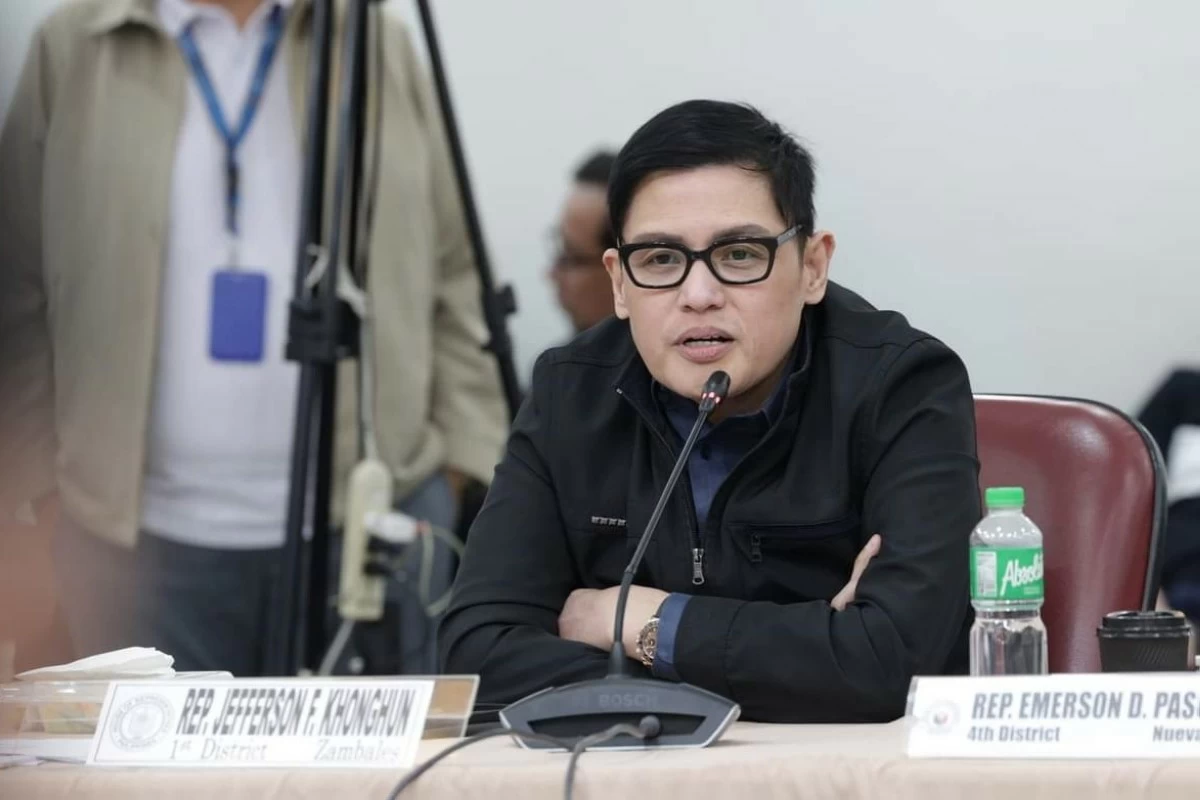
Zambales 1st district Rep. Jay Khonghun (PPAB)
“Defending our sovereign rights is not warmongering."
Thus, said House Deputy Speaker Zambales 1st district Rep. Jay Khonghun as he justified the results of a recent survey which indicated that Filipinos perceived China as the country’s greatest external threat.
“The numbers are very clear. This is no longer a fringe view or an elite position. When a strong majority of Filipinos express distrust and see China as the country’s biggest threat, leaders have a duty to listen and act responsibly,” Khonghun said in a statement on Thursday, Jan. 29.
He pointed to the latest Tugon ng Masa (TNM) nationwide survey conducted by OCTA Research. The poll results found that only 13 percent of adult Filipinos believe the Philippines should trust China.
The survey results, released as a public service and not commissioned by any group, also showed that 79 percent of adult Filipinos view China as the Philippines’ greatest threat, up from 74 percent in July 2025. Russia and the United States (US) trailed far behind at 5 percent and 4 percent, respectively.
“For me, this is democracy speaking. Defending our sovereign rights is not warmongering. It is responding to what the Filipino people themselves are saying,” said Khonghun, whose province faces the West Philippine Sea (WPS).
According to the deputy speaker, the poll results affirm President Marcos' strong and consistent stance in defending Philippine sovereignty in the WPS.
Last Monday, Presidential Communications Office (PCO) Undersecretary Claire Castro strssed that President Marcos was standing firmly behind Philippine officials im defending the country’s rights in the WPS amid China’s escalating public attacks on Filipinos who speak out against Beijing’s illegal activities.
Castro said the Chief Executive had been unequivocal in his directive: the Philippines will continue to defend what is rightfully its own and will not yield “even an inch” of the country’s territory.
Khonghun says the issue goes beyond geopolitics and has real consequences for ordinary Filipinos, particularly in terms of food security.
“When our fishermen are harassed or prevented from fishing in our own waters, that loss eventually reaches the dining table. Reduced catch means higher prices and fewer choices for Filipino families. This is why the WPS matters to everyday life," he explained.
Administration critics have framed any kind of pushback from the Philippine government on the WPS issue as seeking hostilities with China--something that the Zambales solon rejected.
Regionally speaking, distrust of China remained consistently high, ranging from 56 percent to 63 percent, with the highest levels recorded in Balance Luzon and the National Capital Region (NCR). Trust levels varied widely, from zero in Caraga to 31 percent in the Davao Region.
Across socioeconomic classes, distrust was highest among Class E respondents at 70 percent, compared with 61 percent among Class ABC and 59 percent among Class D. OCTA also noted that skepticism toward China cut across age groups and educational levels, with distrust more pronounced among Filipinos aged 45 and above.
“These findings should inform our national conversation. They show that Filipinos across regions and income groups are united in their concern. Our policies must reflect that unity while remaining grounded in law, diplomacy, and the protection of livelihoods,” Khonghun said.