






Manila Bulletin
 Philippines
National
Ridon: SC ruling 'restores clarity' to House's role in impeachment process
Philippines
National
Ridon: SC ruling 'restores clarity' to House's role in impeachment process
Philippines
National
Ridon: SC ruling 'restores clarity' to House's role in impeachment process
Ridon: SC ruling 'restores clarity' to House's role in impeachment process
Published Jan 29, 2026 06:53 pm


At A Glance
- Bicol Saro Party-list Rep. Terry Ridon says the Supreme Court (SC) En Banc's final ruling on the 19th Congress impeachment case against Vice President Sara Duterte has "restore[d] clarity to the House's constitutional role in impeachment".
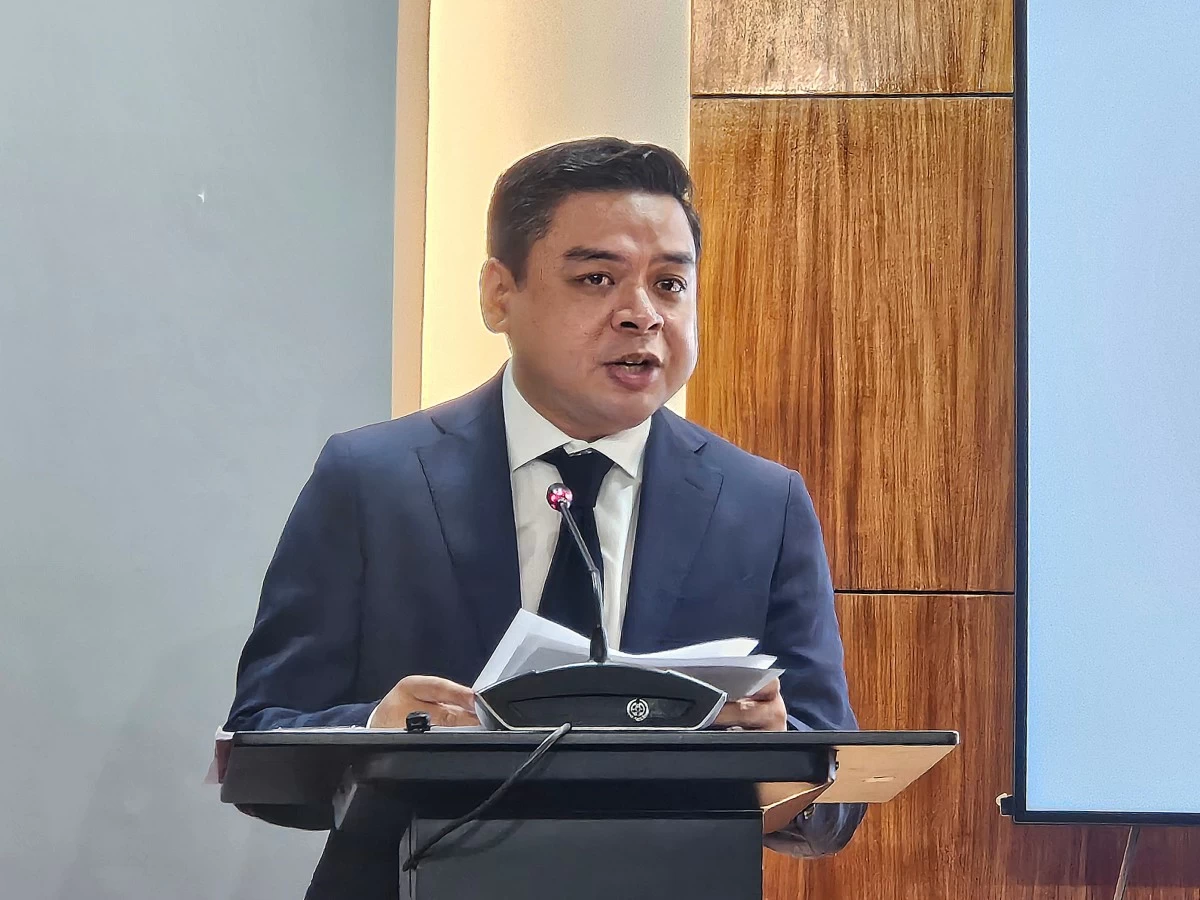
Bicol Saro Party-list Rep. Terry Ridon (Ellson Quismorio/ MANILA BULLETIN)
Bicol Saro Party-list Rep. Terry Ridon says the Supreme Court (SC) En Banc's final ruling on the 19th Congress impeachment case against Vice President Sara Duterte has "restore[d] clarity to the House’s constitutional role in impeachment".
This, even as the SC denied with finality on Thursday, Jan. 29 the House of Representatives' motion for reconsideration (MR) against the high court's ruling last year that declared the articles of impeachment against the Vice President unconstitutional.
"This MR ruling restores clarity to the House’s constitutional role in impeachment," said Ridon, chairman of the Committee on Public Accounts.
"It recognizes that impeachment is a political and constitutional process entrusted to the legislature, and that the House must be allowed to evaluate complaints based on the evidence available to members, consistent with internal rules and the requirements set by the Constitution," he explained.
Some 19th Congress House members were rubbed the wrong way by the original SC ruling, since it was perceived to impose new, stringent requirements for impeachment not found in either the 1987 Constitution or House rules.
Alluding to the en banc decision on the MR on its prior ruling involving the House impeachment process, Ridon says the SC "has effectively abandoned the most restrictive due process requirements imposed in the original decision".
The lawyer-solon said that In its July 2025 ruling that struck down the 19th Congress impeachment complaint against Duterte, the SC required that the respondent be furnished copies of the draft articles of impeachment and be given an opportunity to respond as part of the House’s internal proceedings.
"In the MR decision, however, the court no longer requires that the respondent be furnished copies of the complaint or draft articles of impeachment, [or] that the respondent be given an opportunity to respond at this stage," Ridon said.
"Instead," Ridon continued, "The MR decision now lays down a more workable and constitutionally appropriate standard for the House, requiring that: 1.) The draft Articles of Impeachment and supporting evidence be provided to House members; 2.) The evidence must meet the required quantum of proof to establish the charges; and 3.) During plenary deliberations, the evidence must be made available to all House Members for their information and guidance in deciding on the complaint."
In February 2025, House members sought Vice President Duterte's impeachment via the so-called "fast track" mode wherein more than one-third of the plenary signed and adopted a complaint--including the articles of impeachment.
This mode skipped the holding of hearings by the Committee on Justice, which would have publicly discussed the arguments and grounds for the lady official's impeachment.
While awaiting the Senate impeachment trial, the SC ruled in favor of a petition from the Vice President's camp and declared the complaint unconstitutional in July 2025. The House filed a motion for reconsideration (MR), but this was ultimately defeated by the SC En Banc ruling Thursday.
"The House remains fully committed to ensuring that impeachment proceedings—when warranted—are grounded on facts, evidence, and constitutional principles," Ridon said.