







Return of the 'sick man': 2025 slowdown mirrors 1980s malaise
By Derco Rosal
Published Jan 29, 2026 03:55 pm


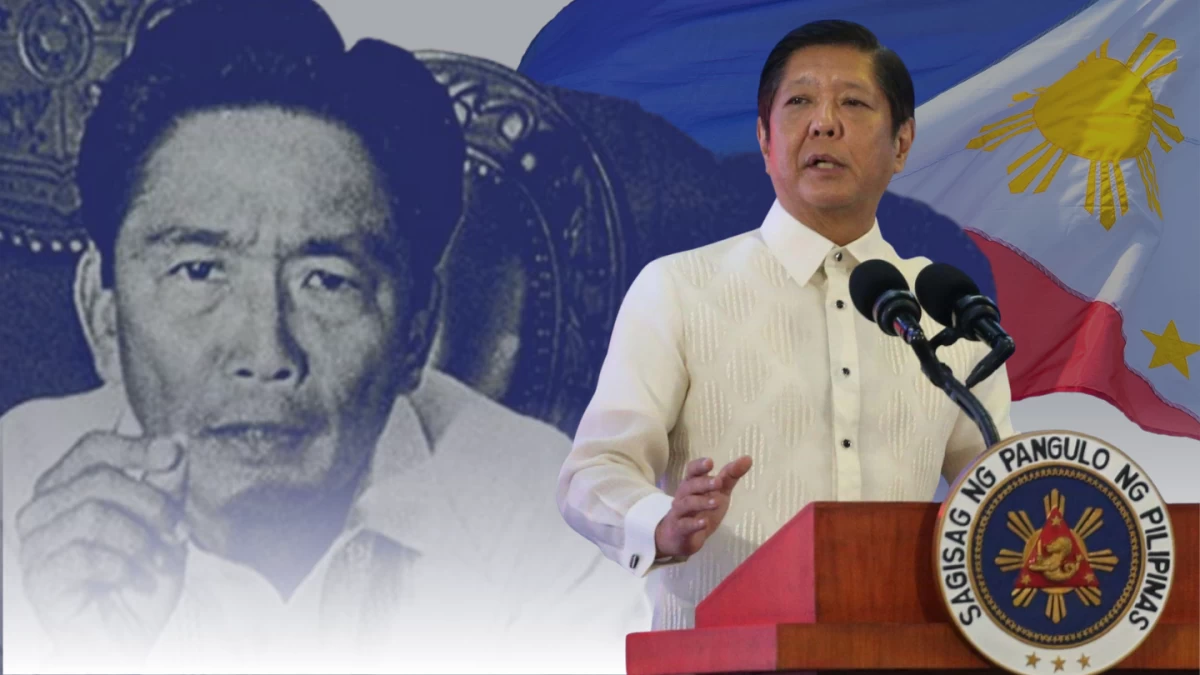
Marcos Jr. grapples with ‘sick man of Asia’ specter that haunted his father’s era.
The Philippine economy is confronting a familiar specter of stagnation as the administration of President Ferdinand R. Marcos Jr. grapples with a sharp slowdown, echoing the period of malaise that marked his father’s strongman rule decades ago.
Economic growth in the fourth quarter of 2025 tumbled to three percent, a figure that shocked policymakers and revived the “sick man of Asia” narrative. For the full year, output expansion averaged 4.4 percent, falling significantly short of the government’s minimum target of 5.5 percent.
Excluding the pandemic years, 2025 marked the weakest economic performance since 2011—a period of déjà vu recalling the early term of former President Benigno S. Aquino III, whose aggressive anti-corruption campaign similarly constrained fiscal spending.
Department of Economy, Planning, and Development (DEPDev) Secretary Arsenio M. Balisacan admitted on Thursday, Jan. 29, that the severity of the deceleration caught the government off guard.
“To be honest, I did not expect this sharp [moderation]. I expected that there would be a slowdown as a consequence of the measures that we are putting in place,” Balisacan told reporters, referring to ongoing reforms targeting systemic corruption.
The primary culprit appears to be a paralysis in state spending. In a Jan. 29 commentary, Salceda Research chair Joey Sarte Salceda noted that while a slowdown was anticipated, the reality was closer to a standstill.
“When the flood control issue blew up, the fiscal pipes did not just slow. They froze,” Salceda said.
According to Salceda, the Department of Public Works and Highways (DPWH)—normally the driver of infrastructure expansion—was hit by a major graft probe. This led public construction to plunge by more than a fourth in the third quarter of 2025, the steepest decline since 2011, before falling further by 10.1 percent in the fourth quarter.
Balisacan said the lackluster 2025 gross domestic product (GDP) growth could be blamed on several factors, including the adverse impact of recent typhoons and flooding, which halted business activity.
“Admittedly, the flood control corruption scandal also weighed on business and consumer confidence,” Balisacan noted.
Reyes Tacandong & Co. senior adviser Jonathan L. Ravelas said the economy was already losing steam even before the flood-control scandal erupted, a glaring red flag for businesses and investors.
Ravelas said the end of the artificial boost from “ghost projects” and the loss of confidence “just pushed us back to ‘sick man of Asia’ status.”
It bears recalling that the “sick man of Asia” label was first attached to the Philippines during the martial law regime of Ferdinand E. Marcos Sr. This unwanted reputation emerged following an economic collapse as the dictatorship waned in the mid-1980s.
The label was closely associated with crony capitalism, heavy reliance on foreign debt, and a balance-of-payments (BOP) crisis—raising questions over whether these vulnerabilities are resurfacing.
Private-sector economists believe inefficient government spending and a decline in investments weighed heavily on the Philippine economy.
“I think it’s clear that poor-quality public spending was behind this [deterioration],” said Emilio S. Neri Jr., senior vice president and lead economist at the Bank of the Philippine Islands (BPI).
Neri stressed that the anemic fourth-quarter performance stemmed from diminished private-sector confidence, driven largely by questionable governance and a lack of accountability.
Similarly, Rizal Commercial Banking Corp. (RCBC) chief economist Michael L. Ricafort pointed to tightened infrastructure spending amid the flood-control fiasco.
He also cited political uncertainties that dampened investor confidence, alongside global headwinds from trade tensions and protectionist measures.
Nicholas Antonio T. Mapa, chief economist at Metropolitan Bank & Trust Co. (Metrobank), highlighted household consumption, which slowed to 3.8 percent growth during the quarter—the weakest in one-and-a-half decades, or since the third quarter of 2010, when it stood at 2.6 percent.
“Shifts in sentiment can quickly influence spending rates. With the measures we are implementing, in coordination with the private sector, we aim to regain public and business confidence so that spending can rebound swiftly,” Balisacan said.
“You don’t have to wait several years for that to happen,” he added.
For Mapa, public investment was the main drag on the economy in the latter part of 2025, as construction activity contracted by more than two-fifths.
Likewise, Alvin Joseph A. Arogo, first vice president and chief economist at Philippine National Bank (PNB), pointed to the continued decline in public construction. He had forecast 3.2 percent growth for the fourth quarter, close to the actual print.
In addition to weaker construction activity, Arogo cited the tapering of government spending after the election, the easing of front-loading that had earlier boosted exports, and a dip in consumer confidence.
Vitals still unstable
This somber output performance has convinced private economists that the economy will continue to expand below its six-percent growth potential.
Neri said the risk of a below-potential print remains “pretty high” in 2026, adding that it would not surprise him if growth slips below five percent again. Balisacan has already lowered his 2026 growth assumption to five to six percent from a faster 5.5 to 6.5 percent.
Neri stressed that preventing further slippage would require firm rules to arrest conflicts of interest among public officials, alongside the efficient execution of a realigned budget “without the leakages that we saw in the last three years.”
“If anti-corruption measures and other priority reforms that further raise governance standards are taken seriously, these would be the missing and remaining catalysts that could improve investor sentiment,” Ricafort said.
Should catch-up government spending and ongoing anti-corruption and governance reforms succeed, Ricafort expects GDP growth to rebound to at least 5.3 percent in 2026.
While the national socioeconomic planner remains confident that 2026 will serve as the Philippines’ “rally point,” foreign and local think tanks remain cautious about growth reaching its full potential.
“Our leadership in the Association of Southeast Asian Nations (ASEAN) should be able to turn the corner and get the economy back on track as early as the second half of the second quarter of this year,” Balisacan said.
Still, think tank Capital Economics penciled in a 4.5-percent full-year expansion for 2026—short of both the six-percent potential and the consensus estimate of 5.3 percent.
“Authorities have pledged to restart infrastructure projects, which should help reverse some of the recent weakness in activity,” said Shivaan Tandon, Asia economist at Capital Economics. He added, however, that the economy may still accelerate at a slower pace than expected.
“We expect the economy to underperform consensus expectations in 2026,” Tandon said.
Meanwhile, Oxford Economics maintained its 5.4 percent growth forecast for 2026, banking on “resilient consumption and exports,” while warning that risks “remain heavily skewed to the downside,” said the think tank’s assistant economist Jun Hao Ng.
Philippine Institute for Development Studies (PIDS) senior research fellow John Paolo R. Rivera said that, at the current pace of data releases, growth may fall short of his 5.3-percent forecast.
“Should trust and confidence resume, 2026 growth could be pegged at five percent,” Rivera said, adding that he expects recovering private investment and still-benign inflation to help close the output gap this year.
“However, recent governance failures and episodes of capital flight have delayed this process by dampening risk-taking and amplifying uncertainty,” Rivera stressed.
Despite the government’s deliberate efforts to clean up the mess—including a Cabinet revamp—Salceda warned that growth should not be sacrificed while corruption is being addressed.
“Growth is a moral responsibility for the government of a developing country. The surgery must succeed. The tumor must be removed. The government has made sincere efforts. But we cannot let the patient bleed out on the operating table,” he said.