







Marcos: Act in unity, consistency in solving learning crisis
Published Jan 29, 2026 07:19 pm


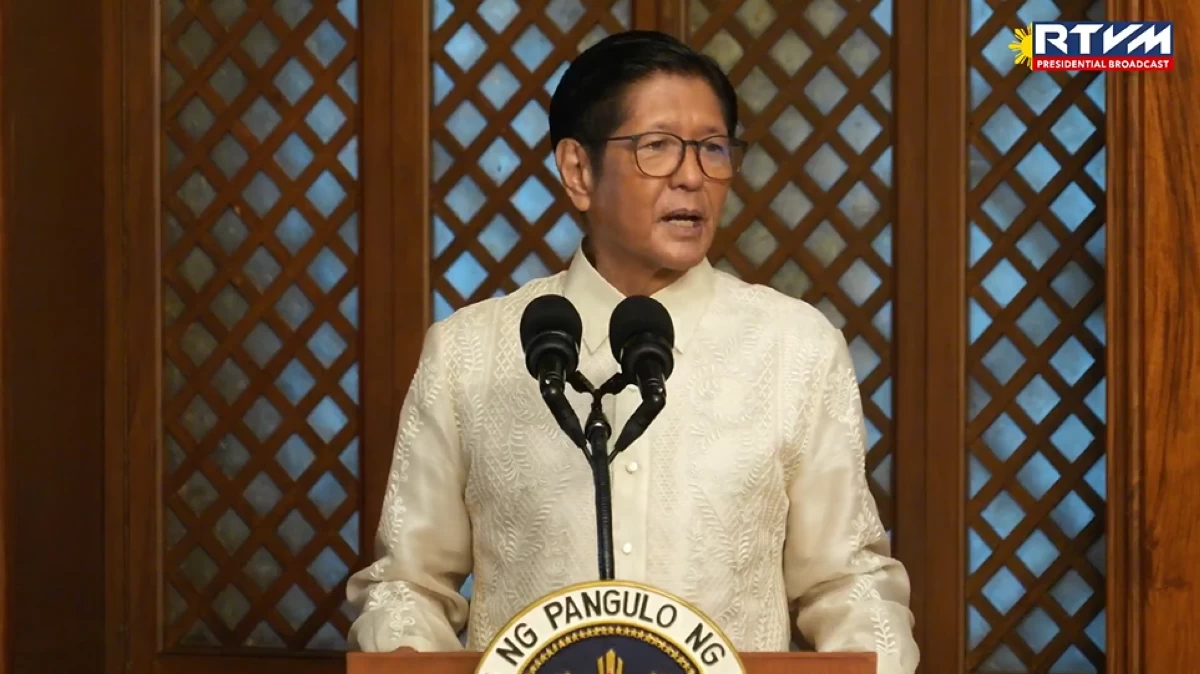
President Ferdinand R. Marcos Jr. (RTVM)
Addressing the country's educational crisis would require unity, determination, and consistency, President Marcos said.
The President, who personally delivered his speech for the first time in a week, received the final report detailing the three-year findings on the current state of Philippine education by the Second Congressional Commission on Education (EDCOM II) in a ceremonial submission at the Malacañan Palace on Thursday, Jan. 29.
He said he was receiving the report "with a great sense of urgency and responsibility" as it reveals where the government has fallen short and what it must do to improve the educational system.
"The report includes the NatPlan, which offers us a 10-year plan to address the learning crisis that can be solved if we act in unity, and with determination and with consistency," Marcos said.
"Ladies and gentlemen, this report shows us that we must think beyond the present, beyond my administration and current local leadership terms," Marcos added.
He stressed that the report named "Turning Point: A Decade of Necessary Reform" provides a clear picture of the learning crisis that the education system needs to overcome.
"It calls on government, educators, industries, and communities to improve our educational system into one that will prepare every Filipino to meet the challenges of our time," the President said.
Marcos further said that his administration has worked consistently with EDCOM II to coordinate and align the government’s reforms with their recommendations.
“With these initiatives, we will continue building on the progress that we have made and strengthening our efforts so that all Filipino learners receive the quality education that they deserve and that they rightly expect,” he said.
“Throughout these past years, we have focused much on our efforts on addressing learning gaps and the damage caused by the pandemic to our children’s education and the continuing cost that we are paying because of climate change,” he added.
The President cited the revision of the basic education curriculum to be learner-centered, skill-focused, and decongested.
To ensure that teachers are focused on implementing the new curriculum, the government has filled teaching and non-teaching positions and pursued the expanded career progression system, he added.
Marcos highlighted that this year’s national budget has the largest allocation for the education sector, amounting to P1.345 trillion, equivalent to 4.36 percent of the country’s gross domestic product.
Through this budget, Marcos said the government can hire more public school teachers to reduce their overall workload; implement learning recovery in reading, math and science; expand school-based feeding programs; and construct more classrooms.
He further said that the government is allotting more than P182 million in the 2026 budget for scholarships in master’s degrees for guidance counseling, psychology, and other specializations.
He also cited that the government has expanded access to Technical-Vocational Education and Training through scholarships.