






Manila Bulletin
 Philippines
Mindanao
Class, work suspensions expand in Central Mindanao following earthquakes
Philippines
Mindanao
Class, work suspensions expand in Central Mindanao following earthquakes
Philippines
Mindanao
Class, work suspensions expand in Central Mindanao following earthquakes
Class, work suspensions expand in Central Mindanao following earthquakes
Published Jan 29, 2026 04:55 pm


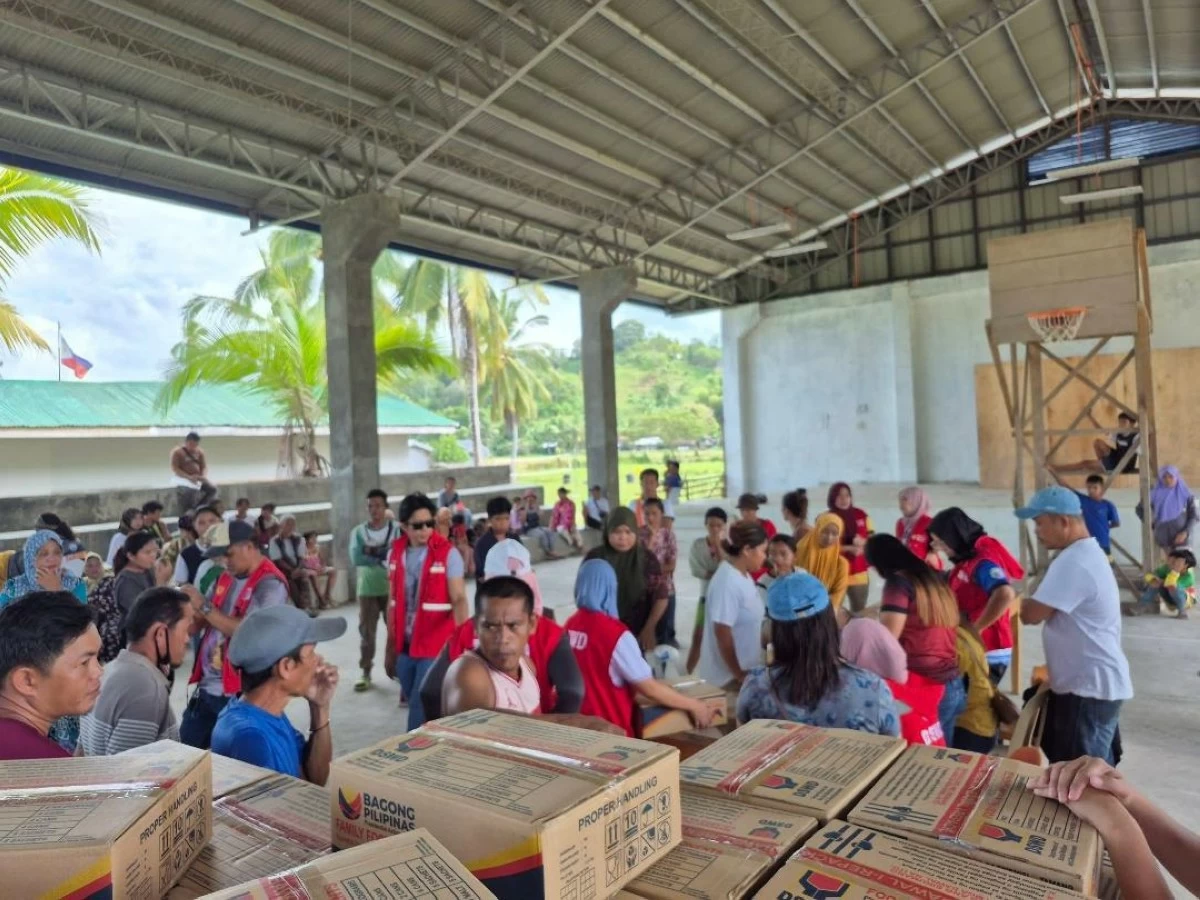
DISPLACED residents in Lebak, Sultan Kudarat receive food aid from the government. (DSWD-12)
DAVAO CITY – As earthquakes continue to rock many parts of Central Mindanao, class and work suspensions have expanded to several municipalities and provinces outside of Sultan Kudarat province which has been experiencing a swarm of earthquakes totaling 2,264 as of 7 a.m. Thursday, Jan. 29.
Sultan Kudarat Gov. Datu Pax Ali Mangudadatu ordered the suspension of classes and work in government offices in the coastal towns of Kalamansig, Lebak, and Palimbang following the magnitude-5.7 tremor that hit the province before dawn on Thursday.
Mangudadatu expanded the suspension of classes and work in the entire province following a magnitude-5.9 earthquake with epicenter 40 kilometers southwest of Kalamansig at 2:46 p.m. Wednesday and a shallow depth of four kilometers
The Philippine Institute of Volcanology and Seismology said both earthquakes were tectonic in origin.
“The provincial government assures the public that the situation is being closely monitored and managed with the highest level of readiness. All concerned offices are on heightened alert to safeguard the safety and welfare of our communities,” the governor said in a statement.
Kalamansig Mayor Ronan Eugene Garcia has ordered the preemptive evacuation of all residents in 10 coastal barangays of the municipality, citing the possible occurrence of a tsunami.
“These offshore seismic activities may result in strong ground shaking, aftershocks, sea disturbances, and possible tsunami events that may endanger lives, livelihoods, and properties,” he said in an executive order issued late Wednesday afternoon.
Following the earthquake on Wednesday, some towns in the neighboring provinces of Cotabato, South Cotabato, and Maguindanao del Sur that shares a boundary with Sultan Kudarat cancelled classes due to possible tsunami.
The Philippine Institute of Volcanology and Seismology has not issued any advisory indicating an imminent tsunami but thousands of residents in most coastal barangays have evacuated to higher grounds following the Wednesday earthquake.
“Our latest advisory reminded the public to duck, cover, and hold, and, in addition, be mindful of the damages to structures, in case of a strong earthquake. Residents of coastal communities should be watchful of the natural signs of a local tsunami, and evacuate if any one of these signs is experienced,” Phivolcs said in a media advisory.
Phivolcs said that it is well within the mandate or discretion of local government units to decide on matters related to response actions, such as evacuation, based on the local assessment and their preparedness protocol.
As of 7 a.m. Thursday, Phivolcs recorded 2,264 earthquakes off Kalamansig since Jan. 19. It added that 677 of them were plotted by monitoring stations, of which 84 were felt. Recorded magnitude ranges from 1.3 to 5.9.
In neighboring South Cotabato, the local government units of Koronadal City and the municipalities of Surallah, Polomolok, Norala, Banga, Tboli, and Lake Sebu and General Santos City have suspended face-to-face classes as a precautionary measure against possible hazards due to the quakes also felt in the province.
Chief Minister Abdulraof Macacua suspended work in Bangsamoro Autonomous Region in Muslim Mindanao (BARMM) agencies located in Cotabato City. Macacua, however, said work will continue for those involved in rescue, emergency, and health services, among other frontline offices.
Some of these class and work suspensions are until Saturday, Jan. 31.
The Department of Social Welfare and Development-Region 12 Disaster Response Management Division has activated its quick response teams, mobilizing personnel and resources to ensure the delivery of assistance to affected communities in the municipality of Kalamansig and neighboring towns.
DSWD-12 chief Loreto Cabaya Jr. said that as of Jan. 28, the earthquake has affected over 50,000 individuals in the towns of Kalamansig, Lebak, and Palimbang.
Cabaya said they have dispatched food aid for affected families, particularly those who are still in evacuation centers. He added further validation of affected communities is still ongoing. The DSWD has put up modular tents for affected families in evacuation centers in Kalamansig.