ADVERTISEMENT

Asia-Pacific airline traffic rose 9.4% in 2025 on regional demand

Published Jan 29, 2026 03:46 pm
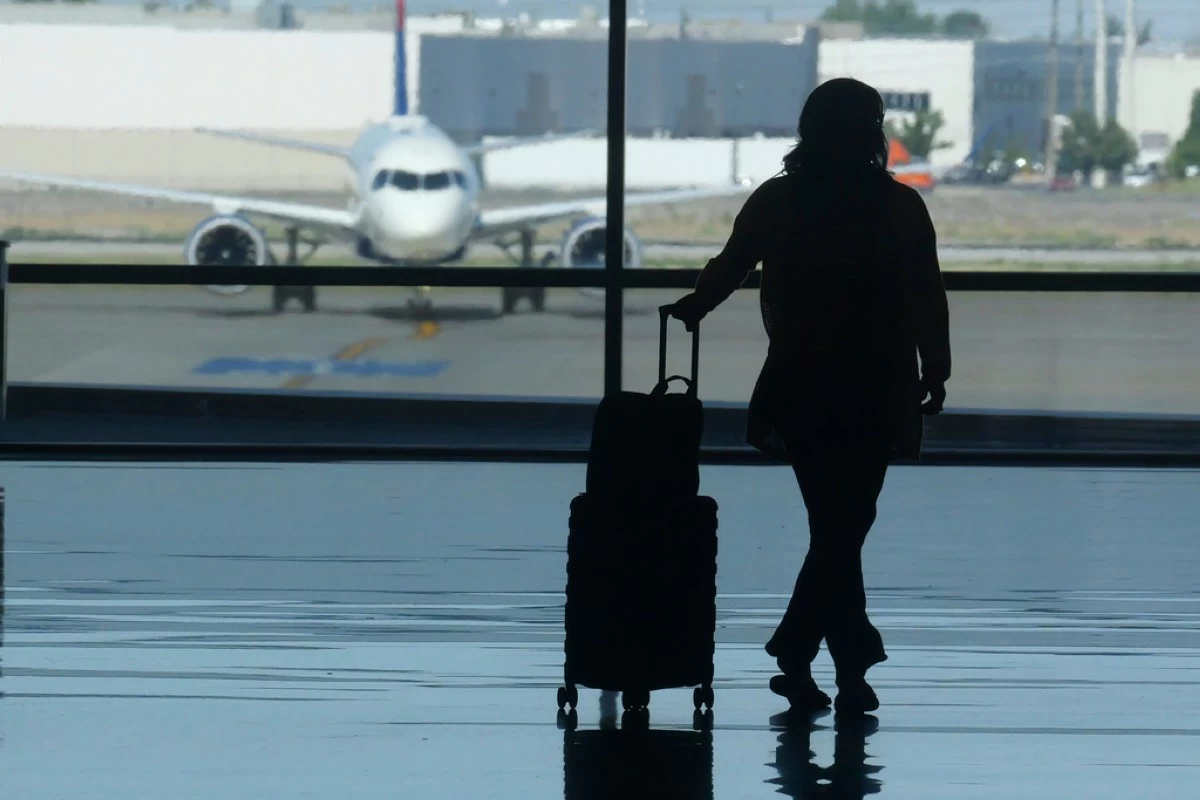
FILE - A traveler looks out at an airplane at Salt Lake City International Airport, in Salt Lake City, July 3, 2024. (AP Photo/Rick Bowmer, File)
Passenger volume across airlines in the Asia Pacific region rose by 9.4 percent in 2025 compared to the previous year, as air travel remained robust in a year marked by operational challenges.
Preliminary data from the Association of Asia-Pacific Airlines (AAPA) showed that the region’s airlines accommodated 390.47 million passengers last year, an improvement from the 357.08 million recorded in 2024.
Total demand, as measured by revenue passenger kilometers (RPK), registered an 11 percent increase last year.
AAPA attributed the increase to the strength of long-haul routes and the resiliency of intra-regional traffic, supported by regional economic growth.
Passenger load factor for the entire year averaged at a record 82.2 percent, increasing by 0.5 percentage point (ppt) from 81.7 percent in 2024.
The improvement in load factor indicates a higher share of booked seats relative to total capacity.
In December 2025 alone, Asia-Pacific carriers rose by 2.7 percent to 35.45 million passengers compared to 34.51 million passengers during the same month in the prior year.
Passenger load factor during the month settled at 82.8 percent, down from 82.9 percent during the year earlier.
“Asia Pacific carriers saw a year of strong growth in international passenger traffic, supported by robust demand across key markets in the region,” said AAPA Director General Subhas Menon.
Menon said the strong air travel demand was primarily driven by China, India, Japan, and Vietnam.
In terms of cargo, AAPA data showed that demand as measured in freight ton kilometers (FTK), was 5.6-percent higher compared to the previous year.
Available freight capacity recorded a 6.9-percent surge last year, while freight load factor declined by 0.7-ppt.
For December, FTK improved by 5.3 percent, supported by a 6.8 percent hike in freight capacity. Load factor in the month settled at 59.5 percent.
AAPA said the strong performance in cargo reflects the rapid adaptation of global supply chains despite the challenging operating environment due to the United States’ (US) tariff policy.
Last year, the US imposed a barrage of reciprocal tariffs against goods coming from its trading partners in a bid to address supposed “unfair” trade practices. The Philippines, for its part, was slapped with a 19-percent tariff.
“The region’s carriers demonstrated agility in responding to changes in trade policies and market dynamics, while benefiting from continued growth in e-commerce demand and intermediate goods flows from manufacturing hubs across the region,” said Menon.
For 2026, Menon said AAPA is confident that passenger volume will continue to increase this year, driven by steady economic growth and continued network expansion among airlines.
“At the same time, Asian airlines continue to face inflationary pressures on operating costs, partly reflecting ongoing supply chain disruptions,” he noted.
In the same manner, Menon said cargo demand will also continue to grow although it may be weighed down by trade tensions in the global economy.
In response to potential headwinds, he said the region’s airlines remain focused on active cost management, investments in digital capabilities, and network adjustments.
He emphasized that airlines are committed to delivering long-term growth amid market shifts and ongoing uncertainties.
AAPA collates data from 36 airlines based in the region. In the Philippines, it covers figures from flag carrier Philippine Airlines (PAL) and low-cost carriers Cebu Pacific and AirAsia.
ADVERTISEMENT
.most-popular .layout-ratio{ padding-bottom: 79.13%; } @media (min-width: 768px) and (max-width: 1024px) { .widget-title { font-size: 15px !important; } }

{{ articles_filter_1561_widget.title }}

.most-popular .layout-ratio{ padding-bottom: 79.13%; } @media (min-width: 768px) and (max-width: 1024px) { .widget-title { font-size: 15px !important; } }

{{ articles_filter_1562_widget.title }}

.most-popular .layout-ratio{ padding-bottom: 79.13%; } @media (min-width: 768px) and (max-width: 1024px) { .widget-title { font-size: 15px !important; } }

{{ articles_filter_1563_widget.title }}

{{ articles_filter_1564_widget.title }}

.mb-article-details { position: relative; } .mb-article-details .article-body-preview, .mb-article-details .article-body-summary{ font-size: 17px; line-height: 30px; font-family: "Libre Caslon Text", serif; color: #000; } .mb-article-details .article-body-preview iframe , .mb-article-details .article-body-summary iframe{ width: 100%; margin: auto; } .read-more-background { background: linear-gradient(180deg, color(display-p3 1.000 1.000 1.000 / 0) 13.75%, color(display-p3 1.000 1.000 1.000 / 0.8) 30.79%, color(display-p3 1.000 1.000 1.000) 72.5%); position: absolute; height: 200px; width: 100%; bottom: 0; display: flex; justify-content: center; align-items: center; padding: 0; } .read-more-background a{ color: #000; } .read-more-btn { padding: 17px 45px; font-family: Inter; font-weight: 700; font-size: 18px; line-height: 16px; text-align: center; vertical-align: middle; border: 1px solid black; background-color: white; } .hidden { display: none; }
function initializeAllSwipers() { // Get all hidden inputs with cms_article_id document.querySelectorAll('[id^="cms_article_id_"]').forEach(function (input) { const cmsArticleId = input.value; const articleSelector = '#article-' + cmsArticleId + ' .body_images'; const swiperElement = document.querySelector(articleSelector); if (swiperElement && !swiperElement.classList.contains('swiper-initialized')) { new Swiper(articleSelector, { loop: true, pagination: false, navigation: { nextEl: '#article-' + cmsArticleId + ' .swiper-button-next', prevEl: '#article-' + cmsArticleId + ' .swiper-button-prev', }, }); } }); } setTimeout(initializeAllSwipers, 3000); const intersectionObserver = new IntersectionObserver( (entries) => { entries.forEach((entry) => { if (entry.isIntersecting) { const newUrl = entry.target.getAttribute("data-url"); if (newUrl) { history.pushState(null, null, newUrl); let article = entry.target; // Extract metadata const author = article.querySelector('.author-section').textContent.replace('By', '').trim(); const section = article.querySelector('.section-info ').textContent.replace(' ', ' '); const title = article.querySelector('.article-title h1').textContent; // Parse URL for Chartbeat path format const parsedUrl = new URL(newUrl, window.location.origin); const cleanUrl = parsedUrl.host + parsedUrl.pathname; // Update Chartbeat configuration if (typeof window._sf_async_config !== 'undefined') { window._sf_async_config.path = cleanUrl; window._sf_async_config.sections = section; window._sf_async_config.authors = author; } // Track virtual page view with Chartbeat if (typeof pSUPERFLY !== 'undefined' && typeof pSUPERFLY.virtualPage === 'function') { try { pSUPERFLY.virtualPage({ path: cleanUrl, title: title, sections: section, authors: author }); } catch (error) { console.error('ping error', error); } } // Optional: Update document title if (title && title !== document.title) { document.title = title; } } } }); }, { threshold: 0.1 } ); function showArticleBody(button) { const article = button.closest("article"); const summary = article.querySelector(".article-body-summary"); const body = article.querySelector(".article-body-preview"); const readMoreSection = article.querySelector(".read-more-background"); // Hide summary and read-more section summary.style.display = "none"; readMoreSection.style.display = "none"; // Show the full article body body.classList.remove("hidden"); } document.addEventListener("DOMContentLoaded", () => { let loadCount = 0; // Track how many times articles are loaded const offset = [1, 2, 3, 4, 5, 6, 7, 8, 9, 10]; // Offset values const currentUrl = window.location.pathname.substring(1); let isLoading = false; // Prevent multiple calls if (!currentUrl) { console.log("Current URL is invalid."); return; } const sentinel = document.getElementById("load-more-sentinel"); if (!sentinel) { console.log("Sentinel element not found."); return; } function isSentinelVisible() { const rect = sentinel.getBoundingClientRect(); return ( rect.top < window.innerHeight && rect.bottom >= 0 ); } function onScroll() { if (isLoading) return; if (isSentinelVisible()) { if (loadCount >= offset.length) { console.log("Maximum load attempts reached."); window.removeEventListener("scroll", onScroll); return; } isLoading = true; const currentOffset = offset[loadCount]; window.loadMoreItems().then(() => { let article = document.querySelector('#widget_1690 > div:nth-last-of-type(2) article'); intersectionObserver.observe(article) loadCount++; }).catch(error => { console.error("Error loading more items:", error); }).finally(() => { isLoading = false; }); } } window.addEventListener("scroll", onScroll); });

Sign up by email to receive news.