






Manila Bulletin
 Philippines
National
PCG sends technical divers, ROV to Basilan as SAR enters deeper phase for sunken RORO
Philippines
National
PCG sends technical divers, ROV to Basilan as SAR enters deeper phase for sunken RORO
Philippines
National
PCG sends technical divers, ROV to Basilan as SAR enters deeper phase for sunken RORO
PCG sends technical divers, ROV to Basilan as SAR enters deeper phase for sunken RORO
Published Jan 28, 2026 12:44 pm


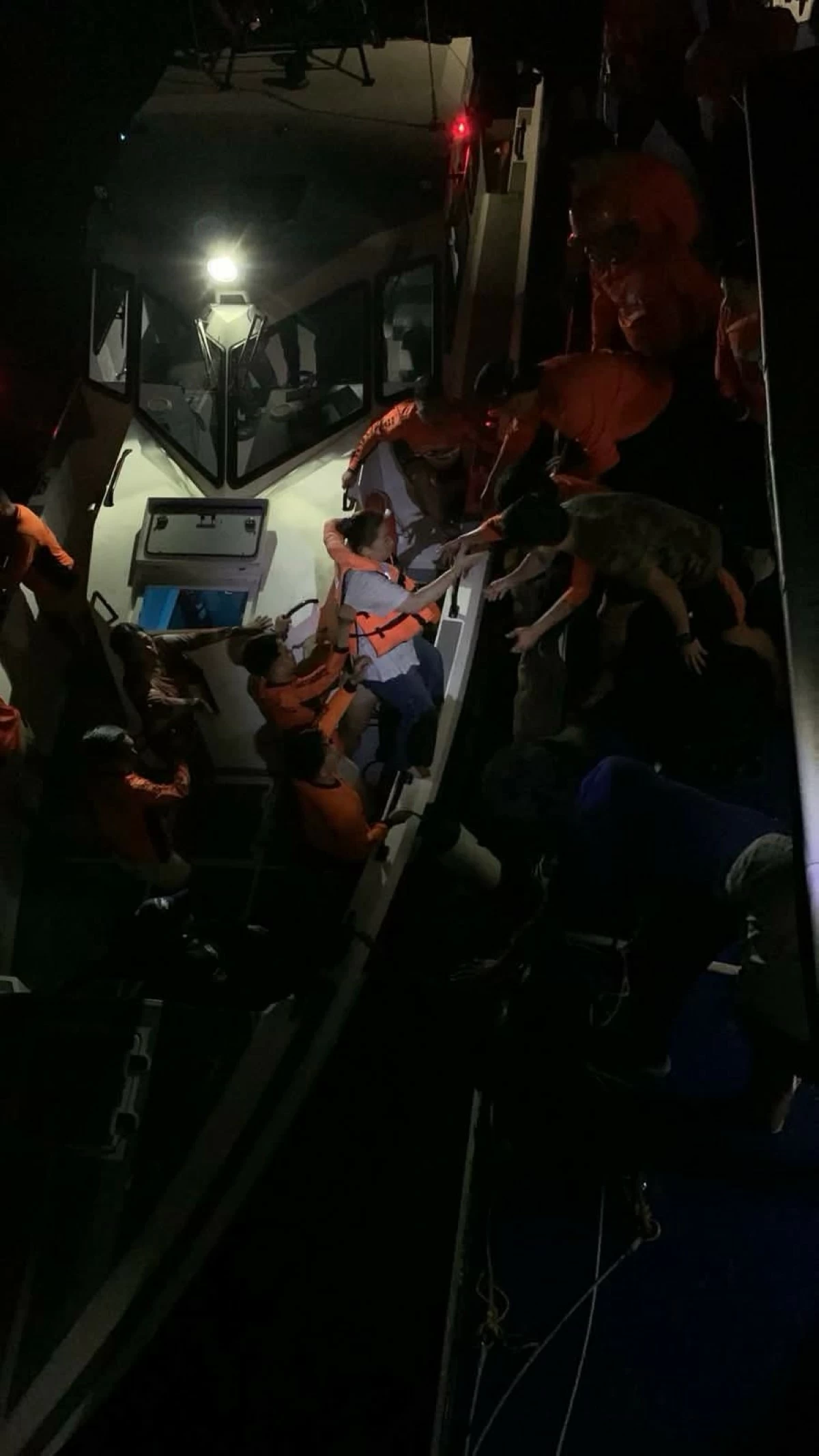
RESCUED passengers of MV Trisha Kirsten 3. (Photo: PCG)
The Philippine Coast Guard (PCG) on Wednesday, Jan. 28, escalated its search and rescue (SAR) operations for the remaining missing passengers of roll-on/roll-off vessel M/V Trisha Kerstin 3 with the deployment of technical wreck divers and a remotely operated vehicle (ROV) in waters off Basilan.
PCG spokesperson Captain Noemie Cayabyab said 19 technical divers have arrived in Zamboanga and were scheduled to begin underwater operations following a briefing at the Coast Guard District Southwestern Mindanao. The team is led by Coast Guard Commander Cheska Jamorol.
“Earlier, our 19 technical wreck divers arrived together with the remotely operated vehicle. We are anticipating that the ROV will be deployed today to assess the seabed where the incident happened,” Cayabyab said.
She said the divers and the ROV will focus on the distress location where the passenger vessel went down.
Initial reports indicate that the wreck of M/V Trisha Kerstin 3 is estimated to be about 76 meters, or roughly 249 feet, below the surface in waters near Baluk-Baluk Island, Basilan.
The divers’ mission covers underwater search operations in areas considered risky for ordinary divers, while the ROV will be used for deeper inspection of the site.
Cayabyab explained that the use of advanced underwater technology enables the PCG to safely and effectively survey submerged areas with limited visibility and challenging sea conditions, and the data gathered through the ROV provides critical visual information to guide ongoing search efforts and operational decision-making.
“This area is relatively deep. That is why only technical divers will be used. The ROV is modern equipment that allows us to check what is under the sea at the incident site,” she said.
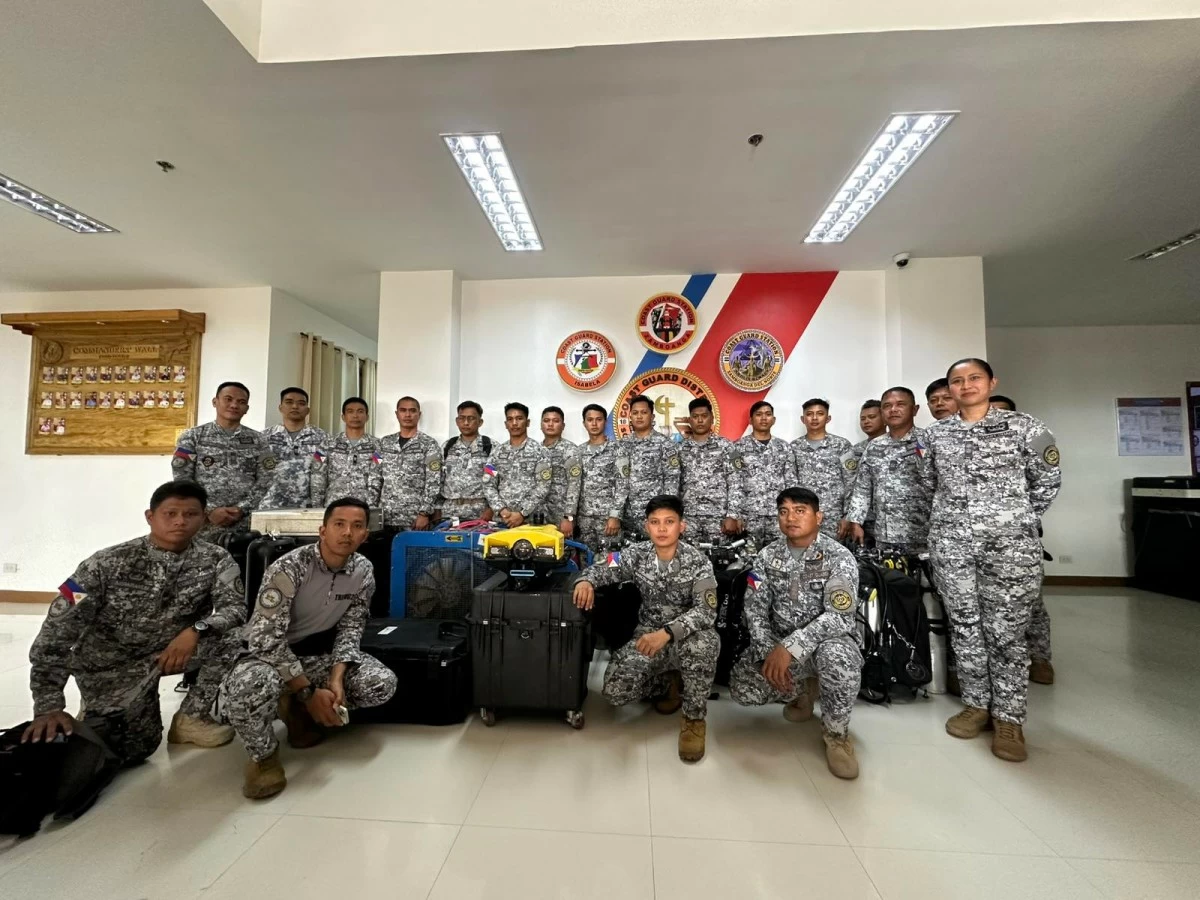
The Philippine Coast Guard's technical diving team. (Photo: PCG)
The PCG did not set a timeline for the operation as the mission is deemed “extremely dangerous.”
“The directive of the PCG Commandant [Admiral Ronnie Gil Gavan] is until we find the missing individuals, we will continue the search. We are still in high hopes that we will find them alive and return them to their respective families. We will not set any timeline but the instruction is to act promptly because time is of the essence,” Cayabyab said.
As of Tuesday, the PCG reported 316 survivors, 18 fatalities, and 10 still missing.
She said the SAR effort remains open-ended, citing past cases where survivors were found days or even weeks later.
“There are many factors to consider. As we always share during interviews, there are documented cases where survivors were rescued after two weeks. That is why search and rescue operations are continuing,” she said.
Foreign assistance
Meanwhile, Cayabyab said the Coast Guard is not yet seeking assistance from foreign counterparts.
“As we speak, all our resources are being used together with other agencies. We believe we can handle this operation. This is a whole-of-government approach with support from national agencies, local government units, and even volunteer individuals and organizations. Of course, the PCG is open to any assistance,” she said.
According to the PCG, the ground zero is considered a marine ecosystem where local fishermen rely for their livelihood. Aerial surveillance showed a thin oil sheen in the area where the passenger vessel sank.
“The vessel was carrying 25,000 liters of diesel. Diesel is a light oil. When exposed to sunlight, it can evaporate naturally. As of now, there is no cause for alarm,” she said.
She added that oil spill booms and dispersants are on standby.
“Our directive is that in case an extreme situation happens, we are ready with oil dispersants and oil spill booms. However, since we want to preserve the marine ecosystem and diesel can evaporate on its own, we prefer not to use dispersants because these are chemicals,” she said.
Cayabyab said the PCG is also checking possible effects on fishing grounds.
“There are reports that part of the area is an ecosystem and locals depend on fishing. That is what we are trying to avoid. Based on our assessment, there is no significant effect because the diesel can evaporate naturally,” she said.
M/V Trisha Kerstin 3, operated by Aleson Shipping Lines, sank on January 26 about 2.75 nautical miles northeast of Baluk-Baluk Island in Basilan.