






Manila Bulletin
 Philippines
National
Mayon logs 240 quakes, 292 rockfalls, 37 pyroclastic flows in 24 hours — Phivolcs
Philippines
National
Mayon logs 240 quakes, 292 rockfalls, 37 pyroclastic flows in 24 hours — Phivolcs
Philippines
National
Mayon logs 240 quakes, 292 rockfalls, 37 pyroclastic flows in 24 hours — Phivolcs
Mayon logs 240 quakes, 292 rockfalls, 37 pyroclastic flows in 24 hours — Phivolcs
Published Jan 28, 2026 10:03 am


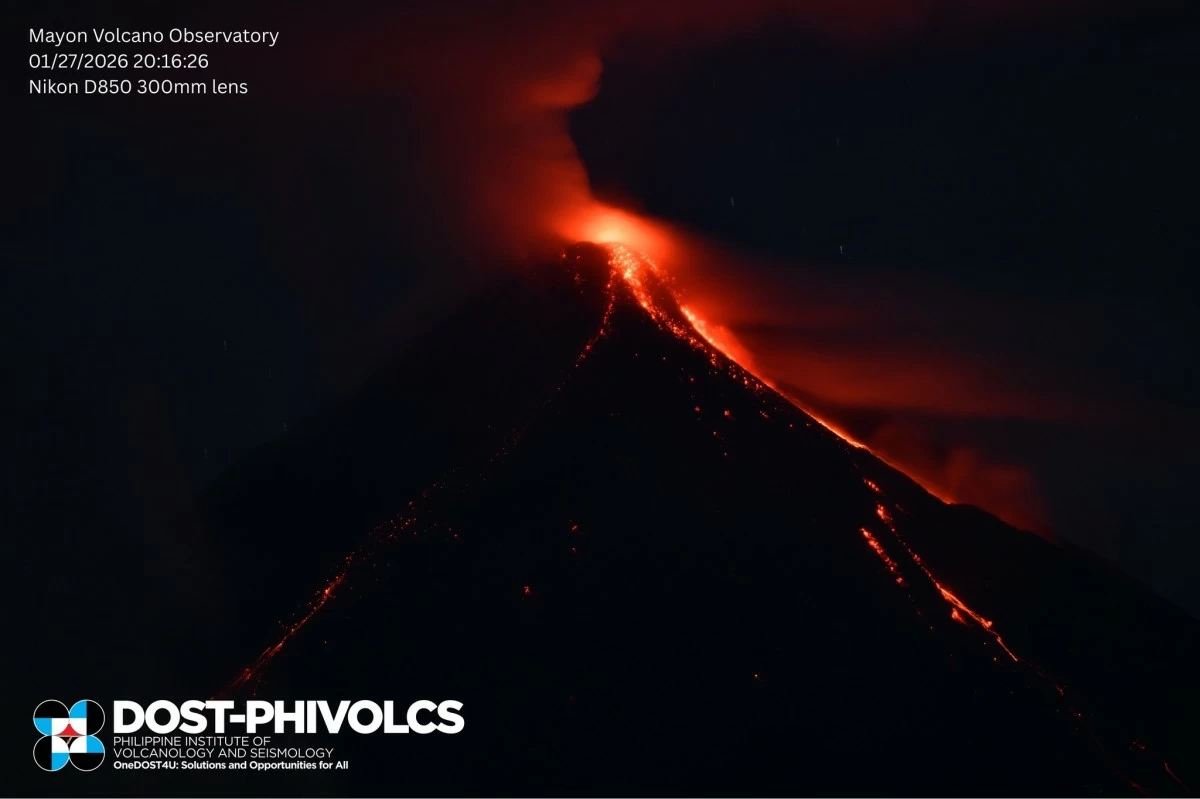
Mayon Volcano’s effusive eruption continues for the 21st day on Jan. 27, 2026, producing lava flows, pyroclastic density currents (“uson”), and rockfalls. Alert Level 3 remains in effect, and entry into the six-kilometer permanent danger zone is prohibited. (Philippine Institute of Volcanology and Seismology)
Mayon Volcano continues to exhibit intensified unrest, producing hundreds of volcanic earthquakes and rockfall events, and pyroclastic density currents, locally known as “uson,” over the past 24 hours, the Philippine Institute of Volcanology and Seismology (Phivolcs) reported on Wednesday, Jan. 28.
In its monitoring from 12 a.m. on Jan. 27 to 12 a.m. on Jan. 28, Phivolcs recorded 240 volcanic earthquakes, 292 rockfall events, and 37 pyroclastic density currents.
A one-kilometer volcanic plume with moderate emission drifted west, and a crater glow was visible to the naked eye.
Sulfur dioxide emissions remained high at 3,364 tons.
Mayon remains under Alert Level 3, indicating intensified magmatic unrest and the potential for hazardous eruptions.
Phivolcs reminded residents that entry into the six-kilometer permanent danger zone is strictly prohibited, while those in the extended danger zone should exercise heightened vigilance.
Authorities warned that even light ashfall may pose health risks, reduce visibility on roads, and disrupt aircraft operations.
Volcanic hazards include lava flows, rockfalls, landslides or avalanches, ballistic fragments, lava fountaining, moderate-sized explosions, pyroclastic density currents, and lahars during periods of heavy or prolonged rainfall.