







Investing in tomorrow's Filipinos
Published Jan 28, 2026 12:05 am
|
Updated Jan 27, 2026 04:22 pm


BEYOND BUDGET
Assalamu alaikum wa Rahmatullahi wa Barakatuh.
Whenever I speak with a child, I feel a quiet sense of excitement. Children see the world differently—with a clarity adults often lose. They are full of curiosity, honesty, and an unshakable belief that tomorrow can still be better. In their queries and laughter, you can glimpse the future taking shape. Thus, I have always believed that children must be at the heart of governance. The decisions we make today will shape the lives they grow into.
This belief guided my work at the Department of Budget and Management (DBM), particularly our push for Public Finance for Children, or PF4C. It carries the simple message that children should never be an afterthought in public spending. They should be a priority. Every peso we allocate must translate into something real in a child’s life—better learning, better health, stronger protection, and a genuine chance to thrive.
For many years, our budgets spoke about children in fragments. Education appeared in one section, nutrition in another, and child protection elsewhere. On paper, everything seemed covered. On the ground, we can see the gaps. Services overlapped, while others failed to reach the children who need them most. PF4C challenges this disconnect by ensuring that our programs work together and that outcomes are felt in communities and not only reflected in reports.
Hence, in May 2025, the DBM, together with the European Union and UNICEF, launched a Public Finance Facility, a cooperation program to support more coordinated and targeted budgeting to improve the lives of the most vulnerable children in our country. This partnership was built on a shared understanding that improving children’s lives requires more than good intentions. It demands sustained, protected, and transparent public spending, guided by evidence and focused especially on the most vulnerable.
PF4C is about weaving children’s rights into the entire budget process—from planning and allocation to implementation and monitoring. This approach is reinforced by the Program Convergence Budgeting, which encourages agencies to align their efforts rather than work in silos. When programs converge, resources go further, duplication is reduced, and services reach children in a more coherent and meaningful way.
Our resources are finite. Competing needs are constant. Hard choices are unavoidable. PF4C does not deny these realities but insists that even in the face of difficult choices, children must never be left behind in our budget.
Armed with this belief, we at the DBM, together with the Department of the Interior and Local Government, and the Bureau of Local Government Finance, launched the Child Budget and Expenditures Tagging and Tracking (CBETT) tool, which grew from a simple concern many of us shared: To make sure that government spending reaches children. Without clear data, even the best intentions remain untested. The CBETT tool gives us visibility. It enables the systematic identification, classification, and monitoring of child-focused budget and expenditures within local budget frameworks. This directly addresses the critical gap in expenditure tracking identified in the Child-Responsive Public Financial Management Assessment Report.
This became even more important after the Mandanas-Garcia ruling, which shifted greater responsibility—and resources—to local governments. LGUs are now on the frontlines of delivering services for children. CBETT helps ensure that as fiscal autonomy expands, accountability and child-responsiveness grow alongside it.
Equally important is opening the budget conversation itself. Through the government’s Open Government initiatives, we have taken steps to make fiscal discussions more transparent and participatory—creating spaces where citizens, including children and young people, can be heard. In fact, during the OpenGov Week last May, we invited children and youth participants for a dialogue titled, “Making Spaces: Children Driving Change for Open Government.” I believe when children are included in conversations about budgets in age-appropriate ways, they learn that governance is not distant or abstract. The government should also truly listen and make sure that lines are open because the best way to move forward is together. Through this, we build consensus, and we make decisions that affect their daily lives and one they can one day help shape.
Education shows how these principles translate into action. Responding to the learning crisis, we at the DBM allocated ₱1.34 trillion to education—the largest education budget in our history. And, for the first time, our country met UNESCO’s global benchmark of four percent of GDP. Over ₱1 trillion supports the hiring of teachers and non-teaching staff, classroom construction, academic recovery programs, and school-based feeding for millions of learners. These are not mere figures. They represent children who can learn better, eat better, and stay in school longer.
Beyond budget, Public Finance for Children reminds us that the true measure of public finance is lived experience—in safe classrooms, accessible clinics, and communities that protect and hear our children. As citizen Mina, I carry this belief beyond public office. Children live longest with the consequences of our choices. When we place them at the center of public finance, we do more than manage resources. We choose the kind of future we are willing to stand for.
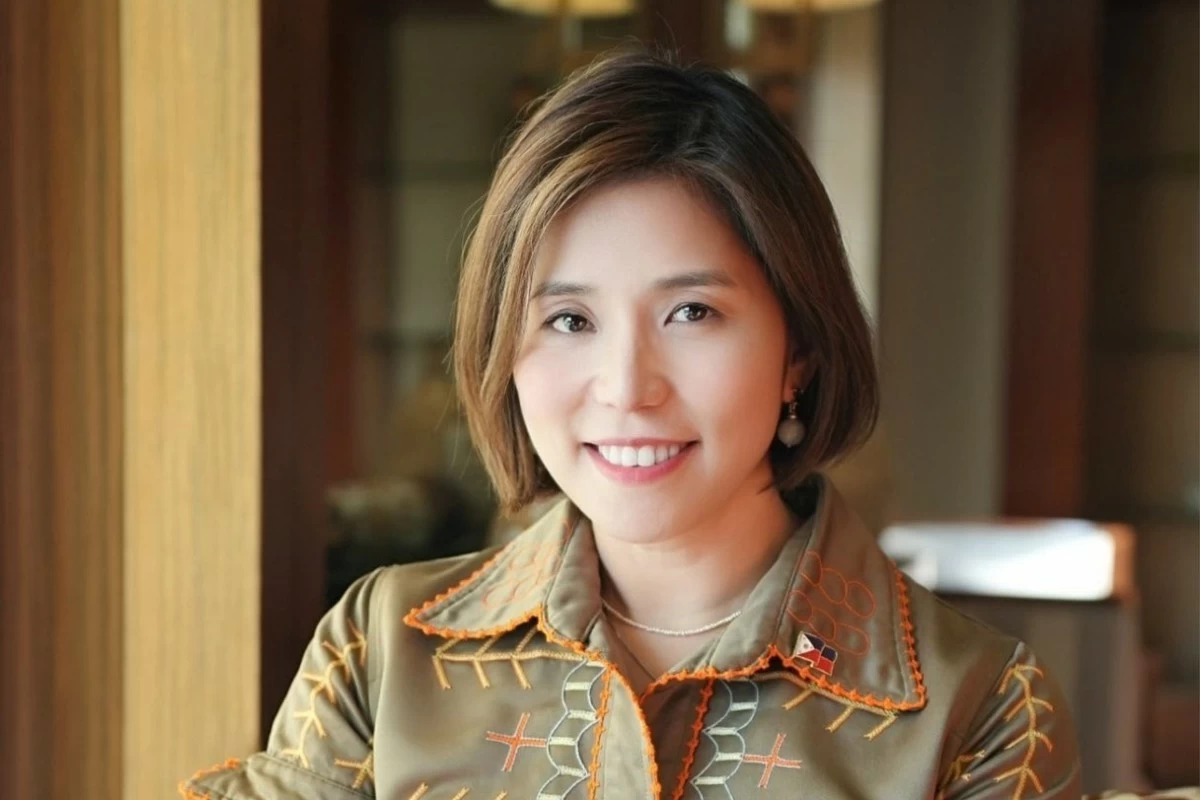
(Amenah F. Pangandaman is the former Secretary of the Department of Budget and Management.)