






 Philippines
National
EDCOM II: Legarda calls for urgent reform to solve education crisis
Philippines
National
EDCOM II: Legarda calls for urgent reform to solve education crisis
EDCOM II: Legarda calls for urgent reform to solve education crisis


At A Glance
- Legarda made the call as the Second Congressional Commission on Education (EDCOM II) formally submitted its Final Report, Turning Point: A Decade of Necessary Reform (2026–2035), to the Senate of the Philippines on 27 January 2026. The Final Report highlighted the urgent realities in the education system particularly the fact that nearly half of Grade 3 learners cannot read at grade level, 88 percent of Grade 7 students are still unready, and proficiency collapses to just 0.40 percent by Grade 12.
Senator Loren Legarda pressed for an urgent and sustained education reform to confront the country’s education crisis.
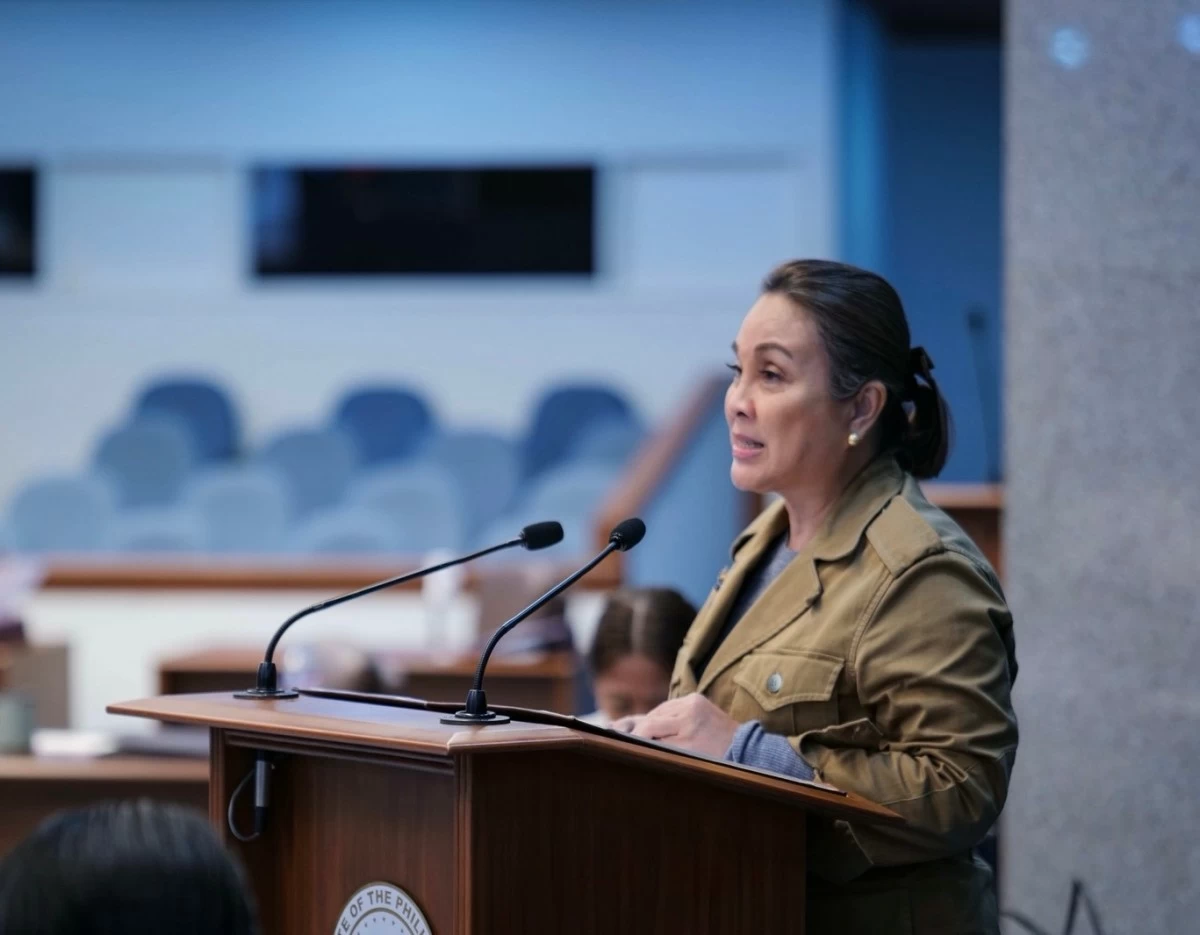
Legarda made the call as the Second Congressional Commission on Education (EDCOM II) formally submitted its Final Report, Turning Point: A Decade of Necessary Reform (2026–2035), to the Senate of the Philippines on 27 January 2026.
“Kapag edukasyon ang inuuna natin, ang buong bansa ang itinataas natin (When we prioritize education, we raise our nation). We all know that our education sector continues to face serious challenges, from learning poverty and classroom backlogs to teacher shortages and weak links to the labor market,” said Legarda, who co-chairs EDCOM II.
“But it is precisely because of these difficulties that we must persist and press forward with reform, not retreat from it,” Legarda stressed as the chairperson of the Senate Committee on Higher, Technical and Vocational Education.
The Final Report of EDCOM II revealed urgent realities in the education system as it recognizes the fact that nearly half of Grade 3 learners cannot read at grade level, 88 percent of Grade 7 students are still unready, and proficiency collapses to just 0.40 percent by Grade 12.
The report also highlights that 23.6 percent of children experience stunting, over 213,000 toddlers remain unreached by feeding programs, and thousands of barangays lack early childhood centers.
The final report also shows how teachers face pressure to pass unqualified students under a transmutation table that inflates failing scores. The report also flagged teacher mismatches, inadequate practicum hours, and promotion incentives that have fueled diploma mills.
The same report also highlights the severity of infrastructure gaps—noting the backlog of 165,000 classrooms, while learning time is diluted by more than 150 mandated activities, and technical vocational training remains skewed toward low-level certifications.
Meanwhile, in higher education, outdated curricula - standards updated only every 11 years - and overlapping mandates among Commission on Higher Education (CHED), Technoligical Education and Skills Development Authority (TESDA), and Professional Regulation Commission (PRC) blur accountability and weaken policy alignment.
Student financial aid remains inefficient a decade after the UniFAST Act, while the Department of Education (DepEd), CHED, and TESDA still operate under 1990s structures despite expanded mandates.
But despite these challenges, Legarda reiterated that transformative change requires both urgency and persistence.
She also pushed for the Commission’s extension to sustain focus and deliver deeper, long-term solutions for education.
“As the sponsor of Senate Bill No. 1483, I once again thank my colleagues for their support in extending the mandate of the Second Congressional Commission on Education until December 2027," the senator said.
“This extension is not merely procedural. It is a reaffirmation of our shared responsibility to place our learners, teachers, and parents at the center of reform, and to give ourselves the time and institutional stability needed to pursue solutions grounded in evidence and lived realities,” she stressed.
Created through Republic Act No. 11899 on 23 July 2022, EDCOM II was tasked to assess the entire education sector and recommend strategic reforms to enhance national learning outcomes and workforce competitiveness.
Present during the presentation of the EDCOM II report were former Senate Minority Leader Aquilino “Koko” Pimentel III, DepEd Secretary Juan Edgardo “Sonny” Angara, Senators Alan Peter Cayetano, Joel Villanueva and Paolo “Bam” Aquino IV who chairs the Senate Committee on Basic Education.
Following the presentation of the Final Report, the National Education and Workforce Development Plan (NatPlan) 2026–2035, which will serve as the compass to reverse the problems in the education sector, was also unveiled.
“While our diagnosis was unflinching, our conclusion is undeniably hopeful: The crisis in Philippine education, while deep, is neither inevitable nor irreversible. We are not here today simply to catalog what is broken. We are here to present the proof that we have already begun to fix it. We are here to chart a future where the boundless potential of the Filipino learner is finally unleashed,” Legarda said during her speech.
“Let this Final Report be the map. Let the National Education and Workforce Development Plan be our compass. And let our collective political will be the engine that drives this nation forward,” she stressed.