







DSWD crafting anti-epal guidelines for AICS distribution
By Dhel Nazario
Published Jan 28, 2026 03:09 pm


An official from the Department of Social Welfare and Development (DSWD) disclosed on Wednesday, Jan. 28, that the agency is currently crafting the so-called "anti-epal" guidelines for the distribution of the Assistance to Individuals in Crisis Situation (AICS).
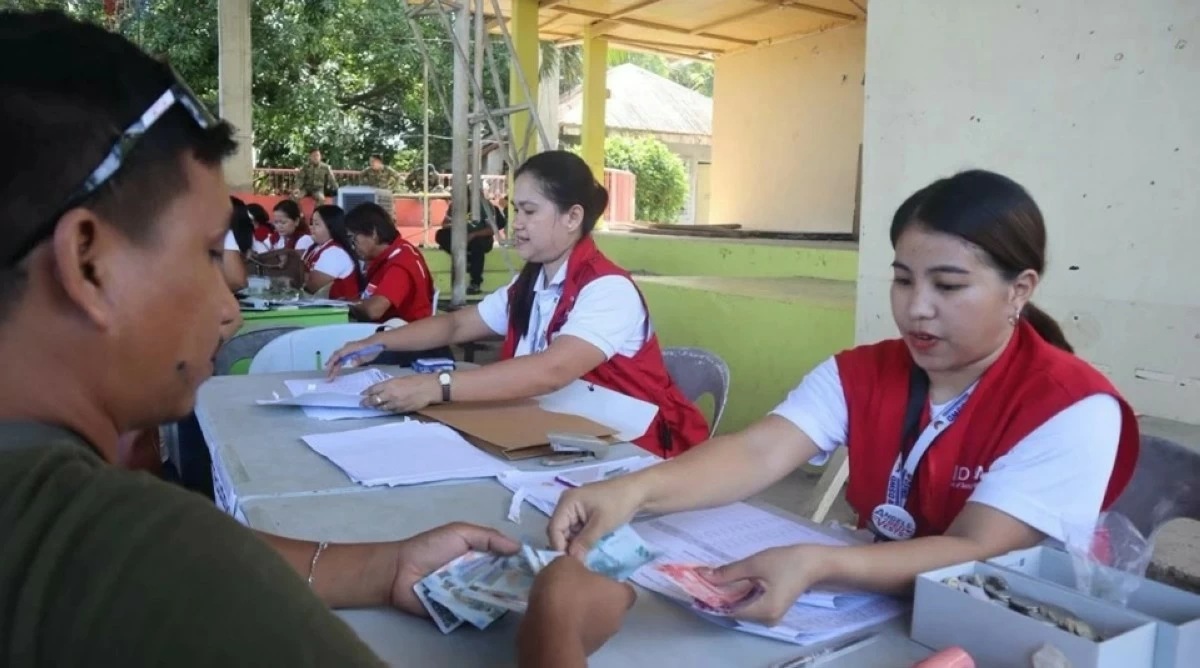
(Photo from DSWD)
During the hearing Committee on Social Justice, Welfare, and Rural Development, Senator Sherwin Gatchalian asked DSWD Crisis Intervention Program Head Artemio Bautista if they have already come up with the guidelines on financial aid distribution as stated under the special provisions of the 2026 General Appropriations Act (GAA) that bars the involvement of politicians.
According to DSWD Crisis Intervention Program Head Artemio Bautista, they have anti-epal guidelines that covers all financial aid programs of the DSWD while they have drafted a separate set of "omnibus guidelines" for AICS.
Senator Erwin Tulfo, who chairs the committee, told Bautista to hasten the review of its guidelines.
"Bilis-bilisan ho ninyo para ma-implement na ho yan. Kasi hindi niyo pwedeng sabihing review nang review...It has to be implemented na tapos election is around the corner, ng barangay, dyan po yung matinding kinakatakot po ng mga kababayan natin na baka maabuso yung mga assistance na pinamigay Ninyo (Please hurry so it can be implemented. You can’t just keep saying it’s under review… It has to be put into action, and with the barangay elections coming up, this is what our people are most worried about—that the assistance you are distributing might be abused)," Tulfo said.
"Yang AICS, yung mga SLP na yan, darating si barangay captain, darating si Kagawad na wala namang papel diyan, biglang lumutang. Ang gusto natin, wala sila diyan sa distribution (For AICS and SLP programs, the barangay captain or the village councilor may show up having no official role. What we want is for them not to be present during the distribution)," he added.
Tulfo asked the Department of the Interior and Local Government (DILG) on the implementation of rules preventing political officials from participating in the distribution of government aid under the 2026 General Appropriations Act (GAA).
“I have a quick question for the DILG. Have you started cascading the information based on the 2026 GAA that politicians—including barangay kagawads, barangay captains, mayors, vice mayors, councilors, governors, and congressmen—are no longer allowed to be present during distribution?” Tulfo asked.
“Have you already informed everyone, given that there are thousands of local officials, that political involvement is prohibited? These are instructions, it’s not a law yet, but it is based on the GAA 2026,” he added.
DILG Undersecretary David Monalud replied that the department is coordinating the release of a Memorandum Circular to reiterate the provisions.
“Yes, Mr. Chair. We have already spoken with our Legal Director, and we are in the process of coordinating with the concerned bureaus for the releasing of a Memorandum Circular, reiterating the provisions of the GAA regarding the non-participation of elected officials—except, of course, congressmen and senators,” he said.
The senator also raised concerns about discrimination in selecting AICS beneficiaries. He urged local authorities and the League of Provinces of the Philippines to ensure that aid is distributed fairly, regardless of political affiliation.
“As we try to craft a law on AICS, we want to eliminate discrimination,” Tulfo said.
He recalled that there are some beneficiaries being left out due to their political alignment.
“From my experience, some people are left out because they did not vote for a certain official or supported someone else. That is what we do not like. It doesn’t matter who they voted for—the person is in crisis,” he added.
“It doesn’t matter if you support BBM or Sara Duterte. One color only—the crisis is brown. No more red, green, white, or black,” Tulfo said. “This is what we have to educate our officials about.”