






 Philippines
National
Senators file resolution condemning China Embassy's criticism vs Philippine officials
Philippines
National
Senators file resolution condemning China Embassy's criticism vs Philippine officials
Senators file resolution condemning China Embassy's criticism vs Philippine officials


At A Glance
- Senators have crossed party lines to sign a resolution expressing the sense of the Senate condemning the recent public statements made by the Embassy of the People's Republic of China that criticized Philippine officials and institutions that defend the country's national sovereignty and maritime rights.
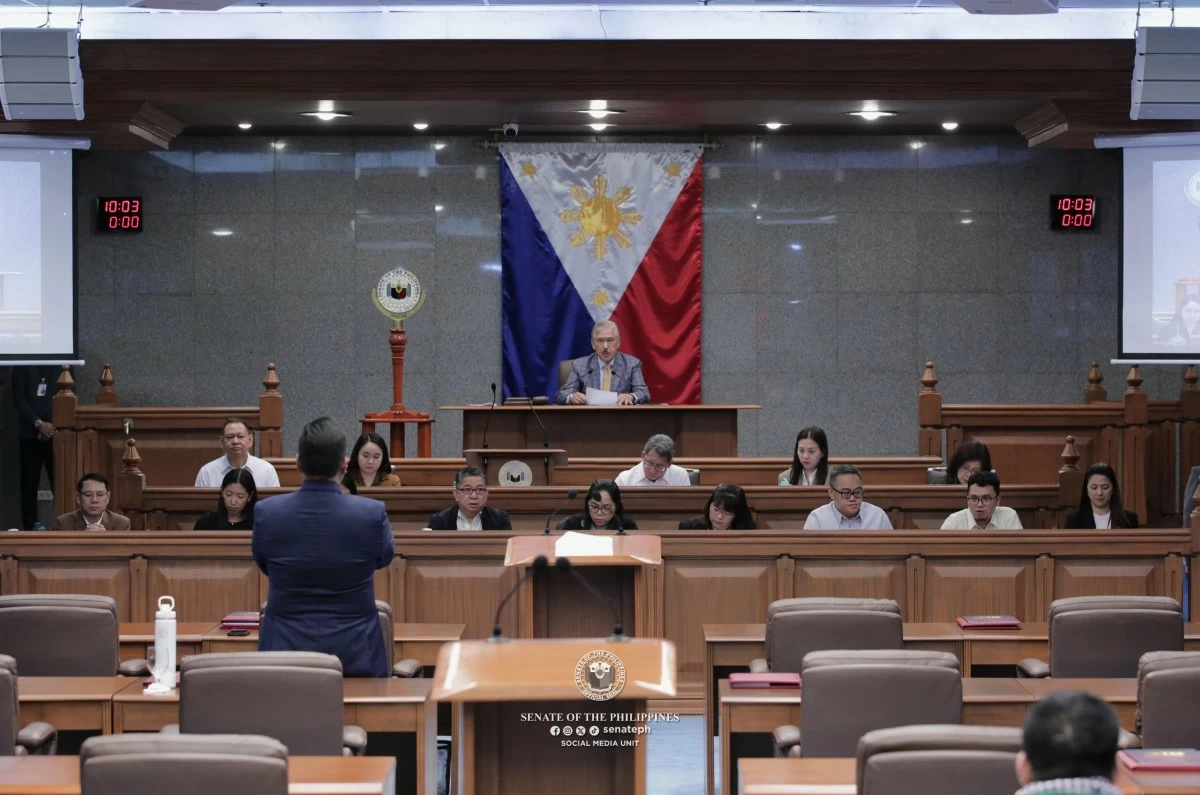
Senators have crossed party lines to sign a resolution expressing the sense of the Senate condemning the recent public statements made by the Embassy of the People’s Republic of China that criticized Philippine officials and institutions that defend the country’s national sovereignty and maritime rights.
Fifteen (15) senators signed Senate Resolution No. 256, which were introduced by Senators Francis “Kiko” Pangilinan, Vicente “Tito” C. Sotto III, Panfilo “Ping” M. Lacson, Juan Miguel “Migz” F. Zubiri, Erwin T. Tulfo, Risa Hontiveros, Raffy T. Tulfo, Sherwin Gatchalian, Loren Legarda, Joseph Victor “JV” Ejercito, Paolo Benigno “Bam” Aquino IV, Camille A. Villar, Mark A. Villar, Jose “Jinggoy” Estrada, and Manuel “Lito” Lapid.
The resolution specifically affirms the sovereign right and duty of Philippine officials to speak on matters of national interest in the performance of their official functions.
“It is clear that China is making us angry with their attempts to change the reality that they are the aggressor. They are the ones who are using water cannons. They are the ones who are hitting the boats and ships of our fishermen and our Bureau of Fisheries and Coast Guard. They are the ones who are destroying the corals and marine resources in our jurisdiction,” Pangilinan said.
“Defending — in words and deeds — our rights as a nation is not a provocation. The Senate of the Republic of the Philippines fully supports the protection and fight for the Arbitral Award that has been won, which says that their ‘Nine-Dash Line’ claim, a ruling that was imposed almost ten years ago, is untrue,” he stressed.
Sen. Erwin Tulfo also expressed his belief that if the Chinese officials cannot accept the country’s policy on freedom of speech, “they are free to leave the Philippines!”
“If they do not like how democracy is run in our country, the response is clear: Get out! This is our house!” Tulfo said in his privilege speech.
“To the Chinese embassy officials: You do not have the moral authority to lecture Filipinos about freedom of speech—because freedom of speech does not exist in your country. It is not practiced. It is not protected. It is punished,” he pointed out.
“What is truly unacceptable is a foreign government acting as if it can police Filipino speech, intimidate Filipino officials, or shame Filipinos into silence,” he said.
Hontiveros also criticized China over its actions saying its embassy clearly violated Article 41 of the Vienna Convention on Diplomatic Relations.
Under the Vienna Convention, foreign envoys are mandated to not interfere in the internal affairs of their host state.
“Censuring a Filipino official’s internal discourse constitutes a breach of this protocol,” she said.
“It’s time for us to really know who is profiting, who is amplifying, and who is China’s megaphone here in the Philippines. If they are determined to work against their own people, that is no longer a strategy. That is treason against the Motherland,” Hontiveros stressed.
Only Estrada from the minority
From the nine-member Senate minority bloc, only Estrada signed Senate Resolution No. 256.
Those who did not sign the resolution are Senate Minority Leader Alan Peter Cayetano, Christopher “Bong” Go, Imee Marcos, Rodante Marcoleta, Ronald “Bato” dela Rosa, Francis “Chiz” Escudero, Robinhood Padilla and Joel Villanueva.
The resolution stresses that the language used by a Chinese Embassy official, directed at incumbent members of Congress, departs from “the restraint, courtesy, and responsibility expected of diplomatic communications” and runs counter to “the principles of mutual respect and non-interference” among states.
It also calls on the Department of Foreign Affairs (DFA) to take the necessary diplomatic measures to uphold the dignity of the Republic of the Philippines, ensure that relations with other states adhere to international law, and, if needed, “place [the country’s] objections on record and elevate the matter to relevant international fora.”