ADVERTISEMENT

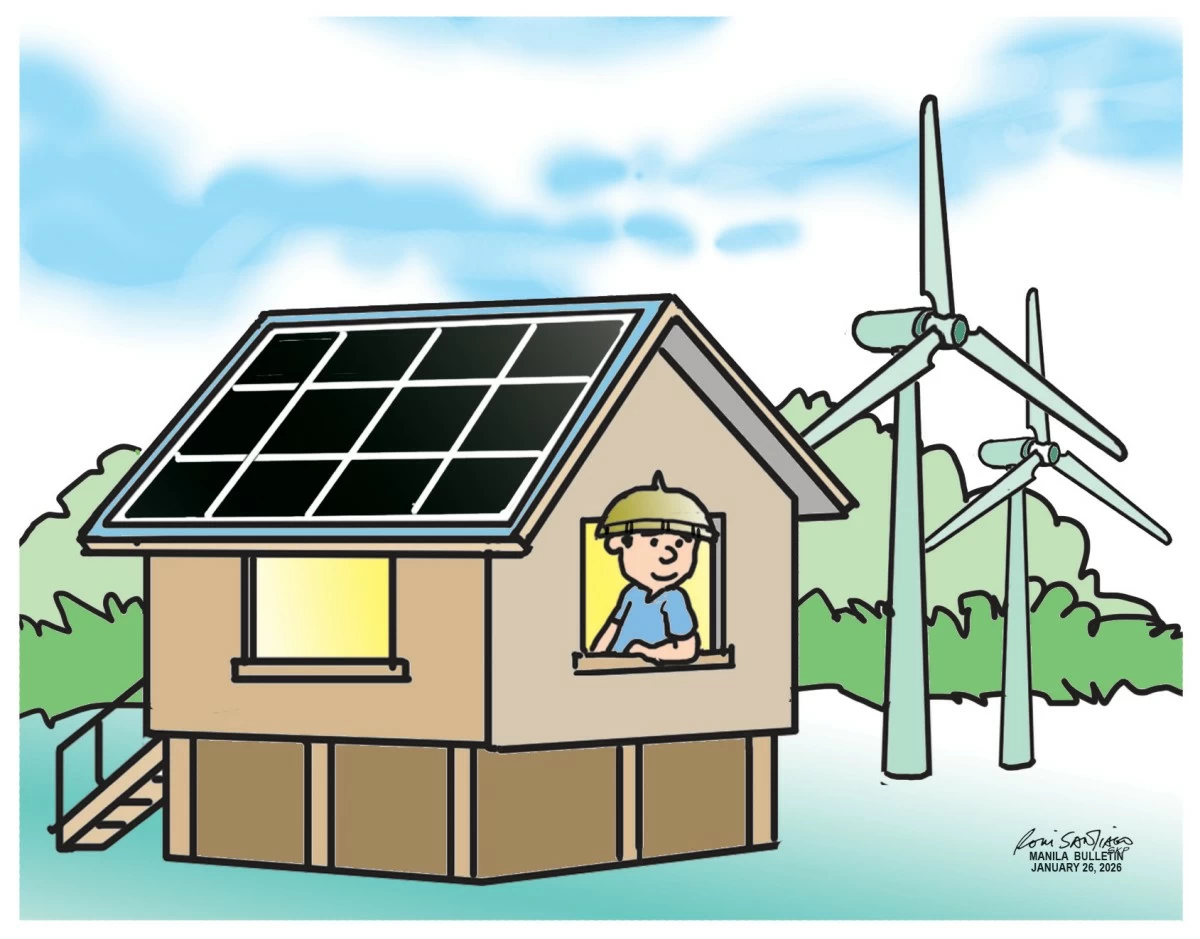
Renewable energy: Toward a sustainable PH energy future

Published Jan 26, 2026 12:05 am  |  Updated Jan 25, 2026 04:23 pm
Jan. 26 is marked globally as International Day of Clean Energy to underscore the growing importance of renewable energy. The International Renewable Energy Agency (IRENA) was established to promote the widespread and sustainable use of renewables; it has since become a key multilateral platform guiding countries toward cleaner, more resilient energy systems.
For the Philippines, this observance is more than symbolic. It is a timely reminder of the urgency to recalibrate an energy mix still heavily dependent on coal and imported oil.
Despite the country’s abundant natural endowments—sun, wind, water, and geothermal resources—the Philippines remains overly reliant on fossil fuels. Coal continues to account for a dominant share of power generation, while oil dependence exposes the economy to volatile global prices and geopolitical disruptions. This structural vulnerability is magnified by climate risks, as the Philippines ranks among the most climate-exposed countries in the world. Energy security, economic stability, and climate resilience are thus inseparable concerns.
The case for scaling up renewable energy is compelling.
Renewable sources reduce exposure to imported fuel shocks, lower greenhouse gas emissions, and create opportunities for inclusive growth through green jobs and local energy development. Over the past decade, policy reforms such as the Renewable Energy Act, the Green Energy Auction Program, and the opening of renewable projects to greater foreign investment have signaled progress. Yet renewables still account for a modest share of the overall energy mix, far short of what is required to meet long-term sustainability and climate goals.
What, then, are the imperatives the Philippines must achieve to accelerate the transition?
First, policy consistency and regulatory certainty are paramount. Investors—both local and foreign—require a stable and predictable policy environment. Streamlining permitting processes, reducing bureaucratic delays, and ensuring transparency in power contracts will help unlock long-term capital for renewable projects.
Second, grid readiness and infrastructure development must keep pace with ambition. Renewable energy cannot scale without a modernized grid capable of handling variable power from solar and wind. Investments in transmission, storage technologies, and smart grid systems are essential to ensure reliability while increasing renewable penetration.
Third, financing mechanisms must be expanded and democratized. While large-scale projects attract institutional capital, community-based and distributed energy systems—such as rooftop solar and microgrids—need access to affordable financing. Blended finance, green bonds, and partnerships with development institutions can bridge this gap and make the energy transition more inclusive.
Fourth, local capacity building and technology transfer must be prioritized. Beyond importing equipment, the Philippines should cultivate domestic expertise in renewable engineering, project management, and maintenance. This strengthens energy sovereignty and ensures that the benefits of the transition extend to Filipino workers and enterprises.
Finally, public awareness and political will must converge. Energy transition is not merely a technical undertaking; it is a societal choice. Consumers, local governments, and industry must be aligned behind a shared vision of sustainability, supported by leaders willing to make long-term decisions beyond short-term costs. The Department of Energy’s recent moves to enforce accountability among those required to establish renewable energy facilities follow this trajectory.
Indeed, renewable energy is no longer aspirational; it is achievable and necessary. For the Philippines, embracing this reality is both a responsibility and an opportunity. A cleaner, more diversified energy mix is not only vital to confronting climate change, but to securing a resilient and sustainable future for generations to come.
ADVERTISEMENT
.most-popular .layout-ratio{ padding-bottom: 79.13%; } @media (min-width: 768px) and (max-width: 1024px) { .widget-title { font-size: 15px !important; } }

{{ articles_filter_1561_widget.title }}

.most-popular .layout-ratio{ padding-bottom: 79.13%; } @media (min-width: 768px) and (max-width: 1024px) { .widget-title { font-size: 15px !important; } }

{{ articles_filter_1562_widget.title }}

.most-popular .layout-ratio{ padding-bottom: 79.13%; } @media (min-width: 768px) and (max-width: 1024px) { .widget-title { font-size: 15px !important; } }

{{ articles_filter_1563_widget.title }}

{{ articles_filter_1564_widget.title }}

.mb-article-details { position: relative; } .mb-article-details .article-body-preview, .mb-article-details .article-body-summary{ font-size: 17px; line-height: 30px; font-family: "Libre Caslon Text", serif; color: #000; } .mb-article-details .article-body-preview iframe , .mb-article-details .article-body-summary iframe{ width: 100%; margin: auto; } .read-more-background { background: linear-gradient(180deg, color(display-p3 1.000 1.000 1.000 / 0) 13.75%, color(display-p3 1.000 1.000 1.000 / 0.8) 30.79%, color(display-p3 1.000 1.000 1.000) 72.5%); position: absolute; height: 200px; width: 100%; bottom: 0; display: flex; justify-content: center; align-items: center; padding: 0; } .read-more-background a{ color: #000; } .read-more-btn { padding: 17px 45px; font-family: Inter; font-weight: 700; font-size: 18px; line-height: 16px; text-align: center; vertical-align: middle; border: 1px solid black; background-color: white; } .hidden { display: none; }
function initializeAllSwipers() { // Get all hidden inputs with cms_article_id document.querySelectorAll('[id^="cms_article_id_"]').forEach(function (input) { const cmsArticleId = input.value; const articleSelector = '#article-' + cmsArticleId + ' .body_images'; const swiperElement = document.querySelector(articleSelector); if (swiperElement && !swiperElement.classList.contains('swiper-initialized')) { new Swiper(articleSelector, { loop: true, pagination: false, navigation: { nextEl: '#article-' + cmsArticleId + ' .swiper-button-next', prevEl: '#article-' + cmsArticleId + ' .swiper-button-prev', }, }); } }); } setTimeout(initializeAllSwipers, 3000); const intersectionObserver = new IntersectionObserver( (entries) => { entries.forEach((entry) => { if (entry.isIntersecting) { const newUrl = entry.target.getAttribute("data-url"); if (newUrl) { history.pushState(null, null, newUrl); let article = entry.target; // Extract metadata const author = article.querySelector('.author-section').textContent.replace('By', '').trim(); const section = article.querySelector('.section-info ').textContent.replace(' ', ' '); const title = article.querySelector('.article-title h1').textContent; // Parse URL for Chartbeat path format const parsedUrl = new URL(newUrl, window.location.origin); const cleanUrl = parsedUrl.host + parsedUrl.pathname; // Update Chartbeat configuration if (typeof window._sf_async_config !== 'undefined') { window._sf_async_config.path = cleanUrl; window._sf_async_config.sections = section; window._sf_async_config.authors = author; } // Track virtual page view with Chartbeat if (typeof pSUPERFLY !== 'undefined' && typeof pSUPERFLY.virtualPage === 'function') { try { pSUPERFLY.virtualPage({ path: cleanUrl, title: title, sections: section, authors: author }); } catch (error) { console.error('ping error', error); } } // Optional: Update document title if (title && title !== document.title) { document.title = title; } } } }); }, { threshold: 0.1 } ); function showArticleBody(button) { const article = button.closest("article"); const summary = article.querySelector(".article-body-summary"); const body = article.querySelector(".article-body-preview"); const readMoreSection = article.querySelector(".read-more-background"); // Hide summary and read-more section summary.style.display = "none"; readMoreSection.style.display = "none"; // Show the full article body body.classList.remove("hidden"); } document.addEventListener("DOMContentLoaded", () => { let loadCount = 0; // Track how many times articles are loaded const offset = [1, 2, 3, 4, 5, 6, 7, 8, 9, 10]; // Offset values const currentUrl = window.location.pathname.substring(1); let isLoading = false; // Prevent multiple calls if (!currentUrl) { console.log("Current URL is invalid."); return; } const sentinel = document.getElementById("load-more-sentinel"); if (!sentinel) { console.log("Sentinel element not found."); return; } function isSentinelVisible() { const rect = sentinel.getBoundingClientRect(); return ( rect.top < window.innerHeight && rect.bottom >= 0 ); } function onScroll() { if (isLoading) return; if (isSentinelVisible()) { if (loadCount >= offset.length) { console.log("Maximum load attempts reached."); window.removeEventListener("scroll", onScroll); return; } isLoading = true; const currentOffset = offset[loadCount]; window.loadMoreItems().then(() => { let article = document.querySelector('#widget_1690 > div:nth-last-of-type(2) article'); intersectionObserver.observe(article) loadCount++; }).catch(error => { console.error("Error loading more items:", error); }).finally(() => { isLoading = false; }); } } window.addEventListener("scroll", onScroll); });

Sign up by email to receive news.