ADVERTISEMENT

Qatar to invest hundreds of millions in Lebanon's electricity sector and help return Syrian refugees

Published Jan 26, 2026 10:17 pm
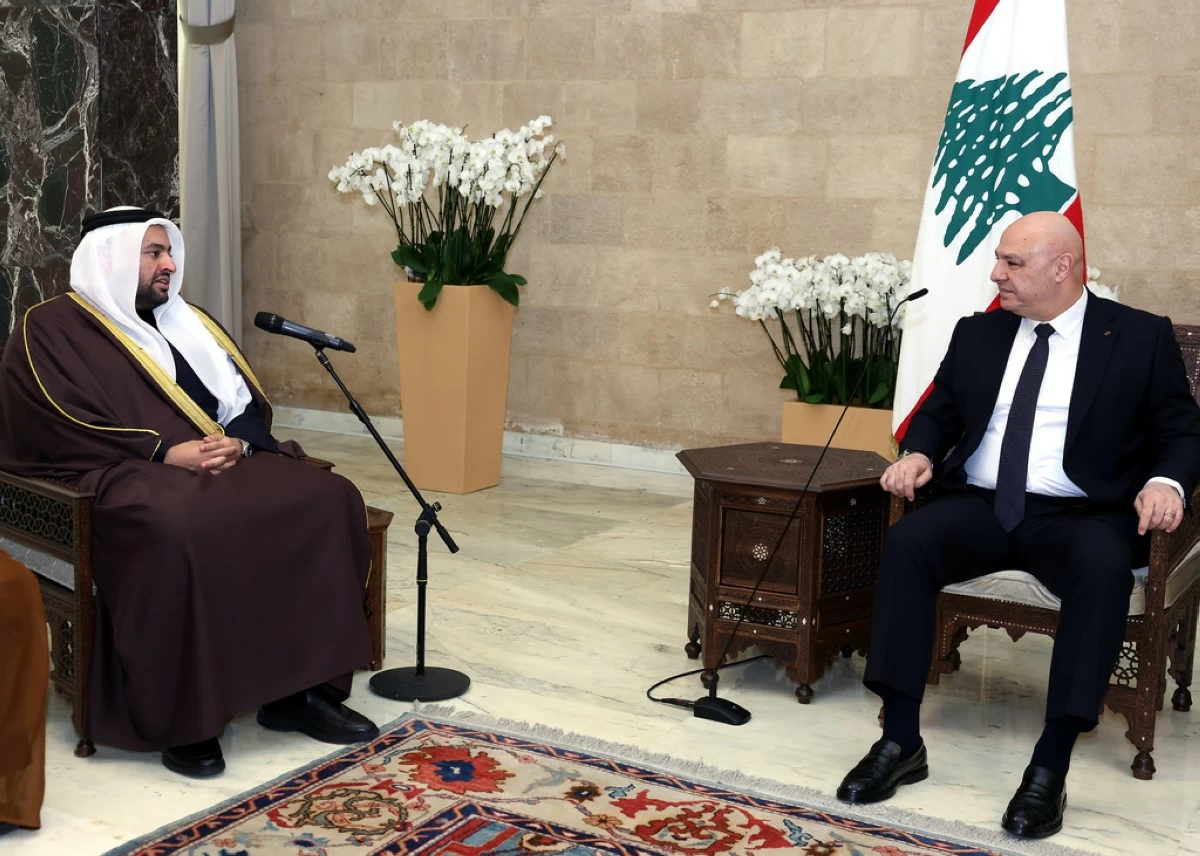
In this photo released by the Lebanese Presidency press office, Lebanese president Joseph Aoun, right, meets with Qatari Minister of State for Foreign Affairs Mohammed bin Abdulaziz Al-Khulaifi, at the presidential place in Baabda, east of Beirut, Lebanon, Monday, Jan. 26, 2026. (Lebanese Presidency press office via AP)

BEIRUT (AP) — Gas-rich Qatar on Monday announced investments in Lebanon worth hundreds of millions of dollars to improve the crisis-hit nation’s crumbling electricity sector and to continue support for the Lebanese armed forces and the return home of Syrian refugees.

Qatar’s minister of state for foreign affairs, Mohammed bin Abdulaziz Al-Khulaifi, announced the investments by the Qatar Fund For Development after meeting Prime Minister Nawaf Salam and President Joseph Aoun in Beirut.

Lebanon has been improving relations with oil-rich gulf countries following years of tensions over the wide influence that the militant Hezbollah group had in the small nation. Hezbollah was weakened by a 14-month war with Israel, and the Iran-backed group recently called on Saudi Arabia to open a new era in relations.

For years, Qatar has been seen as a friendly country to Lebanon and a mediator for domestic and international political crises. Doha is also a key partner in the consortiums for Lebanon’s offshore gas exploration blocks.

Lebanon since late 2019 has been in a historic fiscal crisis after decades of corruption and mismanagement by the country's ruling class.

Al-Khulaifi said Qatar will give a $40 million grant to the electricity sector and another $360 million for projects in the sector that it said will benefit 1.5 million people.

Qatar had tried in the past to improve Lebanon’s electricity sector, without success. This time, Lebanon's president who was elected last year and a newly named prime minister have vowed to fight corruption.

Lebanon’s state electricity company is one of the country's biggest sources of debt, hemorrhaging about $40 billion over the past decades with a bloated workforce and outdated infrastructure. The company provides only a few hours of electricity each day, and the state until a year ago had taken advances from the Central Bank when diesel fuel runs out.

Most homes and businesses in Lebanon rely on highly expensive private generators that are a main cause of pollution in the Mediterranean nation.

The Qatari official also said his country will help with the return of Syrian refugees from Lebanon, starting with the return of 100,000 people at an initial cost of $20 million. Al-Khulaifi said the refugees who will return will be guaranteed suitable housing in addition to payments that cover their food and medicine for three months.

He added that the Syrian government, which has close relations with Qatar, will facilitate the return.

Lebanon’s minister of social affairs, Haneen Sayed, said earlier this month that half a million Syrian refugees returned home in 2025.

Syria’s conflict displaced half of the country’s prewar population of 23 million over 14 years. Lebanon hosted an estimated 1.5 million refugees, who at one point made up roughly a quarter of its 6 million people, with many having been smuggled across the border and unregistered with the U.N.

Al-Khulaifi also said Qatar will continue it support to the Lebanese army, adding that the decision comes from Doha’s belief “that this institution is the basis for security and stability in the country.”

Related Tags

World news
ADVERTISEMENT
.most-popular .layout-ratio{ padding-bottom: 79.13%; } @media (min-width: 768px) and (max-width: 1024px) { .widget-title { font-size: 15px !important; } }

{{ articles_filter_1561_widget.title }}

.most-popular .layout-ratio{ padding-bottom: 79.13%; } @media (min-width: 768px) and (max-width: 1024px) { .widget-title { font-size: 15px !important; } }

{{ articles_filter_1562_widget.title }}

.most-popular .layout-ratio{ padding-bottom: 79.13%; } @media (min-width: 768px) and (max-width: 1024px) { .widget-title { font-size: 15px !important; } }

{{ articles_filter_1563_widget.title }}

{{ articles_filter_1564_widget.title }}

.mb-article-details { position: relative; } .mb-article-details .article-body-preview, .mb-article-details .article-body-summary{ font-size: 17px; line-height: 30px; font-family: "Libre Caslon Text", serif; color: #000; } .mb-article-details .article-body-preview iframe , .mb-article-details .article-body-summary iframe{ width: 100%; margin: auto; } .read-more-background { background: linear-gradient(180deg, color(display-p3 1.000 1.000 1.000 / 0) 13.75%, color(display-p3 1.000 1.000 1.000 / 0.8) 30.79%, color(display-p3 1.000 1.000 1.000) 72.5%); position: absolute; height: 200px; width: 100%; bottom: 0; display: flex; justify-content: center; align-items: center; padding: 0; } .read-more-background a{ color: #000; } .read-more-btn { padding: 17px 45px; font-family: Inter; font-weight: 700; font-size: 18px; line-height: 16px; text-align: center; vertical-align: middle; border: 1px solid black; background-color: white; } .hidden { display: none; }
function initializeAllSwipers() { // Get all hidden inputs with cms_article_id document.querySelectorAll('[id^="cms_article_id_"]').forEach(function (input) { const cmsArticleId = input.value; const articleSelector = '#article-' + cmsArticleId + ' .body_images'; const swiperElement = document.querySelector(articleSelector); if (swiperElement && !swiperElement.classList.contains('swiper-initialized')) { new Swiper(articleSelector, { loop: true, pagination: false, navigation: { nextEl: '#article-' + cmsArticleId + ' .swiper-button-next', prevEl: '#article-' + cmsArticleId + ' .swiper-button-prev', }, }); } }); } setTimeout(initializeAllSwipers, 3000); const intersectionObserver = new IntersectionObserver( (entries) => { entries.forEach((entry) => { if (entry.isIntersecting) { const newUrl = entry.target.getAttribute("data-url"); if (newUrl) { history.pushState(null, null, newUrl); let article = entry.target; // Extract metadata const author = article.querySelector('.author-section').textContent.replace('By', '').trim(); const section = article.querySelector('.section-info ').textContent.replace(' ', ' '); const title = article.querySelector('.article-title h1').textContent; // Parse URL for Chartbeat path format const parsedUrl = new URL(newUrl, window.location.origin); const cleanUrl = parsedUrl.host + parsedUrl.pathname; // Update Chartbeat configuration if (typeof window._sf_async_config !== 'undefined') { window._sf_async_config.path = cleanUrl; window._sf_async_config.sections = section; window._sf_async_config.authors = author; } // Track virtual page view with Chartbeat if (typeof pSUPERFLY !== 'undefined' && typeof pSUPERFLY.virtualPage === 'function') { try { pSUPERFLY.virtualPage({ path: cleanUrl, title: title, sections: section, authors: author }); } catch (error) { console.error('ping error', error); } } // Optional: Update document title if (title && title !== document.title) { document.title = title; } } } }); }, { threshold: 0.1 } ); function showArticleBody(button) { const article = button.closest("article"); const summary = article.querySelector(".article-body-summary"); const body = article.querySelector(".article-body-preview"); const readMoreSection = article.querySelector(".read-more-background"); // Hide summary and read-more section summary.style.display = "none"; readMoreSection.style.display = "none"; // Show the full article body body.classList.remove("hidden"); } document.addEventListener("DOMContentLoaded", () => { let loadCount = 0; // Track how many times articles are loaded const offset = [1, 2, 3, 4, 5, 6, 7, 8, 9, 10]; // Offset values const currentUrl = window.location.pathname.substring(1); let isLoading = false; // Prevent multiple calls if (!currentUrl) { console.log("Current URL is invalid."); return; } const sentinel = document.getElementById("load-more-sentinel"); if (!sentinel) { console.log("Sentinel element not found."); return; } function isSentinelVisible() { const rect = sentinel.getBoundingClientRect(); return ( rect.top < window.innerHeight && rect.bottom >= 0 ); } function onScroll() { if (isLoading) return; if (isSentinelVisible()) { if (loadCount >= offset.length) { console.log("Maximum load attempts reached."); window.removeEventListener("scroll", onScroll); return; } isLoading = true; const currentOffset = offset[loadCount]; window.loadMoreItems().then(() => { let article = document.querySelector('#widget_1690 > div:nth-last-of-type(2) article'); intersectionObserver.observe(article) loadCount++; }).catch(error => { console.error("Error loading more items:", error); }).finally(() => { isLoading = false; }); } } window.addEventListener("scroll", onScroll); });

Sign up by email to receive news.