






Manila Bulletin
 Philippines
National
Marcos approves PH's first nationwide digital connectivity master plan
Philippines
National
Marcos approves PH's first nationwide digital connectivity master plan
Philippines
National
Marcos approves PH's first nationwide digital connectivity master plan
Marcos approves PH's first nationwide digital connectivity master plan
Published Jan 26, 2026 02:34 pm


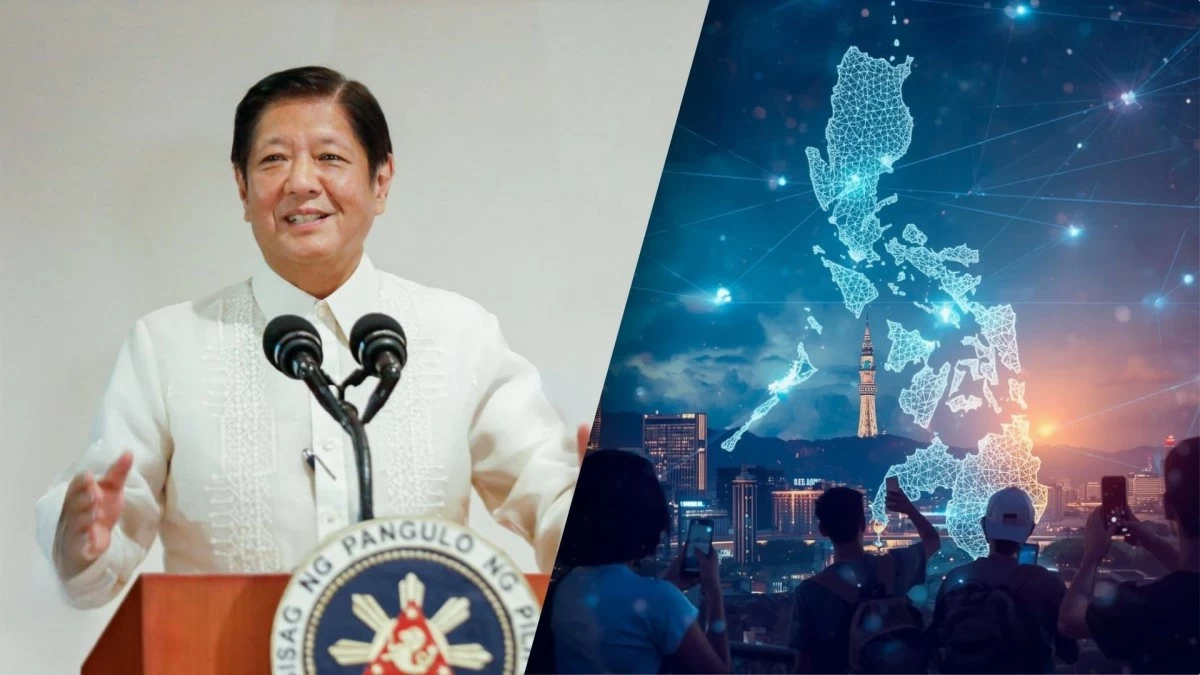
Photos: Malacañang/Canva AI
President Marcos has approved the country’s first National Digital Connectivity Plan (NDCP), a long-term master plan aimed at accelerating broadband rollout, lowering internet costs, and closing the digital divide nationwide, the Department of Information and Communications Technology (DICT) announced.
The DICT said the NDCP is the Philippines’ first comprehensive and nationwide framework for digital connectivity, positioning the country to catch up with regional peers and deliver faster, more affordable, and more secure internet services to Filipinos.
In a message to reporters, Presidential Communications Office (PCO) Secretary Dave Gomez said the President acknowledged that the Philippines is “playing catch-up” with its ASEAN neighbors, many of which adopted similar plans as early as a decade ago.
“But with technology now more advanced and at less cost, he is confident we will soon be at par in terms of connectivity, speed, and cost,” Gomez said.
The NDCP envisions a “Digitally Connected Philippines,” where connectivity is universal, affordable, high-speed, and secure, according to the DICT.
The plan is designed to ensure that digital access becomes meaningful and transformative, particularly for communities that have long been underserved by traditional telecom infrastructure.
“The National Digital Connectivity Plan envisions a Digitally Connected Philippines — one where connectivity is meaningful, inclusive, and transformative, anchored on universal access, affordability, higher speeds, and secure digital services for all Filipinos,” Gomez said.
DICT officials said the NDCP places strong emphasis on geographically isolated and disadvantaged areas (GIDAs) to ensure that no community is left behind in the country’s digital transition.
The master plan is anchored on four strategic pillars that will guide implementation across government and the private sector.
First, the NDCP seeks to strengthen governance and the regulatory framework by liberalizing the industry, promoting competition, and lowering barriers to entry.
Second, it aims to expand universal access by prioritizing connectivity for remote and underserved communities.
Third, the plan intensifies infrastructure investment by leveraging public-private partnerships to accelerate nationwide rollout and scale.
Finally, it focuses on building resilient digital infrastructure capable of withstanding climate-related risks, natural disasters, and cybersecurity threats.
According to Gomez, the NDCP is the result of an extensive consultative process that began with regional consultations in early 2024.
The plan was further refined through sectoral discussions, inter-agency technical working groups, and technical board presentations before receiving presidential approval.