

ADVERTISEMENT

House to make the most out of EDCOM II final report--Speaker Dy

Published Jan 26, 2026 11:56 pm

At A Glance

  • Speaker Faustino "Bojie" Dy III vowed that the House of Representatives will make the most out of the final report of the Second Congressional Commission on Education (EDCOM II) in terms of crafting laws and policies to address long-standing problems in the country's education sector and improve learning outcomes nationwide.
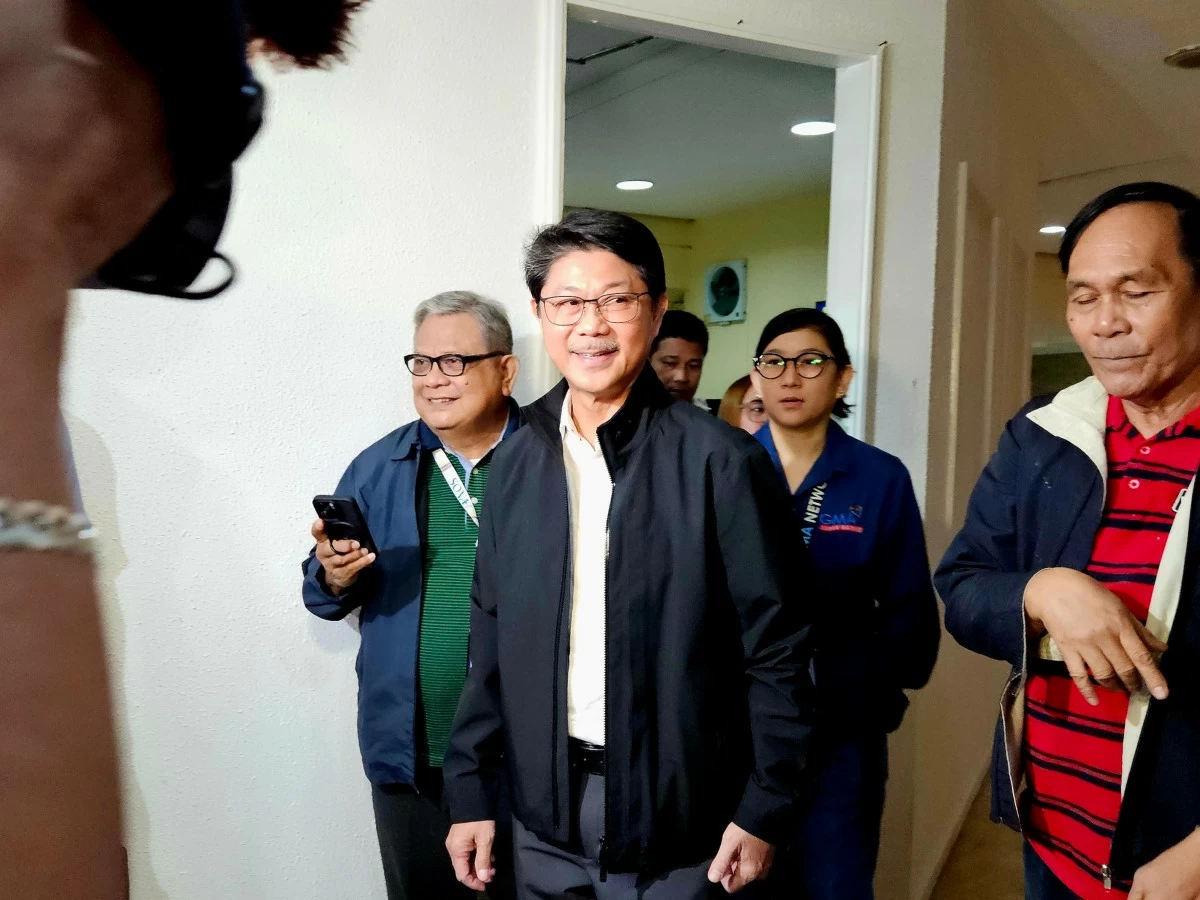
House Speaker Faustino "Bojie" Dy III (Ellson Quismorio/ MANILA BULLETIN)


Speaker Faustino "Bojie" Dy III vowed that the House of Representatives will make the most out of the final report of the Second Congressional Commission on Education (EDCOM II) in terms of crafting laws and policies to address long-standing problems in the country’s education sector and improve learning outcomes nationwide.
“Ipinapakita ng final report ng EDCOM II na ang krisis sa edukasyon ay hindi bago. Matagal na nating kinakaharap ang mababang literacy rate, mahinang pundasyon sa mga unang taon, at kulturang inuuna ang proseso kaysa tunay na pagkatuto,” the Speaker said during the turnover of the report on Monday, Jan. 26
(The final report of EDCOM II shows that the education crisis is not new. We have long been facing low literacy rates, weak foundations in the early years, and a culture that prioritizes process over genuine learning.)
“Ang kaibahan ngayon, malinaw na inilalatag ng ulat ang landas kung paano ito tutugunan (What is different now is that the report clearly lays out the path for how this will be addressed),” Dy pointed out.
According to the House leader, the responsibility now rests with lawmakers to ensure the recommendations are implemented.
“Ngayon, responsibilidad natin sa Kongreso na tiyaking ang mga rekomendasyong ito ay hindi mananatiling nasa papel lamang (Now, it is our responsibility in Congress to ensure that these recommendations do not remain only on paper)," he said.
Dy described the EDCOM II final report as a "guiding framework". The document represents a clear government reckoning with the state of Philippine education and a call for sustained action, he said.
“Ang ulat na inilulunsad natin ngayon ay hindi simpleng pagtatapos ng isang komisyon. Ito ay isang paninindigan ng pamahalaan—isang tapat, malinaw at walang-palusot na pagharap sa tunay na kalagayan ng edukasyon sa bansa,” Dy said.
(The report we are launching today is not simply the conclusion of a commission. It is a stand taken by the government—a sincere, clear, and uncompromising confrontation with the true state of education in the country.)
EDCOM II was convened to conduct a systemwide review of education amid persistent learning gaps, weak literacy outcomes and concerns that reforms have not translated into real gains for learners.
The commission’s final report lays out a long-term roadmap focused on strengthening foundational learning, teaching quality and education-to-employment pathways.
“It is not enough to study and understand the problems before us—what is more critical is that we act on the recommendations of the EDCOM II,” he stressed.
Dy said the House will consider the EDCOM II report a guide for education-related legislation, oversight of implementing agencies, and scrutiny of education spending.
“Tinatanggap ng Kapulungan ang ulat na ito bilang gabay sa patuloy na paggawa ng mga batas, sa masusing oversight, at sa matalinong paggastos ng pondo ng bayan—para sa tunay na pagkatuto ng bawat batang Pilipino,” he said.
(The House accepts this report as a guide in the continued crafting of laws, in thorough oversight, and in the wise spending of public funds—for the genuine learning of every Filipino child.)
Dy said that Congress should ultimately be judged not by the number of laws it passes but by their impact on learners.
“Sa huli, ang sukatan ng ating tagumpay ay hindi sa dami ng batas na ating ipinasa, kundi kung ilang batang Pilipino ang binigyan natin ng tunay na pag-asa at pagkakataon upang maiangat ang buhay nila at ang buhay ng kanilang pamilya.”
(In the end, the measure of our success is not in the number of laws we have passed, but in how many Filipino children we have given real hope and opportunity to uplift their lives and the lives of their families.)
Dy credited EDCOM II co-chairpersons Reps. Roman Romulo and Jude Acidre, along with commissioners Reps. Zia Adiong, Steve Solon, and Anna Victoria Veloso-Tuazon, for grounding the report in data and classroom realities.
He also thanked Dr. Karol Mark Yee and the EDCOM II Secretariat for producing what he described as the country’s first unified, long-term roadmap for education and workforce development.
ADVERTISEMENT
.most-popular .layout-ratio{ padding-bottom: 79.13%; } @media (min-width: 768px) and (max-width: 1024px) { .widget-title { font-size: 15px !important; } }

{{ articles_filter_1561_widget.title }}

.most-popular .layout-ratio{ padding-bottom: 79.13%; } @media (min-width: 768px) and (max-width: 1024px) { .widget-title { font-size: 15px !important; } }

{{ articles_filter_1562_widget.title }}

.most-popular .layout-ratio{ padding-bottom: 79.13%; } @media (min-width: 768px) and (max-width: 1024px) { .widget-title { font-size: 15px !important; } }

{{ articles_filter_1563_widget.title }}

{{ articles_filter_1564_widget.title }}

.mb-article-details { position: relative; } .mb-article-details .article-body-preview, .mb-article-details .article-body-summary{ font-size: 17px; line-height: 30px; font-family: "Libre Caslon Text", serif; color: #000; } .mb-article-details .article-body-preview iframe , .mb-article-details .article-body-summary iframe{ width: 100%; margin: auto; } .read-more-background { background: linear-gradient(180deg, color(display-p3 1.000 1.000 1.000 / 0) 13.75%, color(display-p3 1.000 1.000 1.000 / 0.8) 30.79%, color(display-p3 1.000 1.000 1.000) 72.5%); position: absolute; height: 200px; width: 100%; bottom: 0; display: flex; justify-content: center; align-items: center; padding: 0; } .read-more-background a{ color: #000; } .read-more-btn { padding: 17px 45px; font-family: Inter; font-weight: 700; font-size: 18px; line-height: 16px; text-align: center; vertical-align: middle; border: 1px solid black; background-color: white; } .hidden { display: none; }
function initializeAllSwipers() { // Get all hidden inputs with cms_article_id document.querySelectorAll('[id^="cms_article_id_"]').forEach(function (input) { const cmsArticleId = input.value; const articleSelector = '#article-' + cmsArticleId + ' .body_images'; const swiperElement = document.querySelector(articleSelector); if (swiperElement && !swiperElement.classList.contains('swiper-initialized')) { new Swiper(articleSelector, { loop: true, pagination: false, navigation: { nextEl: '#article-' + cmsArticleId + ' .swiper-button-next', prevEl: '#article-' + cmsArticleId + ' .swiper-button-prev', }, }); } }); } setTimeout(initializeAllSwipers, 3000); const intersectionObserver = new IntersectionObserver( (entries) => { entries.forEach((entry) => { if (entry.isIntersecting) { const newUrl = entry.target.getAttribute("data-url"); if (newUrl) { history.pushState(null, null, newUrl); let article = entry.target; // Extract metadata const author = article.querySelector('.author-section').textContent.replace('By', '').trim(); const section = article.querySelector('.section-info ').textContent.replace(' ', ' '); const title = article.querySelector('.article-title h1').textContent; // Parse URL for Chartbeat path format const parsedUrl = new URL(newUrl, window.location.origin); const cleanUrl = parsedUrl.host + parsedUrl.pathname; // Update Chartbeat configuration if (typeof window._sf_async_config !== 'undefined') { window._sf_async_config.path = cleanUrl; window._sf_async_config.sections = section; window._sf_async_config.authors = author; } // Track virtual page view with Chartbeat if (typeof pSUPERFLY !== 'undefined' && typeof pSUPERFLY.virtualPage === 'function') { try { pSUPERFLY.virtualPage({ path: cleanUrl, title: title, sections: section, authors: author }); } catch (error) { console.error('ping error', error); } } // Optional: Update document title if (title && title !== document.title) { document.title = title; } } } }); }, { threshold: 0.1 } ); function showArticleBody(button) { const article = button.closest("article"); const summary = article.querySelector(".article-body-summary"); const body = article.querySelector(".article-body-preview"); const readMoreSection = article.querySelector(".read-more-background"); // Hide summary and read-more section summary.style.display = "none"; readMoreSection.style.display = "none"; // Show the full article body body.classList.remove("hidden"); } document.addEventListener("DOMContentLoaded", () => { let loadCount = 0; // Track how many times articles are loaded const offset = [1, 2, 3, 4, 5, 6, 7, 8, 9, 10]; // Offset values const currentUrl = window.location.pathname.substring(1); let isLoading = false; // Prevent multiple calls if (!currentUrl) { console.log("Current URL is invalid."); return; } const sentinel = document.getElementById("load-more-sentinel"); if (!sentinel) { console.log("Sentinel element not found."); return; } function isSentinelVisible() { const rect = sentinel.getBoundingClientRect(); return ( rect.top < window.innerHeight && rect.bottom >= 0 ); } function onScroll() { if (isLoading) return; if (isSentinelVisible()) { if (loadCount >= offset.length) { console.log("Maximum load attempts reached."); window.removeEventListener("scroll", onScroll); return; } isLoading = true; const currentOffset = offset[loadCount]; window.loadMoreItems().then(() => { let article = document.querySelector('#widget_1690 > div:nth-last-of-type(2) article'); intersectionObserver.observe(article) loadCount++; }).catch(error => { console.error("Error loading more items:", error); }).finally(() => { isLoading = false; }); } } window.addEventListener("scroll", onScroll); });

Sign up by email to receive news.