







Integrity education: Shaping honest students to safeguard public welfare
Published Jan 25, 2026 12:05 am
|
Updated Jan 24, 2026 03:45 pm


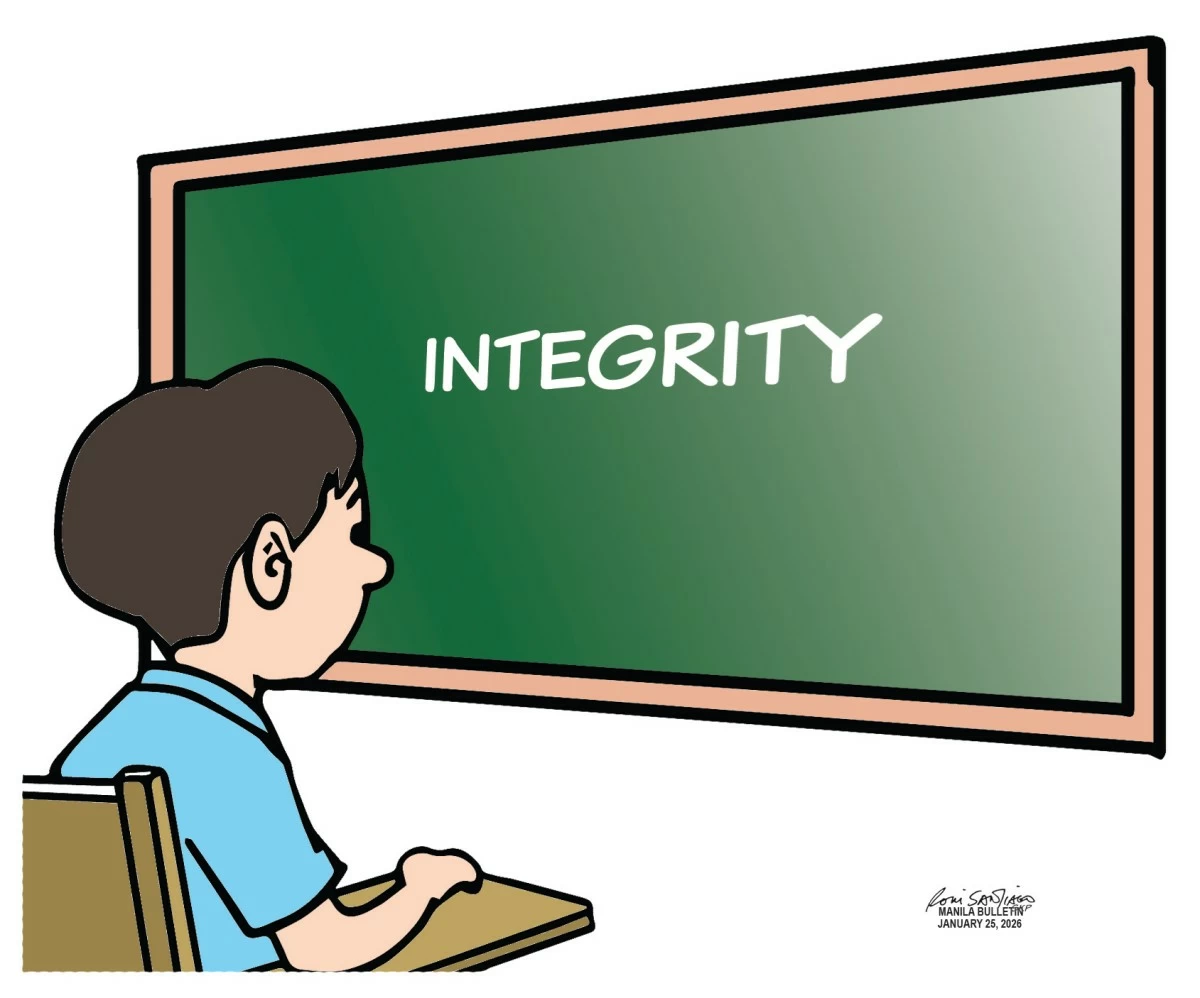
Integrity is often described as honesty, but it goes far beyond telling the truth. Integrity is the alignment between values and actions. It is the discipline to do what is right even when no one is watching, when shortcuts are tempting, or when wrongdoing appears to bring reward without consequence. Integrity gives credibility to individuals and stability to institutions. Without it, trust erodes, systems fail, and societies pay a heavy price.
Integrity is revealed in everyday situations. It is the student who refuses to cheat despite pressure to succeed. It is the teacher who grades fairly even when favoritism would be easier. It is the employee who reports an error instead of concealing it. At higher levels, integrity is seen when leaders reject corruption and place public welfare above personal gain. These decisions, whether small or monumental, shape the moral fabric of a community.
Recent revelations of dishonest acts linked to ghost projects, particularly in flood control and other infrastructure, show the devastating consequences of integrity failures. Billions of pesos intended to protect communities, prevent disasters, and improve lives were discovered siphoned off through ghost or substandard projects. The result is not just financial loss, but increased flooding, damaged livelihoods, endangered lives, and deep public distrust. These cases demonstrate that corruption is not a victimless crime. When integrity collapses, ordinary citizens bear the cost.
Given these realities, integrity must be taught deliberately in schools. Education is not only about producing skilled workers or high-achieving students; it is about forming responsible citizens. Classrooms are among the earliest spaces where young people encounter rules, authority, fairness, and accountability, making them ideal environments for integrity education.
Integrity is best taught through example. Teachers who act consistently, admit mistakes, and enforce rules fairly show students that ethical behavior is not optional. Clear policies on academic honesty, plagiarism, and cheating reinforce the idea that how success is achieved matters as much as success itself.
Discussion-based learning is equally important. By examining real-life cases of corruption, misuse of public funds, and ethical failures, students learn to connect moral choices with real-world consequences. Analyzing issues such as ghost projects helps students understand how dishonesty at the top begins with small acts of compromise tolerated at the bottom. Role-playing ethical dilemmas, debates on accountability, and reflective writing encourage moral reasoning rather than blind rule-following.
Service learning and collaborative projects also strengthen integrity. When students are entrusted with shared responsibilities, they learn accountability, transparency, and respect for others’ efforts. These experiences show that integrity is not abstract, but practical and necessary for teamwork and leadership.
Young people today are growing up in an environment where unethical behavior is sometimes normalized or excused as being “smart” or “practical.” Exposure to scandals involving massive public fund losses can breed cynicism, making corruption seem inevitable. Teaching integrity in school counters this narrative. It tells students that wrongdoing is not normal, acceptable, or unavoidable.
Early exposure to integrity issues helps young people develop a strong moral compass before habits of dishonesty take root. It equips them to resist peer pressure, reject shortcuts, and speak out against wrongdoing. More importantly, it prepares future professionals, leaders, and public servants to manage resources responsibly.
Integrity is the foundation of trust, and trust is essential for governance, development, and social progress. When schools commit to teaching integrity, they help prevent the repetition of costly failures that drain public resources and undermine national progress. In shaping honest students today, we safeguard public welfare tomorrow.