







Visiting Hollywood's favorite desert
A journey to Jordan's Wadi Rum
Published Jan 23, 2026 06:32 am
|
Updated Jan 23, 2026 01:59 pm


At A Glance
- It had breathtaking views and was an exhilarating and adrenaline-filled mad race on the desert sands.
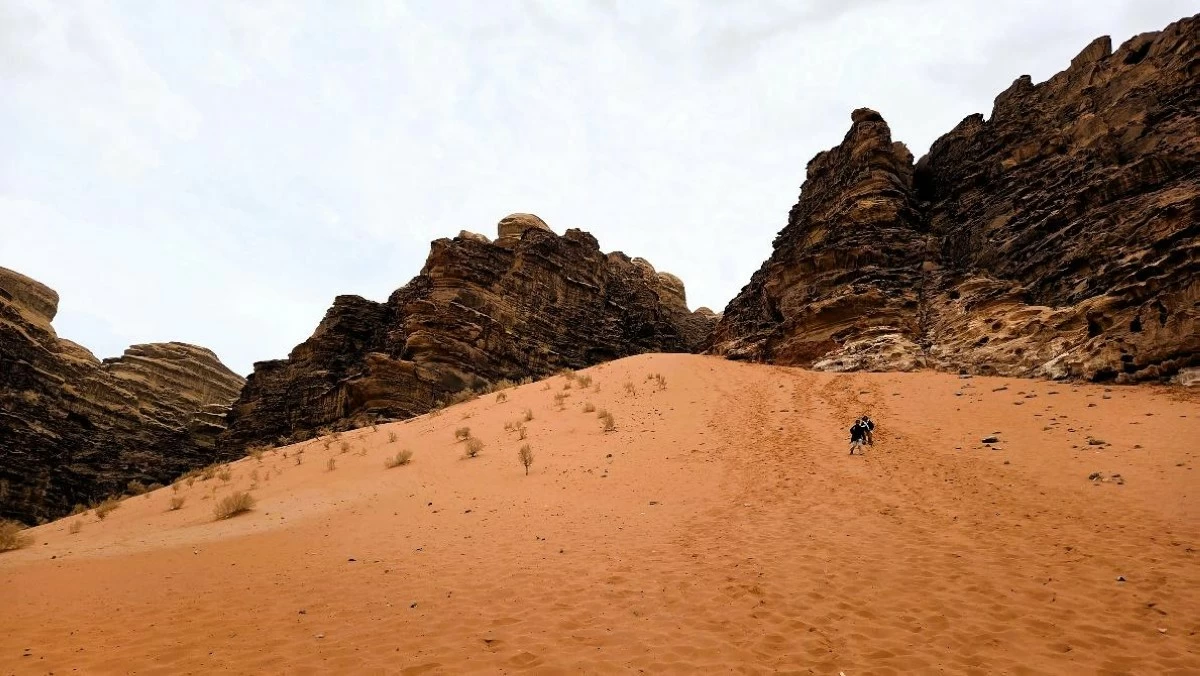
LAND OF LISAN AL GAIB Climbing the red sands of Wadi Rum.
Following our spectacular experiences in Petra, we set off for Wadi Rum convinced that we had already seen the biggest highlight of our journey. This could not have been further from the truth. There is a reason that Hollywood keeps coming back to Wadi Rum. The award-winning movie “Lawrence of Arabia” was filmed here, understandably, because this is where many of those historical events took place. Though otherworldly scenes from “Star Wars,” “Dune,” and “The Martian” were set in Wadi Rum because of the unique vistas and rock formations that can easily pass for those of another planet.
Wadi Rum is thought to have been named after a lost city that was mentioned in the Quran. “Wadi” means valley in Arabic, and “Rum” is from the city of Irum or Iram, which is believed to have been in this area. The climate in Wadi Rum is that of a desert, but because of its unique geology, it functions as an aquifer where very large amounts of rainwater end up stored in the ground. Water from Wadi Rum is pumped out and sent to different parts of Jordan through pipes going as far as Amman, which is 300 kilometers away. The abundant groundwater means that there are many mountain springs and wells, which let the locals raise crops like potatoes and tomatoes. We saw many fields where the tomatoes deemed not fit for market after harvest were left on the ground, and the camels were brought in to eat them. Our driver, Abed, said that the best potatoes in Jordan come from Wadi Rum, and they have a very distinct and delicious taste.
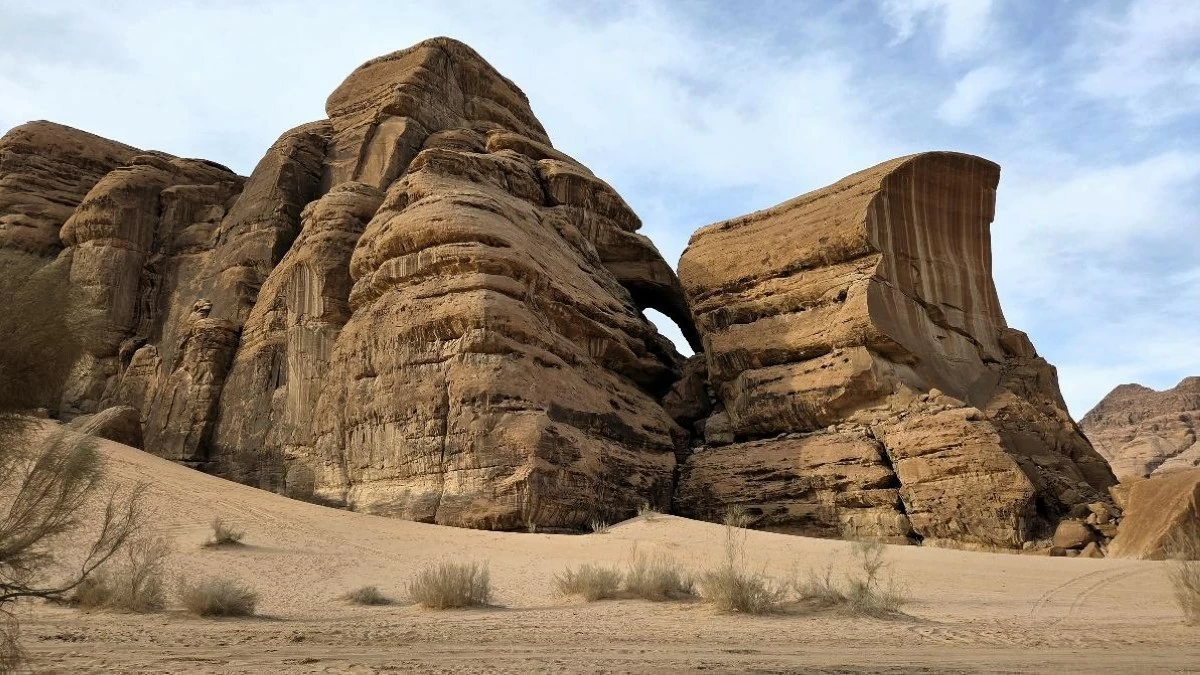
MIGHTY ROCKS One of many spectacular rock formations in Wadi Rum.
Our accommodation in Wadi Rum was at a Bedouin camp in the desert. The Bedouins are local nomadic tribes who have lived in this area for thousands of years. They are given a lot of autonomy by the Jordan government, although there is still a police presence to assist tourists in the event of emergencies. Bedouin camp accommodations come in different levels of luxury. Ours was one of the bigger outfits, and the “tents” were sturdy structures with heating and comfortable beds, as well as modern toilets and hot water showers. We came in wintertime, and the temperature ranged from three to 10°C, so these creature comforts were very welcome. We arrived at our camp from Petra a little past lunchtime. After checking in, we met our local Bedouin guide for a four-hour tour of the desert.
We set off in a 4x4 pickup truck through dirt roads, dashing past dunes along the way. To better see the sites, all four of us rode in the open cab of the pickup. Our driver told us to hang on tight as he floored the accelerator. What followed was better than any Disneyland ride. It had breathtaking views and was an exhilarating and adrenaline-filled mad race on the desert sands. We stopped at several sites with fascinating features such as ancient petroglyphs pointing passing caravans toward water sources, multicolored canyons cut deep into the mountains, and historic sites that T.E. Lawrence, a.k.a. Lawrence of Arabia, used during the campaign for Arab independence from the Ottoman Turks.
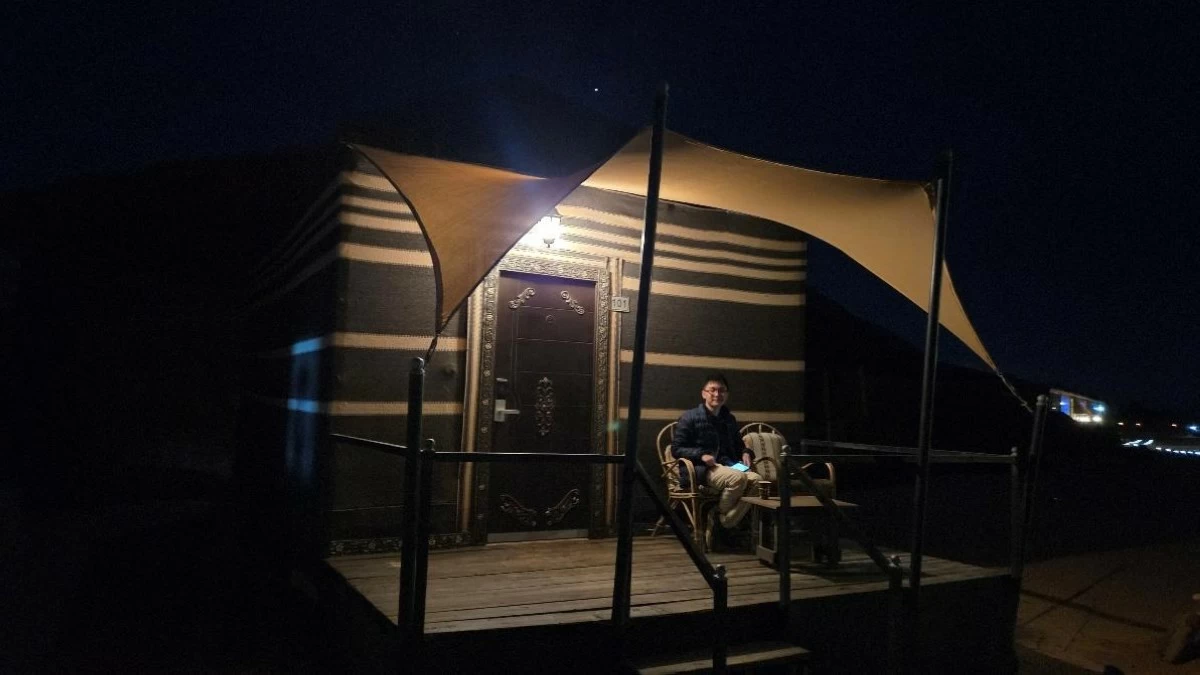
STAYING THE NIGHT A modern Bedouin tent in the desert of Wadi Rum.
After an afternoon of excitement, we set off for our camp at sunset. Dinner started off with a traditional Zarb, which is a whole lamb cooked for hours in an underground oven. The result is a fall-off-the-bone tender meat that is full of flavor. Even my wife and son, who normally avoid lamb, agreed that this was delicious. The lamb was accompanied by local Bedouin and Arabic delicacies, and thankfully, rice as well. We ate delicious food to our heart’s content while we were warmed by the open flames from strategically placed fireplaces. We smelled like wood smoke afterwards, but this was strangely fitting as we walked under a star-filled sky back to our tents for the night.
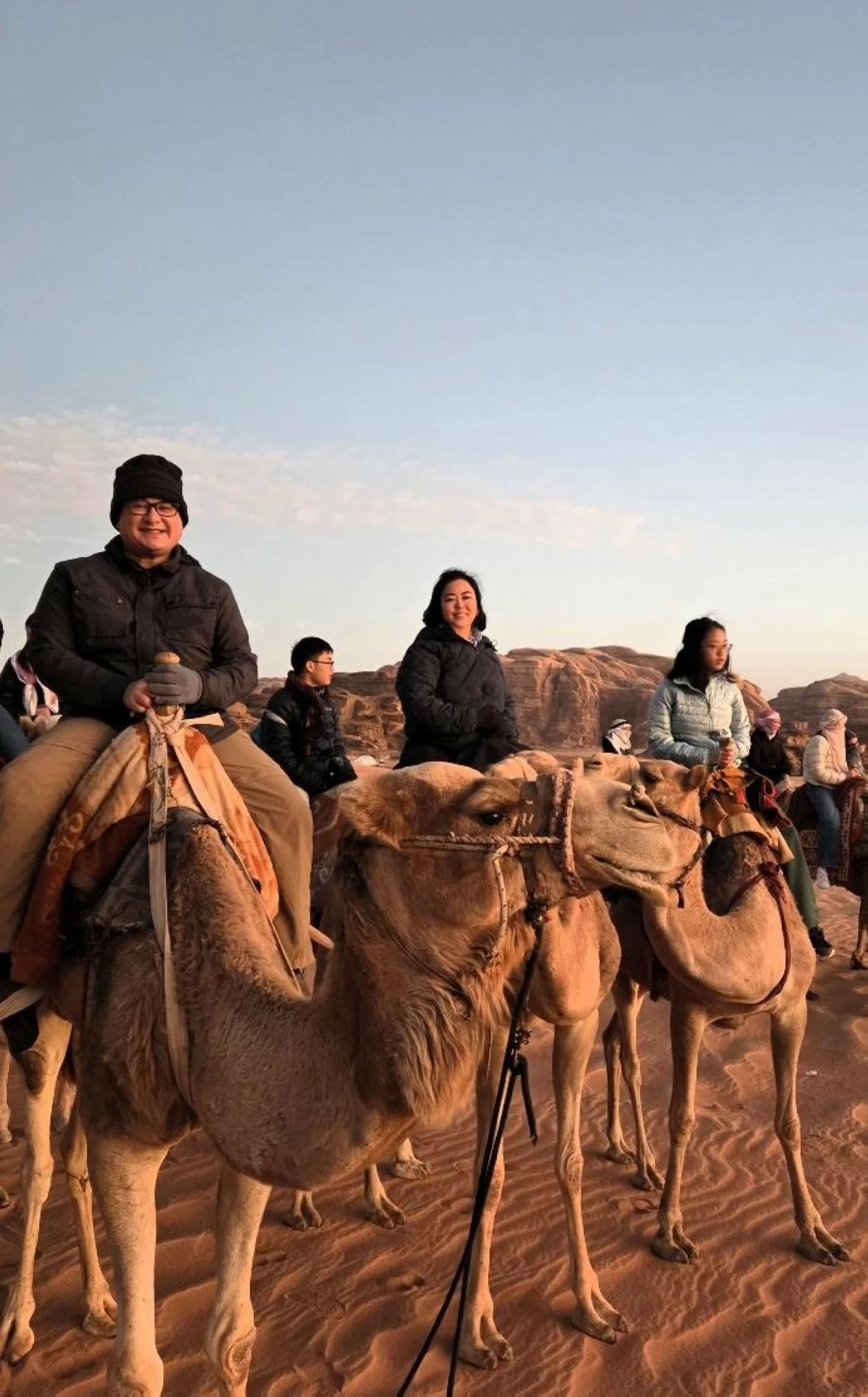
LIKE OLDEN TIMES The author and his family on the way to watch the sun rise while riding camels.
We woke up bright and early to watch the sunrise. We rode camels from our camp to the viewing area. The cool morning breeze in the pre-dawn twilight was bracing. As the rocky silhouettes in the distance slowly gained color while the sky got brighter, I couldn’t help but think that this view on a camel’s back was the same scene that played out thousands of years ago as the ancient people of this land went about their lives. The sun tentatively peeked from the tops of the mountains, and its rays eventually illuminated the beautiful land before us. We headed back to our camp for breakfast, our hearts full and content.
From Wadi Rum, it was a four-hour drive to the Dead Sea. This was our last stop before heading back home. On the way, our driver pointed out the markers for the underground pipes carrying water from Wadi Rum to Amman. Jordan doesn’t have any oil, unlike some of the other Gulf states. What it does have is water, and in a region covered by deserts, this was something worth fighting for way before oil became a precious commodity.
We drove through Amman on the way to the Dead Sea. As we got closer to our destination, we noticed that it was getting warmer. The Dead Sea is the lowest point on earth, at more than 400 meters below sea level. It isn’t really a sea, but a hypersaline lake with a 34 percent concentration of salt, which is 10 times the salt content of seawater. This occurs because the Dead Sea has no outlet and is fed by the Jordan River. As water evaporates in the desert sun, the water becomes saltier and saltier. This salty water and the mud of the Dead Sea are thought to have healing and rejuvenating properties. We arrived at our hotel a little after 5 p.m., and since it was the winter season, the beach was already closed. We settled down to a traditional Arabic meal and woke up bright and early to soak in the water.
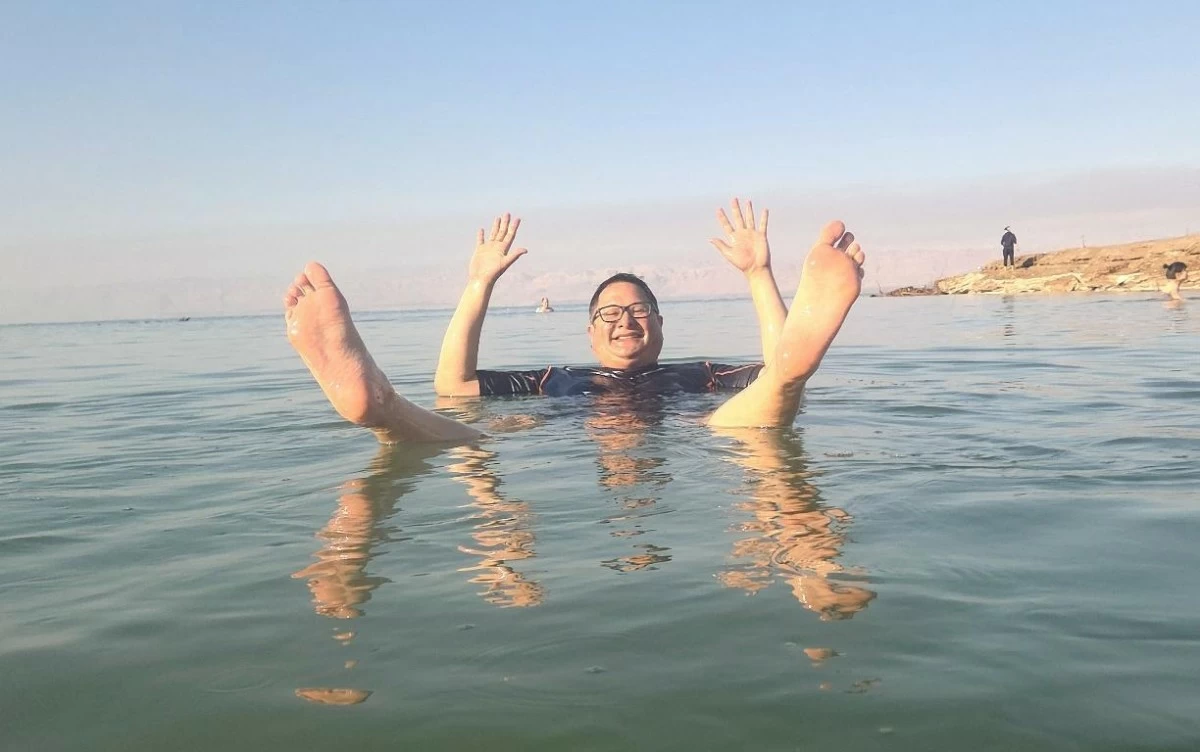
LIGHT AS A FEATHER The author floating in the Dead Sea
Due to the high salt content that enables it to retain a lot of heat, the water temperature of the Dead Sea almost never goes below 20°C, even in winter. We made the trek from the hotel to the beach, which had receded quite a bit since the early 2000s. The water is quite dense, so dense that it is impossible to sink, and you can float even with your hands and feet sticking out of the water. It is recommended that you do not spend more than 15 minutes in the water at a time since you will get dehydrated, and you should avoid getting the water in your eyes and nose since it burns. We also used the mud that was conveniently dredged up and placed in stone basins next to the shore to coat our skin, making a natural sunscreen and soothing balm.
Following our soak in the Dead Sea, it was time to head to the airport and say goodbye to this wonderful country and its people. Our journey through Jordan exceeded all expectations, and it perfectly embodied the reason we travel off the beaten path. If you are willing to go outside your comfort zone, there are real treasures out there waiting to be discovered.