






Manila Bulletin
 Business
Trade & Industry
Philippine visa-free policy for China boosts Cebu airport outlook
Business
Trade & Industry
Philippine visa-free policy for China boosts Cebu airport outlook
Business
Trade & Industry
Philippine visa-free policy for China boosts Cebu airport outlook
Philippine visa-free policy for China boosts Cebu airport outlook
Published Jan 23, 2026 10:23 am


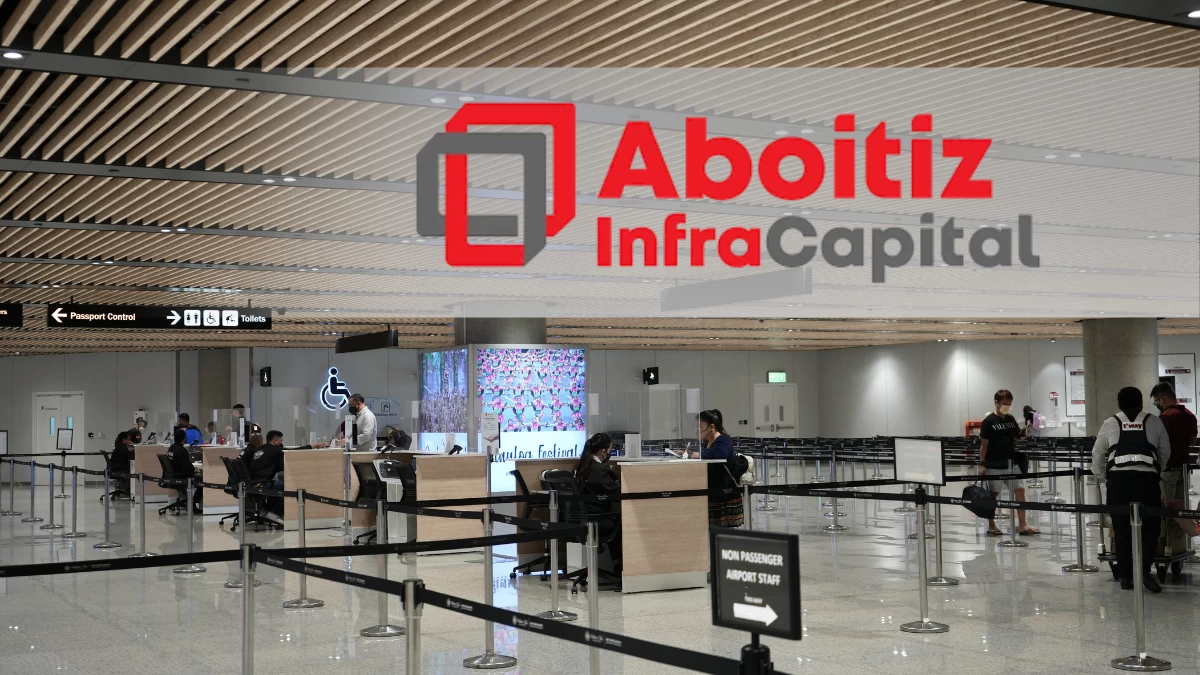
Mactan-Cebu International Airport is positioning itself as the primary gateway to the Visayas and Mindanao regions in 2026, capitalizing on a new Philippine government policy that grants Chinese nationals visa-free entry for up to 14 days.
Aboitiz InfraCapital Inc., the airport’s operator, said in a statement on Friday, Jan. 23, that the policy allows eligible Chinese travelers to enter through the Cebu hub for both tourism and business.
Rafael M. Aboitiz, vice president and head of airports at Aboitiz InfraCapital, said the move to bolster connectivity will allow passengers arriving in Cebu to move more efficiently to other parts of the archipelago by air or sea.
The visa-free initiative is part of a broader government effort to increase international arrivals and strengthen bilateral exchanges.
Department of Tourism data showed that Chinese travelers accounted for 262,144 of the 5.6 million tourists recorded last year. Officials expect those figures to rise significantly under the revised immigration rules.
The Mactan-Cebu facility currently serves as a central hub for domestic destinations through enhanced air-to-air connectivity.
Eligible travelers can access various provincial locations via direct domestic flights and streamlined transfer programs. Among these is CEB Connects, a service that reduces international connection times to 60 minutes and domestic transfers to 35 minutes.
The company is also readying CEB+, an airport-to-seaport connectivity program. Once the service is officially launched, it will allow travelers to reach nearby island provinces by integrating air and sea travel.
Aboitiz said these programs are designed to support tourism growth while distributing visitor traffic more evenly across the central and southern Philippines.
Under the new rules, Chinese travelers can gain easier access to destinations such as Bohol via fast ferry and Northern Mindanao through Laguindingan International Airport in Misamis Oriental. This integrated network simplifies the logistics of business and cultural travel within a single itinerary.
Aboitiz InfraCapital took over the operations of the Mactan-Cebu and Laguindingan airports in October 2024 and April 2025, respectively. These facilities, alongside Bohol-Panglao International Airport, comprise the AIC Airports platform.
The company expects the network to handle approximately 16 million passengers by the end of 2025, accounting for more than 20 percent of the Philippines’ total passenger traffic.
Modernization projects at the Bohol and Laguindingan airports began in early 2025 under government concession agreements.
The upgrades, overseen by the Department of Transportation and the Civil Aviation Authority of the Philippines, are intended to elevate the passenger experience and ensure the country’s regional hubs remain competitive with other Southeast Asian gateways.