






Manila Bulletin
 Property and Living
Leading the cycle: Robinsons Land's blueprint for sustainable growth
Property and Living
Leading the cycle: Robinsons Land's blueprint for sustainable growth
Property and Living
Leading the cycle: Robinsons Land's blueprint for sustainable growth
Leading the cycle: Robinsons Land's blueprint for sustainable growth
The real estate firm outlines its strategic vision for its next growth phase
Published Jan 23, 2026 01:33 pm



Mybelle V. Aragon-GoBio, RLC president and CEO
Robinsons Land Corporation (RLC) concluded 2025 with a series of rousing victories and multiple accolades across development and design, thereby strengthening its leadership role in the local and regional property sector. As the new year begins and ushers in the next quarter-century, RLC charts the framework of its growth momentum in building better lives for Filipinos.
In 2006 and the following years, Mybelle V. Aragon-GoBio, RLC president and CEO, sees the emergence of markets and development models, including infrastructure-led and transit-oriented growth corridors, regional cities enabled by improved mobility, and industrial and digital infrastructure zones anchored in employment creation.
For GoBio, the most crucial development models are the transit-oriented and destination-based mixed-use estates, end-user-driven and ready-for-occupancy residential formats, industrial and logistics developments that stabilize cash flows, and capital-efficient platforms supported by AI and REIT structures.
In the next cycle, GoBio anticipates a directional change—from speculative expansion or purely supply-led growth to infrastructure-enabled lifestyles, disciplined capital deployment, and data- and AI-driven decision-making—resulting in value that will increasingly accrue to developers who understand how people will live, move, work, and consume in a more connected yet more discerning environment.
She further describes the burgeoning transformation centered on major infrastructure projects. “The subway system, rail extensions, expressways, improved airports, and intermodal terminals will redefine accessibility across Metro Manila and key regional growth corridors. As travel times compress, access replaces distance as the primary determinant of real estate value. This shift accelerates the emergence of transit-oriented developments (TODs) as a dominant development model. TODs are no longer simply about density near stations; they are about enabling time-efficient, walkable, and convenience-driven lifestyles that align with evolving consumer preferences.”
RLC Residences Senior Vice President and Officer In Charge Teddy Bernas observes that buyers tend to “look for value beyond the residential project and recognize the premium of being part of an integrated development” and that “after the pandemic, buyers with more disposable income are seeing the value of investing in real estate they can enjoy with their families and escape the busy metropolis.”
GoBio notes that the post-pandemic mindset among end-users has crystallized around practical priorities—shorter commutes, daily convenience, healthier environments, and reliable infrastructure—that can be found in mixed-use communities. Given this, she imparts that “RLC is deliberately advancing its strategy of developing destination estates, self-sustaining integrated communities that allow people to live, work, play, and be inspired within a single, thoughtfully planned environment.”
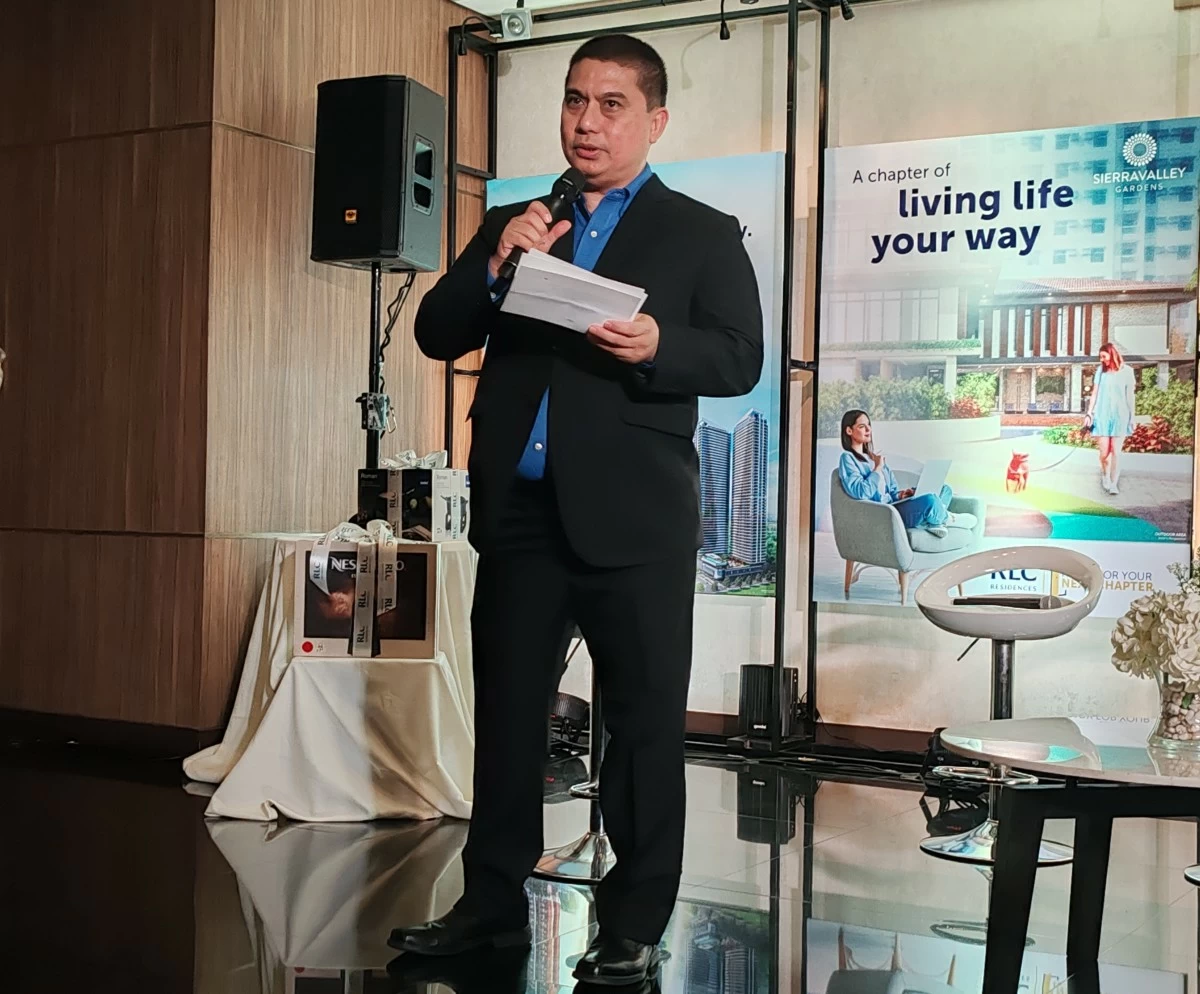
RLC Residences Senior Vice President and Officer In Charge Teddy Bernas
Furthermore, RLC’s destination estates integrate its core development formats—residential, office, retail, hotels, logistics, and lifestyle components—into cohesive ecosystems that generate daily, repeat usage from genuine end-users, reinforcing demand across asset classes. Nearby workplaces and essential services support these estates; offices benefit from walkable access to retail and leisure; malls evolve into experiential and community anchors; and hospitality components activate estates beyond working hours. In this way, RLC moves beyond single-asset optimization toward portfolio-level value creation.
Parallel to the rise of destination estates and TODs, GoBio emphasizes the continued decentralization of growth toward regional cities and infrastructure-led corridors. Bernas acknowledges this shift, observing that “as global economies and cultures shift, OFWs are considering moving back and securing homes in the country, thus creating demand for better quality homes in their home provinces.”
“Regional hubs such as Central Luzon, CALABARZON, Cebu, and select provincial cities become increasingly competitive alternatives to traditional urban cores. Real estate growth in this next phase will follow employment, infrastructure completion, and lifestyle alignment,” says GoBio.
Given this environment, GoBio underlines that development models must be reoriented toward greater certainty and responsiveness to end-user needs. While residential demand shows a growing preference for ready-for-occupancy (RFO) and near-RFO units, particularly within destination estates or near transit and employment nodes, she noted the prevailing market for pre-selling inventory, especially where product positioning, affordability, and location align with buyer expectations.
“By maintaining a balanced residential portfolio that includes RFO and pre-selling offerings, backed by a strong balance sheet and a track record of delivery, RLC can manage absorption risk, broaden its end-user base, and retain flexibility across market cycles, while continuing to align supply with genuine housing demand rather than purely speculative activity,” she adds.
For a competitive advantage, GoBio ensures the inclusion of industrial and logistics developments, particularly those integrated within infrastructure corridors, which provide long-term, predictable cash flows. These developments stabilize the portfolio and support more cyclical segments such as mixed-use and residential. In addition, designing the firm's assets from inception to be REIT-ready enables capital recycling, preserves liquidity, and allows growth without over-leveraging.
The executive also names AI as a critical enabler of future-proof development models, as it plays a huge role in strengthening demand sensing, optimizing unit mix and phasing, improving construction predictability, and enhancing asset operations through energy optimization and predictive maintenance. “When used effectively, AI supports faster RFO delivery, stronger net operating income, and better capital allocation decisions,” she explains.
With a focus on market movements, new requirements, and redefined targets, RLC is well-positioned to lead in the next phase of sustainable, resilient real estate growth.