






Manila Bulletin
 Business
Trade & Industry
EVAP lauds budget pivot as major win for investor confidence
Business
Trade & Industry
EVAP lauds budget pivot as major win for investor confidence
Business
Trade & Industry
EVAP lauds budget pivot as major win for investor confidence
EVAP lauds budget pivot as major win for investor confidence
Published Jan 23, 2026 01:25 pm


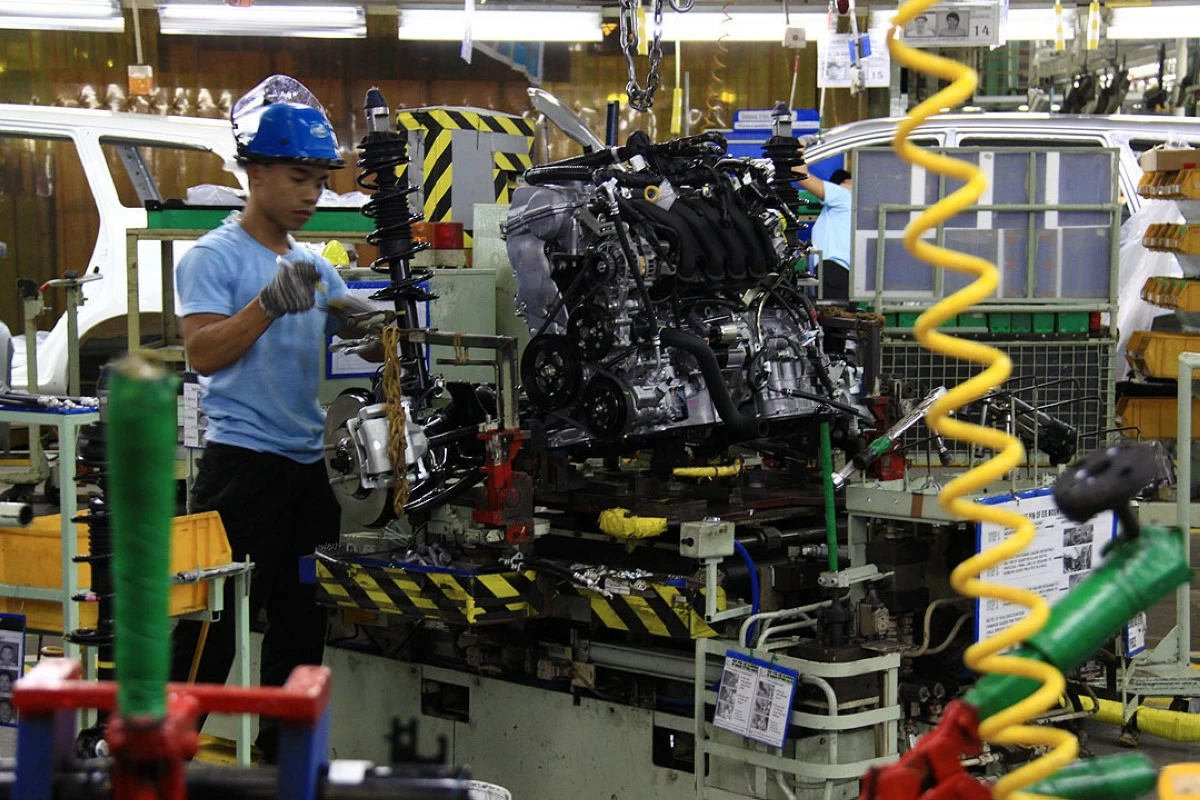
(PPMA photo)
The Electric Vehicle Association of the Philippines (EVAP) expects the country to be well-positioned to attract investments in the growing EV sector following the government’s move to fund recently vetoed vehicle manufacturing incentive program.
EVAP President Edmund Araga said the government’s funding solution to fulfill the remaining arrearages of the Comprehensive Automotive Resurgence Strategy (CARS) program directly benefits the Electric Vehicle Industry Strategy (EVIS).
Araga said the EVIS, which forms part of the country’s roadmap for the EV industry, hinges on a strong automotive manufacturing base.
“You cannot scale electric mobility if the underlying ecosystem—vehicle assembly, parts manufacturing, and supplier development—is weakened,” said Araga.
“This reassurance from DBM (Department of Budget and Management), DTI (Department of Trade and Industry), and DOF (Department of Finance) strengthens confidence in the Philippines as a serious and reliable partner for long-term EV investments,” he added.
The DTI, DBM, and DOF issued a joint statement on Jan. 19 saying that the government will leverage unused funds from the Department of Public Works and Highways (DPWH) and savings from last year’s national budget to cover the entire ₱4.32-billion vetoed from CARS.
Through CARS, the government grants fiscal support to automotive companies that manufacture at least 200,000 units of their enrolled vehicle model within six years.
The program was vetoed by President Ferdinand “Bongbong” Marcos Jr. earlier this month, alongside other unprogrammed appropriations from the year’s ₱6.79-trillion national budget.
EVAP said that returning the program’s budget affirms the country’s commitment to supporting investors, potentially paving the way for long-term investments in the automotive industry.
“A functioning and competitive local auto industry is critical to enable the Philippines to expand EV adoption,” Araga said.
“When the government honors commitments under CARS, it sends the right signal: the Philippines can be trusted, and industrial transformation under EVIS will be supported in a structured and responsible way,” he added.
EVIS seeks to provide fiscal and non-fiscal support to attract domestic manufacturing of EVs, batteries, electric components and parts, and the deployment of charging stations
The strategy, expected to begin in 2028, aims to roll out up to 9 million EVs and nearly 400,000 charging stations by 2040.
With CARS funding already set, Araga said this presents an opportunity to enhance its alignment with EVIS, bringing them together into a single national industrial roadmap.
Through this roadmap, he said, the country further strengthens investor confidence while ensuring that it remains competitive within neighboring countries in the region.
“The country needs continuity of policy to transition successfully into the future of mobility,” Araga said.