






Manila Bulletin
 Business
Banking & Finance
DBP donates cancer care device to National Kidney Institute
Business
Banking & Finance
DBP donates cancer care device to National Kidney Institute
Business
Banking & Finance
DBP donates cancer care device to National Kidney Institute
DBP donates cancer care device to National Kidney Institute
Published Jan 23, 2026 10:41 am


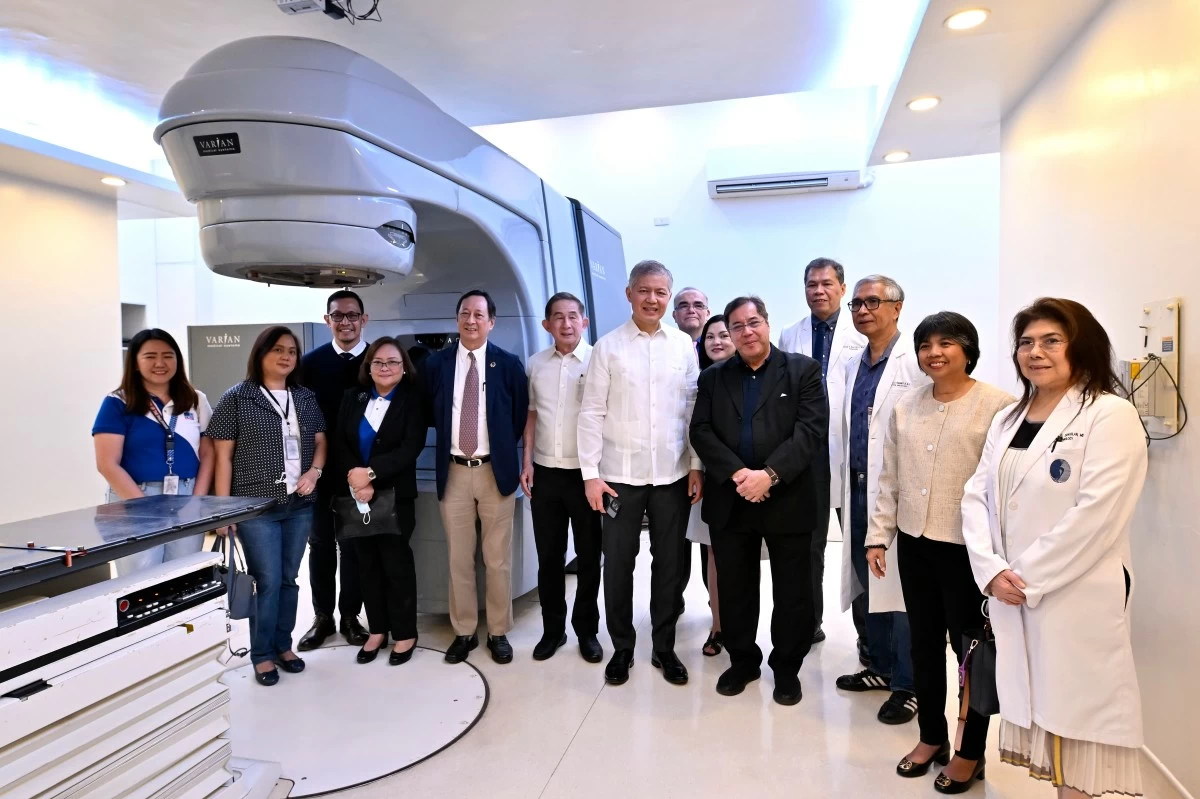
Shown in photo during the turnover of the LINAC machine donation to NKTI are Health Secretary Teodoro J. Herbosa (fifth from right), DBP President and CEO Michael O. de Jesus (seventh from left), DBP Chairman Philip G. Lo (sixth from left) and NKTI Executive Director Dr. Jose Dante P. Dator (fifth from left). Also in photo are DBP Senior Vice President Carolyn I. Olfindo (fourth from left), DBP Senior Vice President Ma. Cristina Malab (second from right), Senior Assistant Vice President Regina F. Tronco, (second from left), DBP Senior Manager Romil Joseph N. Sinocruz (third from left) and DBP Manager Maryknell R. Porcioncula (leftmost) along with other officials of NKTI.
Development Bank of the Philippines, the nation’s ninth-largest lender by assets, donated a radiation oncology device to the National Kidney and Transplant Institute to restore cancer treatment services that had been halted since the pandemic.
The state-owned bank provided a linear accelerator, or LINAC, to the Quezon City-based medical center, DBP President and Chief Executive Officer Michael O. de Jesus said in an emailed statement.
The equipment allows the institute to resume specialized radiation therapy, filling a critical gap in public health infrastructure after the facility’s previous operations were suspended during the height of the COVID-19 crisis.
The move marks a deepening of DBP’s involvement in social services as the government seeks to modernize state-run medical facilities. Established in 1981, NKTI is a tertiary medical center focused on renal health and organ transplants, but it also serves as a primary hub for various allied medical treatments for low-income patients.
De Jesus said the donation strengthens the bank’s commitment to supporting government healthcare programs that target marginalized and underserved communities. He noted that the initiative is designed to ensure that advanced oncological care remains accessible to those who cannot afford private healthcare alternatives.
Beyond its role as a development financier for infrastructure and logistics, DBP has increasingly prioritized social services and community development. The bank currently ranks as a major credit provider for four key economic pillars, including micro, small, and medium enterprises, as well as environmental projects.
The lender plans to explore further collaborations with the Department of Health and other state-run hospitals to address equipment shortages and facility upgrades. De Jesus said the bank remains committed to standing alongside NKTI and other healthcare partners to support projects aimed at improving the lives of the underprivileged.
The integration of the LINAC machine at NKTI is expected to reduce the backlog of cancer patients awaiting affordable radiation therapy in the capital. By focusing on high-impact medical technology, DBP is positioning itself as a central player in the state’s broader strategy to fortify the public health safety net against future disruptions.