







BIR restores tax audits with new accountability safeguards
By Jun Ramirez
Published Jan 23, 2026 01:05 pm


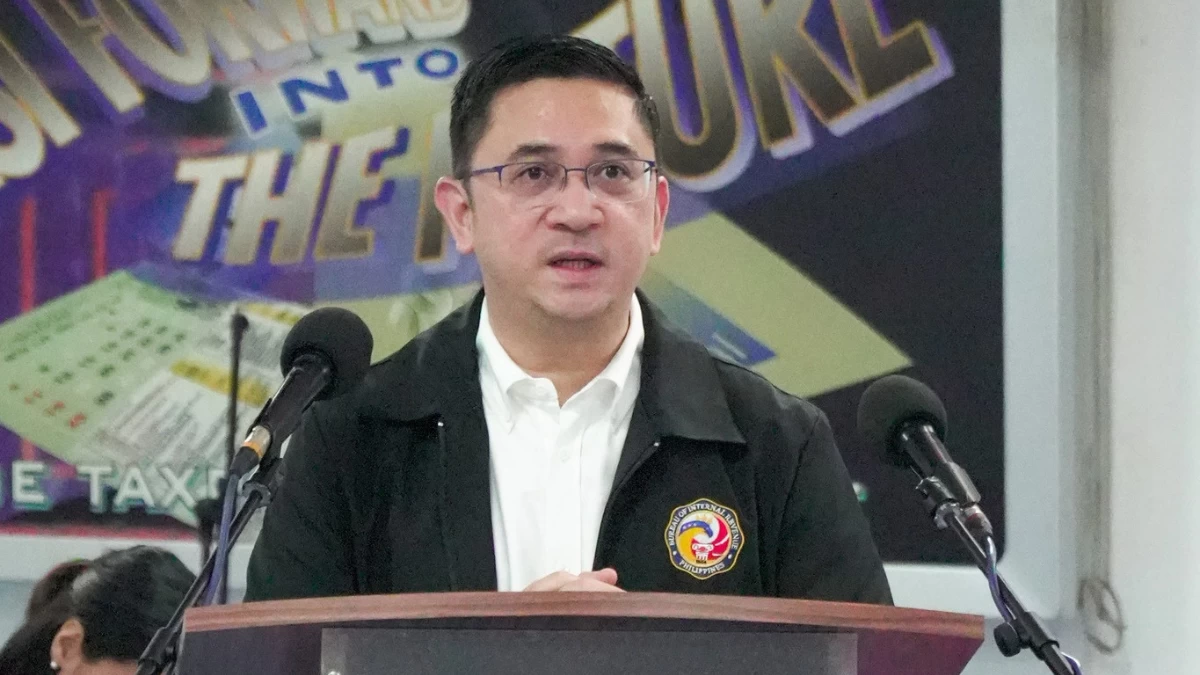
BIR Commissioner Charlito Martin R. Mendoza
The Bureau of Internal Revenue (BIR) launched a reform agenda aimed at overhauling tax audits and tightening accountability through a new oversight framework.
During the agency’s Directors’ Conference, BIR Commissioner Charlito Martin R. Mendoza introduced a five-point program dubbed BIR DARES.
The initiative, which stands for Digital and Data Transformation; Audit Reform and Accountability; Revenue Collection and Base Protection; Employee Empowerment and Welfare Promotion; and Service Excellence and Stakeholder Engagement, is intended to align tax administration with President Ferdinand Marcos Jr.’s broader economic goals.
Mendoza told regional directors from Luzon and officials from the Large Taxpayers Service that the program targets deep-seated weaknesses in how the government monitors taxpayer compliance.
He noted that the agenda reflects the immediate challenges the bureau faces on the ground rather than abstract policy goals. The rollout is expected to continue with a secondary briefing for Visayas and Mindanao offices later today.
A central pillar of the new strategy is the resolution of long-standing private sector complaints regarding audit practices.
In November, the BIR suspended the issuance of Letters of Authority, the official documents that empower revenue officers to examine a taxpayer’s books.
The suspension followed reports of inconsistent enforcement and lack of transparency in the assessment process.
To address these concerns, Mendoza established a Technical Working Group Review Committee on Assessment Integrity and Audit Reform. This committee is currently finalizing the regulatory framework that will govern the lifting of the audit suspension.
Mendoza noted that when audits resume, they will operate under significantly stricter rules, including a single consolidated Letter of Authority per taxpayer per year to prevent repetitive or overlapping investigations.
The bureau is also introducing digital safeguards to protect taxpayers from unauthorized examinations. This includes a public verification system via the agency’s chatbot, REVIE, which allows individuals and companies to confirm the authenticity of audit orders.
Furthermore, the agency plans to abolish overlapping audit units and revive the “revalida” system, a peer-review mechanism designed to increase internal accountability among revenue officers.
Beyond audit reforms, the BIR is pivoting toward risk-based enforcement for high-risk commodities such as vape products, tobacco, and fuel.
Mendoza indicated that digitalization will be the primary driver for revenue growth in 2026, alongside improved employee welfare to ensure service delivery.
He maintained that the current reforms are essential to maintaining public trust, which he identified as the foundation of an effective tax system. (With reports from Derco Rosal)