ADVERTISEMENT

Waste is everyone's responsibility

Published Jan 22, 2026 12:02 am  |  Updated Jan 21, 2026 05:08 pm
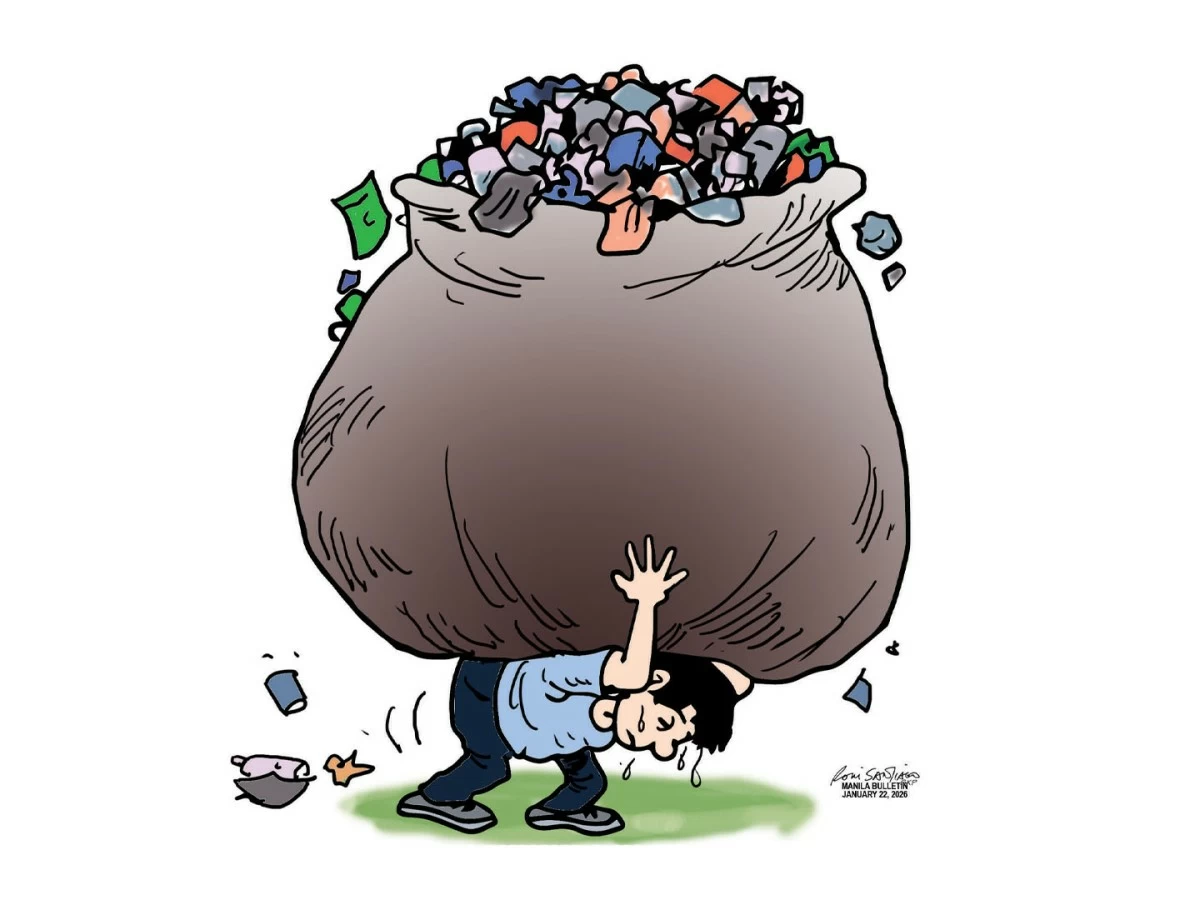
The increasing amount of waste generated by people is a major problem that cannot be ignored. Every day, tons of garbage collected by local government units (LGUs) confront us—on trucks crawling through traffic, on street corners where uncollected waste forms mounds of plastic bags reeking of foul odor, and in waterways where trash floats like mini islets on what were once rivers.
The scale of the problem is alarming. The Philippines generates an estimated 60,000 metric tons of solid waste daily, with Metro Manila producing over 10,000 tons a day. Plastic packaging—especially single-use plastics such as sachets—makes up a significant portion of this waste, much of which is neither recycled nor properly disposed of. Instead, it clogs drainage systems, worsens flooding, and pollutes rivers that flow into Manila Bay.
Collecting and disposing of this waste comes at a steep cost. More garbage means more trucks, more fuel, more collectors, longer hauling distances, and more trips to dump sites. These realities translate into rising expenses that must eventually be paid by the people who generate the waste—us. This was the context behind Manila Mayor Francisco “Isko Moreno” Domagoso’s recent announcement that the city had to increase garbage collection fees for the first time since 2013 to reflect the actual cost of waste collection and disposal.
As waste volumes continue to grow, other LGUs will likely follow Manila’s lead and adjust their own garbage collection fees. Any increase, however, inevitably affects people, especially those living on daily wages.
Still, the rising cost of waste collection exposes an uncomfortable truth: society has long treated waste disposal as cheap and limitless, when in fact it is neither. If garbage fees remain unrealistically low, LGU budgets are drained, funds for basic services are compromised, and the waste problem worsens.
Waste reduction is a shared responsibility. It cannot rest solely on government agencies tasked with collecting what society discards. Mayor Domagoso’s appeal to residents and business owners underscores this reality: managing garbage requires cooperation from households, communities, and the private sector.
The country already has laws meant to address the problem. Republic Act No. 9003, or the Ecological Solid Waste Management Act of 2000, mandates waste segregation at source, recycling and composting, and the establishment of materials recovery facilities in every barangay. Yet more than two decades since its passage, compliance remains inconsistent.
More recently, Republic Act No. 11898, the Extended Producer Responsibility (EPR) Act of 2022, placed responsibility squarely on large corporations that produce plastic packaging—especially sachets—to recover, recycle, or offset the plastic waste they generate. This law recognizes that consumers alone cannot solve a problem created by excessive plastic production. Strict enforcement of the EPR law is crucial if the country is serious about reducing plastic pollution at its source.
Government must do more than raise fees. It must enforce existing laws, penalize violators, invest in waste reduction infrastructure, and expand education campaigns on proper waste management. At the same time, people must reduce consumption, segregate waste, avoid single-use plastics, and support recycling and composting initiatives.
Waste is everyone’s problem, and so is its solution. Until we treat waste reduction as a shared responsibility—by government, businesses, and citizens alike—the garbage will continue to pile up, and the cost of inaction will only grow heavier.
ADVERTISEMENT
.most-popular .layout-ratio{ padding-bottom: 79.13%; } @media (min-width: 768px) and (max-width: 1024px) { .widget-title { font-size: 15px !important; } }

{{ articles_filter_1561_widget.title }}

.most-popular .layout-ratio{ padding-bottom: 79.13%; } @media (min-width: 768px) and (max-width: 1024px) { .widget-title { font-size: 15px !important; } }

{{ articles_filter_1562_widget.title }}

.most-popular .layout-ratio{ padding-bottom: 79.13%; } @media (min-width: 768px) and (max-width: 1024px) { .widget-title { font-size: 15px !important; } }

{{ articles_filter_1563_widget.title }}

{{ articles_filter_1564_widget.title }}

.mb-article-details { position: relative; } .mb-article-details .article-body-preview, .mb-article-details .article-body-summary{ font-size: 17px; line-height: 30px; font-family: "Libre Caslon Text", serif; color: #000; } .mb-article-details .article-body-preview iframe , .mb-article-details .article-body-summary iframe{ width: 100%; margin: auto; } .read-more-background { background: linear-gradient(180deg, color(display-p3 1.000 1.000 1.000 / 0) 13.75%, color(display-p3 1.000 1.000 1.000 / 0.8) 30.79%, color(display-p3 1.000 1.000 1.000) 72.5%); position: absolute; height: 200px; width: 100%; bottom: 0; display: flex; justify-content: center; align-items: center; padding: 0; } .read-more-background a{ color: #000; } .read-more-btn { padding: 17px 45px; font-family: Inter; font-weight: 700; font-size: 18px; line-height: 16px; text-align: center; vertical-align: middle; border: 1px solid black; background-color: white; } .hidden { display: none; }
function initializeAllSwipers() { // Get all hidden inputs with cms_article_id document.querySelectorAll('[id^="cms_article_id_"]').forEach(function (input) { const cmsArticleId = input.value; const articleSelector = '#article-' + cmsArticleId + ' .body_images'; const swiperElement = document.querySelector(articleSelector); if (swiperElement && !swiperElement.classList.contains('swiper-initialized')) { new Swiper(articleSelector, { loop: true, pagination: false, navigation: { nextEl: '#article-' + cmsArticleId + ' .swiper-button-next', prevEl: '#article-' + cmsArticleId + ' .swiper-button-prev', }, }); } }); } setTimeout(initializeAllSwipers, 3000); const intersectionObserver = new IntersectionObserver( (entries) => { entries.forEach((entry) => { if (entry.isIntersecting) { const newUrl = entry.target.getAttribute("data-url"); if (newUrl) { history.pushState(null, null, newUrl); let article = entry.target; // Extract metadata const author = article.querySelector('.author-section').textContent.replace('By', '').trim(); const section = article.querySelector('.section-info ').textContent.replace(' ', ' '); const title = article.querySelector('.article-title h1').textContent; // Parse URL for Chartbeat path format const parsedUrl = new URL(newUrl, window.location.origin); const cleanUrl = parsedUrl.host + parsedUrl.pathname; // Update Chartbeat configuration if (typeof window._sf_async_config !== 'undefined') { window._sf_async_config.path = cleanUrl; window._sf_async_config.sections = section; window._sf_async_config.authors = author; } // Track virtual page view with Chartbeat if (typeof pSUPERFLY !== 'undefined' && typeof pSUPERFLY.virtualPage === 'function') { try { pSUPERFLY.virtualPage({ path: cleanUrl, title: title, sections: section, authors: author }); } catch (error) { console.error('ping error', error); } } // Optional: Update document title if (title && title !== document.title) { document.title = title; } } } }); }, { threshold: 0.1 } ); function showArticleBody(button) { const article = button.closest("article"); const summary = article.querySelector(".article-body-summary"); const body = article.querySelector(".article-body-preview"); const readMoreSection = article.querySelector(".read-more-background"); // Hide summary and read-more section summary.style.display = "none"; readMoreSection.style.display = "none"; // Show the full article body body.classList.remove("hidden"); } document.addEventListener("DOMContentLoaded", () => { let loadCount = 0; // Track how many times articles are loaded const offset = [1, 2, 3, 4, 5, 6, 7, 8, 9, 10]; // Offset values const currentUrl = window.location.pathname.substring(1); let isLoading = false; // Prevent multiple calls if (!currentUrl) { console.log("Current URL is invalid."); return; } const sentinel = document.getElementById("load-more-sentinel"); if (!sentinel) { console.log("Sentinel element not found."); return; } function isSentinelVisible() { const rect = sentinel.getBoundingClientRect(); return ( rect.top < window.innerHeight && rect.bottom >= 0 ); } function onScroll() { if (isLoading) return; if (isSentinelVisible()) { if (loadCount >= offset.length) { console.log("Maximum load attempts reached."); window.removeEventListener("scroll", onScroll); return; } isLoading = true; const currentOffset = offset[loadCount]; window.loadMoreItems().then(() => { let article = document.querySelector('#widget_1690 > div:nth-last-of-type(2) article'); intersectionObserver.observe(article) loadCount++; }).catch(error => { console.error("Error loading more items:", error); }).finally(() => { isLoading = false; }); } } window.addEventListener("scroll", onScroll); });

Sign up by email to receive news.