






 Philippines
National
Rare species of flowering plant in Nueva Ecija determined to be new to science
Philippines
National
Rare species of flowering plant in Nueva Ecija determined to be new to science
Rare species of flowering plant in Nueva Ecija determined to be new to science


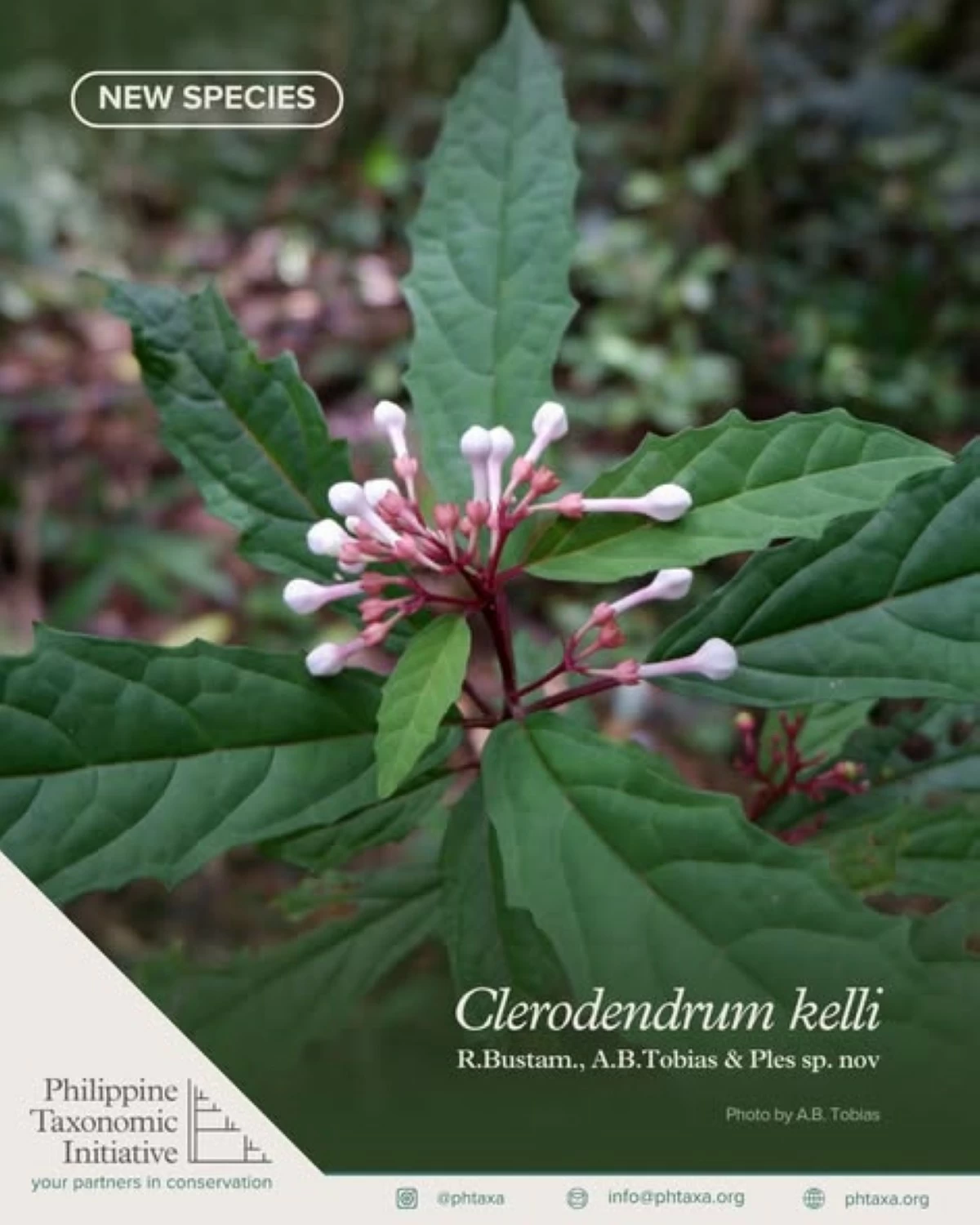
A rare species of flowering plant found in Nueva Ecija was recently determined to be new to science.
Christened Clerodendrum kelli in a scientific publication by the Philippine Taxonomic Initiative (PTI), the species is the first new Clerodendrum to be described from the Philippines since 1930, bringing the country’s total up to 19.
The paper explains Clerodendrum kelli to be a shrub growing up to one meter tall, with toothed leaves that are green above and purple underneath as well as white flowers with five petals.
Like other members of its genus (often called “glorybowers” in English and “bagawak” in Tagalog), its flashiest features are noted to be its sepals.
In Clerodendrum, sepals appear as a fused structure called a calyx, which often grows in size and changes color to support and showcase the plant’s developing fruit.
According to the article, Clerodendrum kelli is special in that the pointed “fingers” of its calyces shrink away, leaving a reddish-pink cup with a smooth rim. It is very similar to a related species, the better-known “bagawak morado” (Clerodendrum quadriloculare), although its flowers are much shorter and less clumped together, and its sepals are smaller and more rounded.
Members of PTI chanced upon the species during a botanical expedition to the Pantabangan-Carranglan Watershed Forest Reserve (PCWFR) in 2020. It was later confirmed to be undescribed in existing taxonomic accounts through comparison to live plants, dried herbarium specimens, and published images.
Although the species is currently considered “new” to science, PTI recognizes that their team was not the first to “discover” it. Their publication asserts that the indigenous Bugkalot within the PCWFR were already familiar with the plant, pinpointing both its habitat in colder regions of the mountain and its medicinal use in local remedies for sick dogs.
Preliminary assessments have placed Clerodendrum kelli in the category “Critically Endangered” due to its limited range and the threats of both landslides and land conversion. In recognition of indigenous knowledge and stewardship, the researchers adopted the Bugkalot name “kelli” as the species’ scientific epithet to highlight the role of indigenous peoples and forest reserves play in safeguarding the Philippines’ unique plant life.