

ADVERTISEMENT

More Filipinos protected against climate-related losses as insurance coverage rises in 2025

Published Jan 22, 2026 10:48 am

At A Glance

  • Filipinos stand more financially resilient against the potential losses destructive typhoons could cause, as the number of insured properties and lives increased in 2025.
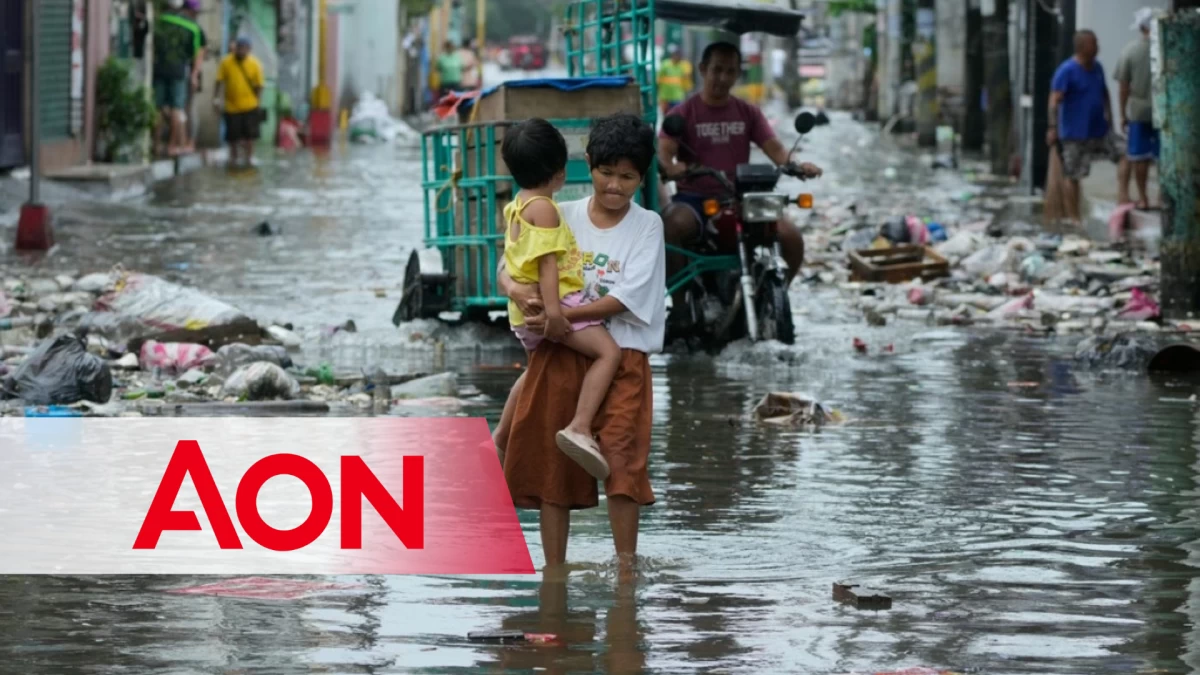
Filipinos are becoming more financially resilient against the potential losses destructive typhoons could cause, as the number of insured properties and lives increased in 2025.

Global insurance broker Aon wrote in a Jan. 20 report that the Philippines, despite being frequently hit by typhoons, has increased its layer of protection against massive economic losses.

This is evident in total insurance penetration, which climbed 11 basis points (bps) to 1.85 percent in the third quarter of 2025 from 1.74 percent in the same period in 2024. Insurance penetration refers to the size of a country’s insurance market relative to its economy, measured as total insurance premiums divided by gross domestic product (GDP).

Aon noted that non-life insurance accounted for 1.1 percent of the total uptake, “suggesting gradual progress in strengthening financial resilience against natural catastrophes.” Total premiums in the non-life sector increased by 13 percent to over $1 billion during the quarter, up from $906.5 million a year earlier.

From June to August 2025, Tropical Storm Crising and Typhoons Betty, Isang, and Emong battered parts of Southeast Asia, including the Philippines, Vietnam, Thailand, Laos, and Myanmar, killing more than 150 people, damaging over 200,000 homes, destroying about 480,000 acres of crops, and causing losses of up to $3 billion.

From late September to November, Typhoons Opong, Nando, Paolo, Tino, and Uwan hit the Philippines, Vietnam, and Thailand, killing more than 500 people and causing losses of over $5 billion.

Global economic losses reached $260 billion in 2025, 23 percent below the 21st-century average and the lowest since 2015, according to the report. Insured losses climbed to $127 billion, 27 percent above the long-term average.

This suggests that insurance covered a larger share of total losses than in previous years, as reflected by the global protection gap narrowing to a record-low 51 percent.

More than half of global economic losses in 2025 were in the United States (US), followed by Asia-Pacific (APAC), Europe, Middle East, and Africa (EMEA), and other parts of the Americas.

It bears noting that countries in Southeast Asia have massive exposure to natural disasters and a heavy reliance on self-funding for recovery rather than insurance. Since 2000, only 12 percent of economic losses from flooding and tropical cyclones in the region have been covered by insurance.

This means the protection gap in the region remains high at 88 percent, requiring self-support or government assistance.

ADVERTISEMENT
.most-popular .layout-ratio{ padding-bottom: 79.13%; } @media (min-width: 768px) and (max-width: 1024px) { .widget-title { font-size: 15px !important; } }

{{ articles_filter_1561_widget.title }}

.most-popular .layout-ratio{ padding-bottom: 79.13%; } @media (min-width: 768px) and (max-width: 1024px) { .widget-title { font-size: 15px !important; } }

{{ articles_filter_1562_widget.title }}

.most-popular .layout-ratio{ padding-bottom: 79.13%; } @media (min-width: 768px) and (max-width: 1024px) { .widget-title { font-size: 15px !important; } }

{{ articles_filter_1563_widget.title }}

{{ articles_filter_1564_widget.title }}

.mb-article-details { position: relative; } .mb-article-details .article-body-preview, .mb-article-details .article-body-summary{ font-size: 17px; line-height: 30px; font-family: "Libre Caslon Text", serif; color: #000; } .mb-article-details .article-body-preview iframe , .mb-article-details .article-body-summary iframe{ width: 100%; margin: auto; } .read-more-background { background: linear-gradient(180deg, color(display-p3 1.000 1.000 1.000 / 0) 13.75%, color(display-p3 1.000 1.000 1.000 / 0.8) 30.79%, color(display-p3 1.000 1.000 1.000) 72.5%); position: absolute; height: 200px; width: 100%; bottom: 0; display: flex; justify-content: center; align-items: center; padding: 0; } .read-more-background a{ color: #000; } .read-more-btn { padding: 17px 45px; font-family: Inter; font-weight: 700; font-size: 18px; line-height: 16px; text-align: center; vertical-align: middle; border: 1px solid black; background-color: white; } .hidden { display: none; }
function initializeAllSwipers() { // Get all hidden inputs with cms_article_id document.querySelectorAll('[id^="cms_article_id_"]').forEach(function (input) { const cmsArticleId = input.value; const articleSelector = '#article-' + cmsArticleId + ' .body_images'; const swiperElement = document.querySelector(articleSelector); if (swiperElement && !swiperElement.classList.contains('swiper-initialized')) { new Swiper(articleSelector, { loop: true, pagination: false, navigation: { nextEl: '#article-' + cmsArticleId + ' .swiper-button-next', prevEl: '#article-' + cmsArticleId + ' .swiper-button-prev', }, }); } }); } setTimeout(initializeAllSwipers, 3000); const intersectionObserver = new IntersectionObserver( (entries) => { entries.forEach((entry) => { if (entry.isIntersecting) { const newUrl = entry.target.getAttribute("data-url"); if (newUrl) { history.pushState(null, null, newUrl); let article = entry.target; // Extract metadata const author = article.querySelector('.author-section').textContent.replace('By', '').trim(); const section = article.querySelector('.section-info ').textContent.replace(' ', ' '); const title = article.querySelector('.article-title h1').textContent; // Parse URL for Chartbeat path format const parsedUrl = new URL(newUrl, window.location.origin); const cleanUrl = parsedUrl.host + parsedUrl.pathname; // Update Chartbeat configuration if (typeof window._sf_async_config !== 'undefined') { window._sf_async_config.path = cleanUrl; window._sf_async_config.sections = section; window._sf_async_config.authors = author; } // Track virtual page view with Chartbeat if (typeof pSUPERFLY !== 'undefined' && typeof pSUPERFLY.virtualPage === 'function') { try { pSUPERFLY.virtualPage({ path: cleanUrl, title: title, sections: section, authors: author }); } catch (error) { console.error('ping error', error); } } // Optional: Update document title if (title && title !== document.title) { document.title = title; } } } }); }, { threshold: 0.1 } ); function showArticleBody(button) { const article = button.closest("article"); const summary = article.querySelector(".article-body-summary"); const body = article.querySelector(".article-body-preview"); const readMoreSection = article.querySelector(".read-more-background"); // Hide summary and read-more section summary.style.display = "none"; readMoreSection.style.display = "none"; // Show the full article body body.classList.remove("hidden"); } document.addEventListener("DOMContentLoaded", () => { let loadCount = 0; // Track how many times articles are loaded const offset = [1, 2, 3, 4, 5, 6, 7, 8, 9, 10]; // Offset values const currentUrl = window.location.pathname.substring(1); let isLoading = false; // Prevent multiple calls if (!currentUrl) { console.log("Current URL is invalid."); return; } const sentinel = document.getElementById("load-more-sentinel"); if (!sentinel) { console.log("Sentinel element not found."); return; } function isSentinelVisible() { const rect = sentinel.getBoundingClientRect(); return ( rect.top < window.innerHeight && rect.bottom >= 0 ); } function onScroll() { if (isLoading) return; if (isSentinelVisible()) { if (loadCount >= offset.length) { console.log("Maximum load attempts reached."); window.removeEventListener("scroll", onScroll); return; } isLoading = true; const currentOffset = offset[loadCount]; window.loadMoreItems().then(() => { let article = document.querySelector('#widget_1690 > div:nth-last-of-type(2) article'); intersectionObserver.observe(article) loadCount++; }).catch(error => { console.error("Error loading more items:", error); }).finally(() => { isLoading = false; }); } } window.addEventListener("scroll", onScroll); });

Sign up by email to receive news.