ADVERTISEMENT

HP reveals next-level AI compute power with new workstation lineup

Published Jan 22, 2026 03:48 pm
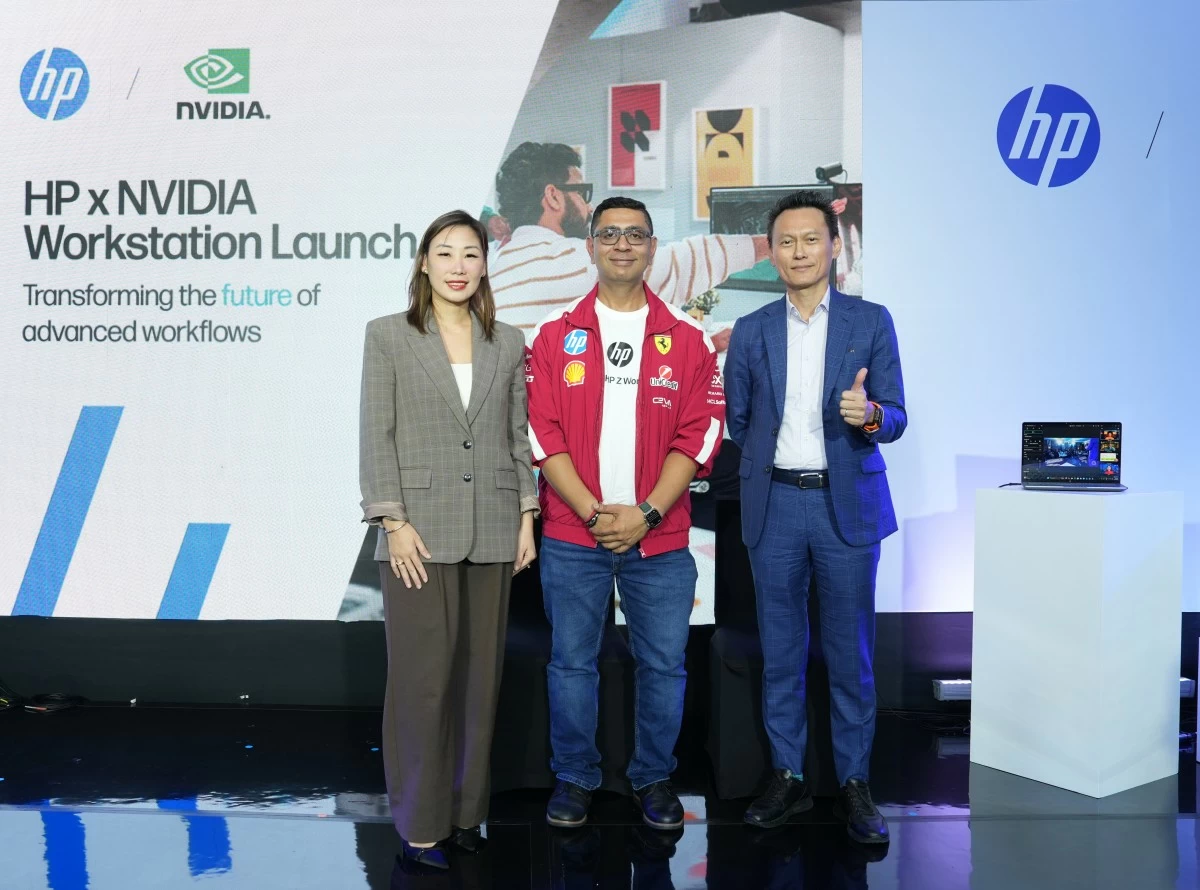
From left to right: Ida Evina Ong-Co, Managing Director of HP Philippines; Tarun Relhan, Advanced Compute Solutions Category Manager of HP Greater Asia; and Kong Meng Koh, Managing Director of HP Southeast Asia, during the HP workstation launch at the Westin Manila, on Wednesday, Jan. 21, 2026. (Photo from HP)
HP Philippines officially introduced its latest addition to its workstation portfolio: the ZBook Ultra G1a laptop, HP’s most powerful 14” mobile workstation, and the Z2 Mini G1a Workstation desktop PC. These two new, next-gen AI PCs are designed to handle demanding AI workloads, accelerate creative processes, and support high-performance professional applications, empowering professionals, businesses, and creatives to achieve new levels of productivity, making multitasking easier and improving performance and innovation.
Both the HP ZBook Ultra G1a laptop and Z2 Mini G1a Workstation desktop PCs were built to deliver next-gen AI performance and mobility in compact designs. The HP ZBook Ultra and HP Z2 Mini enable users to run complex workflows simultaneously, such as 3D design, render graphics-intensive projects, and work locally with large language models (LLMs).
HP’s latest workstation line-up meets the growing demand amongst professionals and creatives for high-performing computing devices to harness the power of AI.
In the Philippines, the creative economy is a major contributor to jobs and national growth, employing over 7 million people and accounting for about 7.3% of GDP, according to the Philippine Information Agency — yet many in the sector face gaps in digital skills and technology readiness as workflows become more complex and digitally intensive. Reports highlight the need to upskill creative and technical workers in digital technologies, including AI and advanced media tools, to better prepare them for evolving industry demands.
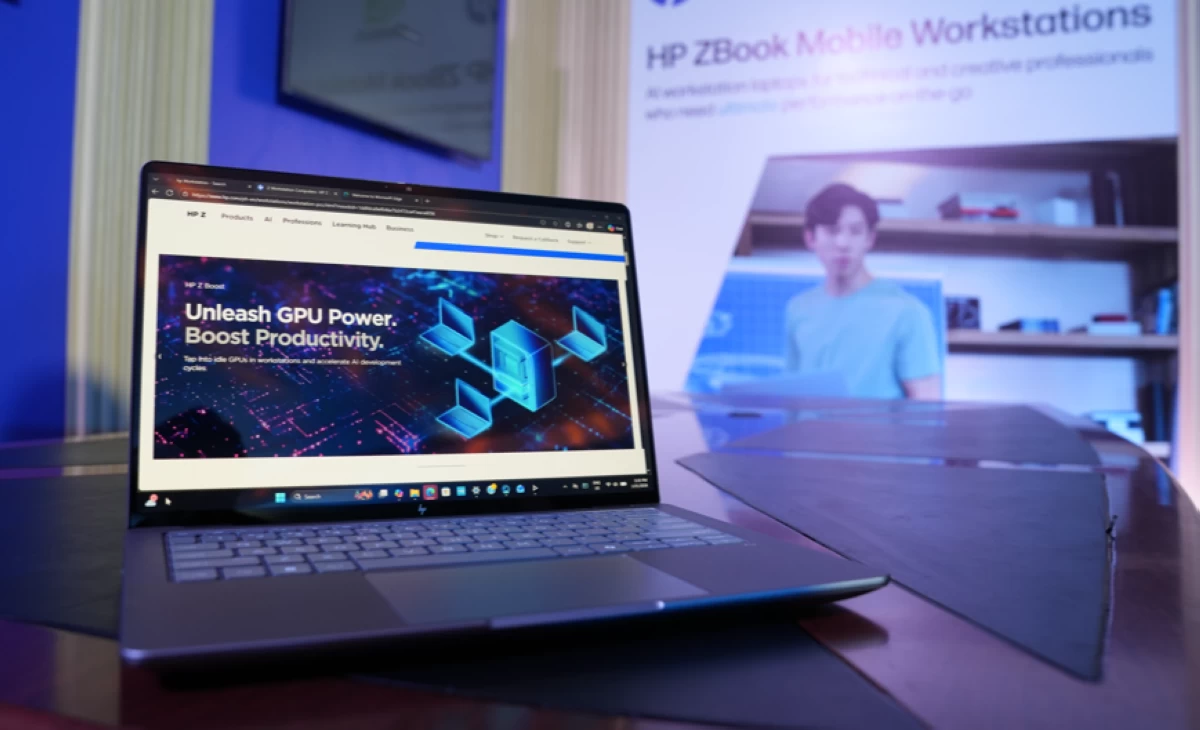
The HP ZBook Ultra G1a is designed to handle demanding creative and technical workflows in a thin, lightweight form factor. (Photo from HP)
“Many Filipino creators and professionals today are handling far more complex tasks than they were even a few years ago. Our goal with ZBook Ultra and Z2 Mini is simply to make sure they have tools that match those evolving demands,” said Ida Evina Ong-Co, Managing Director of HP Philippines. “The launch of both AI-powered workstations also advances HP's vision for the future of work, where design solutions deliver growth and more fulfilling work experiences.”
Creators are juggling content creation and monitoring analytics, often while on the go, which is why being able to work anywhere without compromising performance is a consideration for many.
The launch highlighted HP’s long-standing goal of equipping the workforce with purpose-built technology that adapts to evolving demands. With AI becoming central to creative applications, from video editing to generative design, HP’s new workstation lineup is engineered to deliver sustained performance, reliable thermals, and professional-grade certification.
The HP ZBook Ultra G1a and Z2 Mini G1a redefine what’s possible for professionals demanding uncompromising performance in compact form factors. Powered by AMD Ryzen™ AI Max PRO processors, both devices deliver advanced AI acceleration, next-gen integrated graphics, and ISV-certified reliability with up to 50 TOPS NPU of AI processing capability. With a unified memory architecture of up to 128GB and up to 96GB of GPU-assignable memory, these devices are engineered to handle the most demanding applications — from generative design and 3D rendering to AI model deployment and real-time content creation.
In a media roundtable, Ida Evina Ong-Co summarized the HP workstation by saying that it is “Designed to handle demands of AI workload, (it can) accelerate the creative processes, and it can support high-performance professional applications.”
The HP ZBook Ultra G1a, Z2 Mini G1a, HP ZBook Ultra G1a, and HP Z2 Mini Workstation are available for purchase on HP.com starting from Jan. 22, 2026.
ADVERTISEMENT
.most-popular .layout-ratio{ padding-bottom: 79.13%; } @media (min-width: 768px) and (max-width: 1024px) { .widget-title { font-size: 15px !important; } }

{{ articles_filter_1561_widget.title }}

.most-popular .layout-ratio{ padding-bottom: 79.13%; } @media (min-width: 768px) and (max-width: 1024px) { .widget-title { font-size: 15px !important; } }

{{ articles_filter_1562_widget.title }}

.most-popular .layout-ratio{ padding-bottom: 79.13%; } @media (min-width: 768px) and (max-width: 1024px) { .widget-title { font-size: 15px !important; } }

{{ articles_filter_1563_widget.title }}

{{ articles_filter_1564_widget.title }}

.mb-article-details { position: relative; } .mb-article-details .article-body-preview, .mb-article-details .article-body-summary{ font-size: 17px; line-height: 30px; font-family: "Libre Caslon Text", serif; color: #000; } .mb-article-details .article-body-preview iframe , .mb-article-details .article-body-summary iframe{ width: 100%; margin: auto; } .read-more-background { background: linear-gradient(180deg, color(display-p3 1.000 1.000 1.000 / 0) 13.75%, color(display-p3 1.000 1.000 1.000 / 0.8) 30.79%, color(display-p3 1.000 1.000 1.000) 72.5%); position: absolute; height: 200px; width: 100%; bottom: 0; display: flex; justify-content: center; align-items: center; padding: 0; } .read-more-background a{ color: #000; } .read-more-btn { padding: 17px 45px; font-family: Inter; font-weight: 700; font-size: 18px; line-height: 16px; text-align: center; vertical-align: middle; border: 1px solid black; background-color: white; } .hidden { display: none; }
function initializeAllSwipers() { // Get all hidden inputs with cms_article_id document.querySelectorAll('[id^="cms_article_id_"]').forEach(function (input) { const cmsArticleId = input.value; const articleSelector = '#article-' + cmsArticleId + ' .body_images'; const swiperElement = document.querySelector(articleSelector); if (swiperElement && !swiperElement.classList.contains('swiper-initialized')) { new Swiper(articleSelector, { loop: true, pagination: false, navigation: { nextEl: '#article-' + cmsArticleId + ' .swiper-button-next', prevEl: '#article-' + cmsArticleId + ' .swiper-button-prev', }, }); } }); } setTimeout(initializeAllSwipers, 3000); const intersectionObserver = new IntersectionObserver( (entries) => { entries.forEach((entry) => { if (entry.isIntersecting) { const newUrl = entry.target.getAttribute("data-url"); if (newUrl) { history.pushState(null, null, newUrl); let article = entry.target; // Extract metadata const author = article.querySelector('.author-section').textContent.replace('By', '').trim(); const section = article.querySelector('.section-info ').textContent.replace(' ', ' '); const title = article.querySelector('.article-title h1').textContent; // Parse URL for Chartbeat path format const parsedUrl = new URL(newUrl, window.location.origin); const cleanUrl = parsedUrl.host + parsedUrl.pathname; // Update Chartbeat configuration if (typeof window._sf_async_config !== 'undefined') { window._sf_async_config.path = cleanUrl; window._sf_async_config.sections = section; window._sf_async_config.authors = author; } // Track virtual page view with Chartbeat if (typeof pSUPERFLY !== 'undefined' && typeof pSUPERFLY.virtualPage === 'function') { try { pSUPERFLY.virtualPage({ path: cleanUrl, title: title, sections: section, authors: author }); } catch (error) { console.error('ping error', error); } } // Optional: Update document title if (title && title !== document.title) { document.title = title; } } } }); }, { threshold: 0.1 } ); function showArticleBody(button) { const article = button.closest("article"); const summary = article.querySelector(".article-body-summary"); const body = article.querySelector(".article-body-preview"); const readMoreSection = article.querySelector(".read-more-background"); // Hide summary and read-more section summary.style.display = "none"; readMoreSection.style.display = "none"; // Show the full article body body.classList.remove("hidden"); } document.addEventListener("DOMContentLoaded", () => { let loadCount = 0; // Track how many times articles are loaded const offset = [1, 2, 3, 4, 5, 6, 7, 8, 9, 10]; // Offset values const currentUrl = window.location.pathname.substring(1); let isLoading = false; // Prevent multiple calls if (!currentUrl) { console.log("Current URL is invalid."); return; } const sentinel = document.getElementById("load-more-sentinel"); if (!sentinel) { console.log("Sentinel element not found."); return; } function isSentinelVisible() { const rect = sentinel.getBoundingClientRect(); return ( rect.top < window.innerHeight && rect.bottom >= 0 ); } function onScroll() { if (isLoading) return; if (isSentinelVisible()) { if (loadCount >= offset.length) { console.log("Maximum load attempts reached."); window.removeEventListener("scroll", onScroll); return; } isLoading = true; const currentOffset = offset[loadCount]; window.loadMoreItems().then(() => { let article = document.querySelector('#widget_1690 > div:nth-last-of-type(2) article'); intersectionObserver.observe(article) loadCount++; }).catch(error => { console.error("Error loading more items:", error); }).finally(() => { isLoading = false; }); } } window.addEventListener("scroll", onScroll); });

Sign up by email to receive news.