







Filipinos in New York are watching City Hall
And they built Mamdani Tracker to do that
Published Jan 22, 2026 11:46 am



Anthony Esguerra, Geli Juani, and Cha Crisostomo attend the Philippine Independence Day reception at the Philippine Embassy in Washington, DC, in 2025.
On the morning New York City swore in its new mayor, a small group of Filipino professionals was not watching from the sidelines.
They were refreshing a website they had spent weeks building, fueled by late nights, policy documents, and a shared conviction that promises made at City Hall should not disappear once the campaign banners come down.
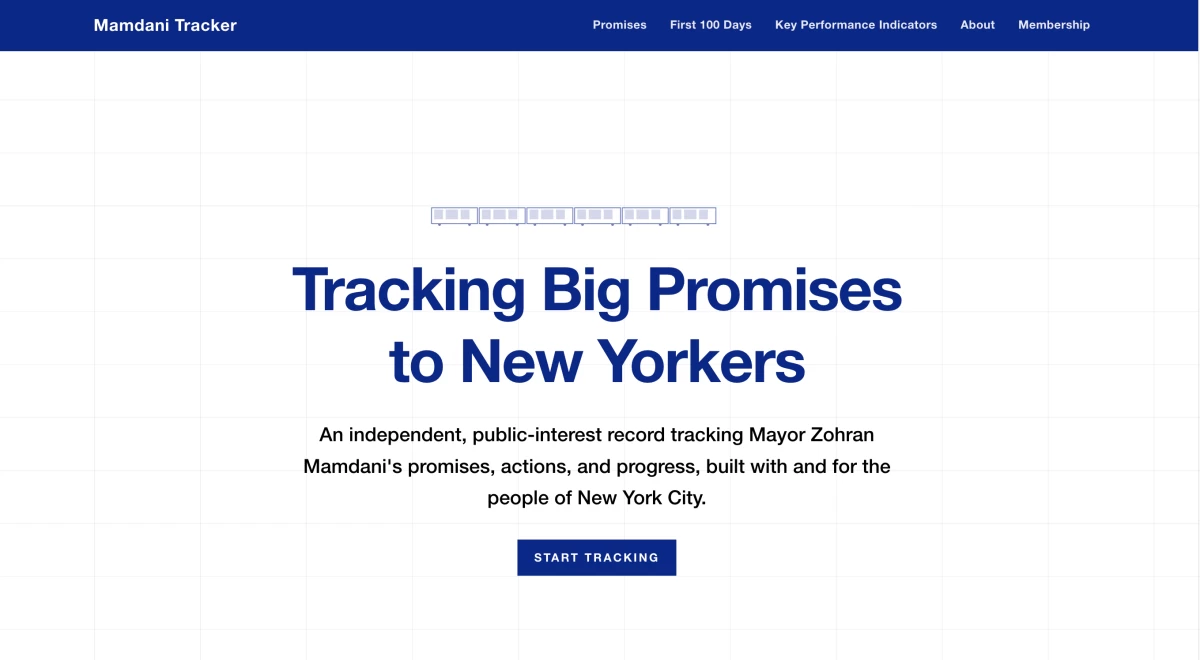
The result is Mamdani Tracker, an independent public-interest website launched as Zohran Mamdani began his term as mayor, designed to track more than 100 promises made by his administration and follow what happens to them once governing begins.
Behind the project are three Filipinos working in the areas of journalism, policy research, and economics — a combination that reflects both the diversity of the Filipino community in New York and its growing presence in civic and political spaces.
A community with skin in the game
Filipinos are among the largest ethnic communities in the New York metropolitan area, deeply embedded in the city’s everyday life.
They work on hospital floors and in caregiving homes, teach in classrooms, build careers in tech and the arts, and increasingly hold positions in government and public policy.
“Because of that, Filipinos absolutely have a stake in what’s happening at City Hall,” said Anthony Esguerra, a New York–based journalist and newsroom leader who founded the tracker.
He pointed to issues at the heart of Mamdani’s campaign — affordability, housing, transit, healthcare, and immigration — as policies that directly shape Filipino lives in the city.
One of the promises tracked on the site, for example, is Mamdani’s pledge to expand affordable housing and strengthen tenant protections in a city where rent continues to outpace wages for many working families, including Filipinos.
“These are not abstract issues for Filipino families,” Esguerra said. “They shape where we live, how we work, and how secure our lives are in the city.”
The tracker, he said, is meant to cut through political messaging and make it easier for people to see what the city promised — and whether those promises are actually being carried out.
Watching promises meet reality
Mamdani Tracker audits and catalogs commitments across 14 policy areas, following how they move — or stall — inside City Hall.
The site blends civic journalism with policy analysis, reviewing official memos, executive actions, and public data to assess progress over time.
For Geli Juani, a New York–based policy analyst and co-founder, the work involves translating technical language into terms people can understand.
“We built a simple, readable site where people can track policy changes over time, matched with clear indicators to measure progress,” Juani said.
She said the goal is not to score political points, but to create a factual, accessible record of governance.
Data over noise
With affordability at the center of the new administration’s agenda, the project also leans heavily on data.
Cha Crisostomo, an economist and co-founder, said the team is compiling indicators spanning economic performance, governance, and quality-of-life measures to track whether policies are translating into real changes.
“Building a data-based tracker helps capture where things are at the outset of Mamdani’s administration and chart the ground covered since,” said Crisostomo, who holds a PhD in economics from the University of the Philippines Diliman.
“We hope this gives people a clearer picture of what’s actually changing, while preserving the nuances involved in achieving policy outcomes,” she added.
Built with passion, not money
Despite its scope, the Mamdani Tracker was built on a modest budget.
“In terms of money, this project cost us very little — about $200 to $300, mostly to cover the server,” Esguerra said.
What the founders invested instead was time.
They spent weeks dissecting policy memos and campaign platforms, often working through the night to ensure the site would launch on Jan. 1, the day Mamdani took office.
“This is very much a work of heart. It’s a love letter to New York from all of us involved,” Esguerra said.
Beyond one mayor
The founders stress that Mamdani Tracker is not affiliated with any political campaign, party, or government office. All information is drawn from publicly available records, official documents, and credible reporting to create a neutral public-interest record.
They also see the project as something larger than a single administration.
“The problems this administration is trying to address — especially around affordability — are not unique to New York,” Esguerra said.
“People outside the city are watching closely to see what works, what doesn’t, and why,” he added.
The team hopes the tracker becomes a collaborative civic project, drawing in journalists, students, and civil society members willing to contribute time and expertise.
“The goal is to build a community around this. Donating their time, their talent, and their passion,” Esguerra said.
A Filipino imprint on civic accountability
Mamdani’s rise has drawn global attention, not only for his policy agenda but also for the broader questions it raises about urban governance.
For the Filipino founders of the tracker, the project reflects a quiet but growing imprint of the diaspora on civic life — not through slogans or endorsements, but through sustained, behind-the-scenes accountability.
“Filipinos are one of the largest ethnic communities in the New York metro area, and we’re also one of the biggest contributors to life in the city," Esguerra said.
"Even in the city government itself. Maria Torres-Springer, for example, is part of the Mamdani transition team and was the first Filipina to serve as a deputy mayor under the previous administration," he added.
The Mamdani Tracker is live at www.mamdanitracker.nyc and will be updated regularly as the administration’s term unfolds, offering New Yorkers — and those watching from afar — a clear view of how promises meet reality at City Hall.