

ADVERTISEMENT

A Kalinga musician's love for culture and nature

Published Jan 22, 2026 11:33 am

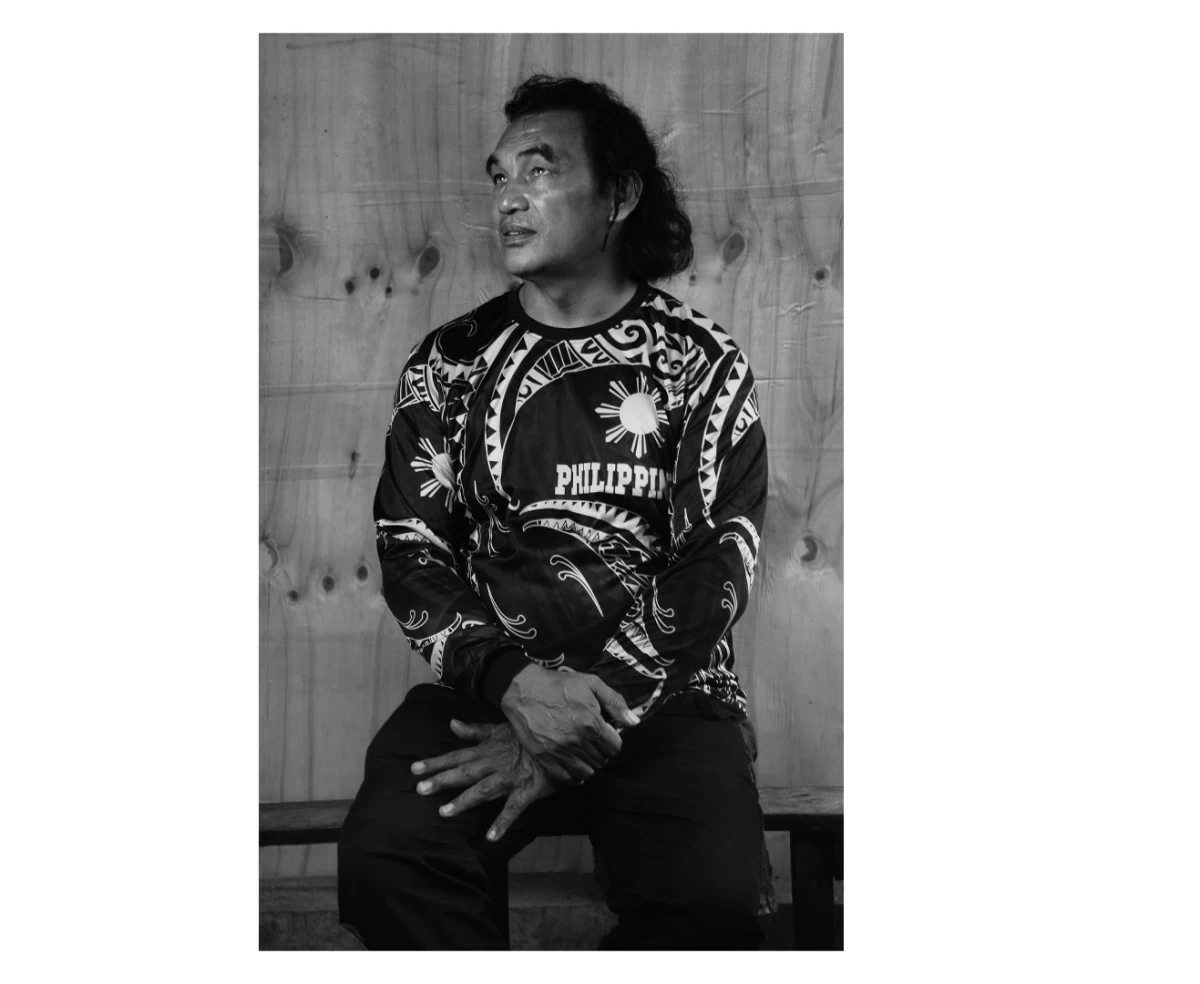
Pasil, Kalinga councilor Arnel Banasan wants to promote love for the environment and Kalinga culture through civic work and the arts.  (MJ Suayan)
Pasil, Kalinga councilor Arnel Banasan wants to promote love for the environment and Kalinga culture through civic work and the arts. (MJ Suayan)
The life of an artist is unpredictable, and Pasil, Kalinga councilor Arnel Banasan’s is no different.
Banasan is one of the most popular musicians in Kalinga. He is part of Mingor Chi Kultura (“Warriors of Culture”), an artist group that aims to promote Kalinga culture.
“I come from a line of chanters. They are healers; shamans,” he said in Taglish, adding that in Kalinga culture, shamans heal through chanting. “But I’m a late bloomer.”
His interest in music started in college, when he was exposed to folkhouses in Baguio City, idolizing bands like Asin, whose songs revolved around society and the environment. He realized that he wanted to become a performer when Asin held a concert in Baguio and needed traditional dancers. Even though he was shy, he volunteered and ended up dancing for them. This led to being a roadie while they toured the Cordilleras. “I was absent for three weeks,” he said. “It was a good experience. I carried their instruments and… played the bamboo flute on one of their songs. I was 16 or 17.”
Caring for the environment
Banasan’s advocacy has always been about Kalinga culture and the environment. A former NGO worker, he found that music made it easier to gather people for a cause. During the pandemic, he started the Kalinga Basura Express, an informal group that spends Saturdays picking up trash in Tabuk and nearby towns, all the way to Rizal, Kalinga. “I grew up in the mountains, so I applied what we learned from our forefathers. We have to take care of our environment because if we don’t have trees, where are we headed?” he said. “It’s in our hearts to care for nature because we communicate with the spirits of the trees and rivers.”
What started as a way to while away time outdoors became a civic activity and now includes professionals, government officials, and even clergy.
Spreading culture through song
“I am the first Kalinga recording artist,” Banasan said, adding that he didn’t realize this until many people began introducing him as such. His songs, all sung in the Kalinga language, span different aspects of Cordilleran life. His first hit, “Tuliyan,” or “Liar,” criticized local politicians. “They keep on promising, but have no good projects.”
Another hit is “Budong,” the local term for peace pact between Kalinga tribes. “The Budong is the most important way peace is maintained in Kalinga. If that peace is destroyed, it’s the innocents who are victims because if that pact is broken, it means war,” Banasan explained. “It’s the most important, most sensitive Kalinga tradition because the fault of one person becomes the fault of the tribe.” He added that now, there are interventions such as professional and religious groups so this is somehow managed.
There is also “Uwawi,” or lullabye, where one puts a baby to sleep. “My parents used to make me skip school to care for my younger siblings, so I wrote about my experiences,” Banasan said. “You do all your mother’s work and when afternoon comes and you haven’t cooked rice or filled the water jug, you get spanked. That’s what I wrote about.”
Banasan also wrote a short prayer that appears in Grace Nono’s “Dosayan,” the folk singer’s prayer to the Cordilleran god Kabunyan, which appears in her 2002 album Diwa.
His songs are in Kalinga, with country influences (country music is popular in the Cordilleras).
“My plan is to propagate songs about culture and the environment. I mix [traditional] chanting and folk songs.”
Pushing for change
Banasan was often teased about his decision to run for office, since his songs tended to be critical of the government. “I want change,” he said. “Just because I sing about it doesn’t mean I’m mad at all politicians. I hope people understand that not all politicians lie.”
He explained one of the things he realized about the system: “During the campaign, voters ask for solicitations and politicians have to give in or else they might not be elected. They’re the same.”
He has put his musical career on hold in the meantime, though he sometimes performs on special occasions, such as concerts for a cause. His music can be found on his YouTube channel. His current projects involve waste management for the municipality of Pasil. He also champions projects that promote tourism in Pasil.
“I want to create seminars for tour guides. I want to create a local tourism code like in Sagada and Baguio… It has to include [traveler and resident] health and the environment.”
Despite his musical hiatus, he still hopes that the young people of Kalinga are encouraged to use their language and creativity. “Because of social media, a lot of young people don’t care about [our] culture. They sing Tagalog or American pop songs,” he said. “I am encouraging local singers to write our songs in the Kalinga language. At least it’s starting to boom.”
Banasan hopes that more people consider Kalinga as a travel destination. Right now, the province is most associated with traditional tattoo artist Whang-Od, but it has more to offer. “Tabuk (Kalinga’s capital) is a growing city. It’s booming. It’s about three hours from Tabuk to Buscalan (where Whang-Od resides), and Pasil is along the way,” he said. “Drop by so you can explore and see the beauty of Kalinga.”

Related Tags

KALINGA COUNCILOR ARNEL BANASAN SPOTLIGHT FEATURES
ADVERTISEMENT
.most-popular .layout-ratio{ padding-bottom: 79.13%; } @media (min-width: 768px) and (max-width: 1024px) { .widget-title { font-size: 15px !important; } }

{{ articles_filter_1561_widget.title }}

.most-popular .layout-ratio{ padding-bottom: 79.13%; } @media (min-width: 768px) and (max-width: 1024px) { .widget-title { font-size: 15px !important; } }

{{ articles_filter_1562_widget.title }}

.most-popular .layout-ratio{ padding-bottom: 79.13%; } @media (min-width: 768px) and (max-width: 1024px) { .widget-title { font-size: 15px !important; } }

{{ articles_filter_1563_widget.title }}

{{ articles_filter_1564_widget.title }}

.mb-article-details { position: relative; } .mb-article-details .article-body-preview, .mb-article-details .article-body-summary{ font-size: 17px; line-height: 30px; font-family: "Libre Caslon Text", serif; color: #000; } .mb-article-details .article-body-preview iframe , .mb-article-details .article-body-summary iframe{ width: 100%; margin: auto; } .read-more-background { background: linear-gradient(180deg, color(display-p3 1.000 1.000 1.000 / 0) 13.75%, color(display-p3 1.000 1.000 1.000 / 0.8) 30.79%, color(display-p3 1.000 1.000 1.000) 72.5%); position: absolute; height: 200px; width: 100%; bottom: 0; display: flex; justify-content: center; align-items: center; padding: 0; } .read-more-background a{ color: #000; } .read-more-btn { padding: 17px 45px; font-family: Inter; font-weight: 700; font-size: 18px; line-height: 16px; text-align: center; vertical-align: middle; border: 1px solid black; background-color: white; } .hidden { display: none; }
function initializeAllSwipers() { // Get all hidden inputs with cms_article_id document.querySelectorAll('[id^="cms_article_id_"]').forEach(function (input) { const cmsArticleId = input.value; const articleSelector = '#article-' + cmsArticleId + ' .body_images'; const swiperElement = document.querySelector(articleSelector); if (swiperElement && !swiperElement.classList.contains('swiper-initialized')) { new Swiper(articleSelector, { loop: true, pagination: false, navigation: { nextEl: '#article-' + cmsArticleId + ' .swiper-button-next', prevEl: '#article-' + cmsArticleId + ' .swiper-button-prev', }, }); } }); } setTimeout(initializeAllSwipers, 3000); const intersectionObserver = new IntersectionObserver( (entries) => { entries.forEach((entry) => { if (entry.isIntersecting) { const newUrl = entry.target.getAttribute("data-url"); if (newUrl) { history.pushState(null, null, newUrl); let article = entry.target; // Extract metadata const author = article.querySelector('.author-section').textContent.replace('By', '').trim(); const section = article.querySelector('.section-info ').textContent.replace(' ', ' '); const title = article.querySelector('.article-title h1').textContent; // Parse URL for Chartbeat path format const parsedUrl = new URL(newUrl, window.location.origin); const cleanUrl = parsedUrl.host + parsedUrl.pathname; // Update Chartbeat configuration if (typeof window._sf_async_config !== 'undefined') { window._sf_async_config.path = cleanUrl; window._sf_async_config.sections = section; window._sf_async_config.authors = author; } // Track virtual page view with Chartbeat if (typeof pSUPERFLY !== 'undefined' && typeof pSUPERFLY.virtualPage === 'function') { try { pSUPERFLY.virtualPage({ path: cleanUrl, title: title, sections: section, authors: author }); } catch (error) { console.error('ping error', error); } } // Optional: Update document title if (title && title !== document.title) { document.title = title; } } } }); }, { threshold: 0.1 } ); function showArticleBody(button) { const article = button.closest("article"); const summary = article.querySelector(".article-body-summary"); const body = article.querySelector(".article-body-preview"); const readMoreSection = article.querySelector(".read-more-background"); // Hide summary and read-more section summary.style.display = "none"; readMoreSection.style.display = "none"; // Show the full article body body.classList.remove("hidden"); } document.addEventListener("DOMContentLoaded", () => { let loadCount = 0; // Track how many times articles are loaded const offset = [1, 2, 3, 4, 5, 6, 7, 8, 9, 10]; // Offset values const currentUrl = window.location.pathname.substring(1); let isLoading = false; // Prevent multiple calls if (!currentUrl) { console.log("Current URL is invalid."); return; } const sentinel = document.getElementById("load-more-sentinel"); if (!sentinel) { console.log("Sentinel element not found."); return; } function isSentinelVisible() { const rect = sentinel.getBoundingClientRect(); return ( rect.top < window.innerHeight && rect.bottom >= 0 ); } function onScroll() { if (isLoading) return; if (isSentinelVisible()) { if (loadCount >= offset.length) { console.log("Maximum load attempts reached."); window.removeEventListener("scroll", onScroll); return; } isLoading = true; const currentOffset = offset[loadCount]; window.loadMoreItems().then(() => { let article = document.querySelector('#widget_1690 > div:nth-last-of-type(2) article'); intersectionObserver.observe(article) loadCount++; }).catch(error => { console.error("Error loading more items:", error); }).finally(() => { isLoading = false; }); } } window.addEventListener("scroll", onScroll); });

Sign up by email to receive news.