







The rebirth of the 'Heart of the Filipino'
Cleared for the long haul:
Published Jan 21, 2026 10:30 am
|
Updated Jan 21, 2026 03:38 pm


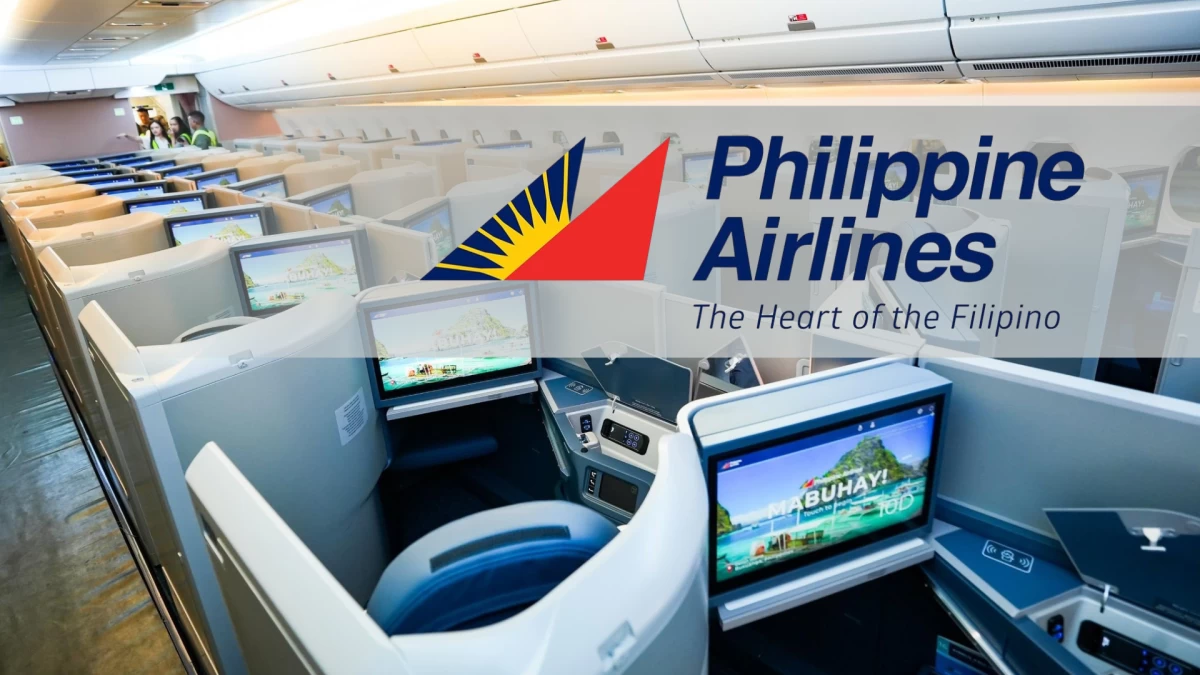
Six years ago, Philippine Airlines (PAL) was flying through an existential storm, operating repatriation flights while the rest of the world’s hangars went dark. Today, the “Heart of the Filipino” has found its second wind.
At a star-studded 85th-anniversary gala attended by President Ferdinand Marcos Jr. last Jan. 17, PAL Holdings Inc. President Lucio Tan III marked the airline’s transformation from a pandemic-stricken carrier into the Asia-Pacific’s most punctual airline—cementing the comeback with the arrival of Southeast Asia’s first Airbus A350-1000.

PAL Holdings Inc. President Lucio Tan III emphasizes the flag carrier’s role in national development, declaring the airline’s identity remains inseparable from the nation.
For Tan, the 32-year-old grandson of taipan Lucio Tan, the plane is more than just a capital expenditure; it is a $300 million-plus signal that Asia’s oldest airline has finally cleared the turbulence of a near-death experience.

PAL also unveiled a brand song, “Fly with Heart.” Produced by composer Louie Ocampo and performed by OPM heavyweights Martin Nievera, Gary Valenciano, and Ogie Alcasid at the 85th-anniversary gala.
Just four years ago, the flag carrier was navigating a Chapter 11 bankruptcy in the United States (US), battered by a pandemic that grounded its fleet and evaporated its revenues. Now, the carrier is rebranding itself as a lean, tech-forward operator, betting that ultra-long-haul efficiency—rather than sheer scale—will define its next decade.
“Our history has never been without hardship,” Tan told the audience, which also included First Lady Louise Araneta-Marcos. “Six years ago, the pandemic brought global air travel to a near standstill. For PAL, it was not only an existential crisis, it was a defining moment that forced us to confront difficult questions about responsibility and purpose.”
The efficiency play
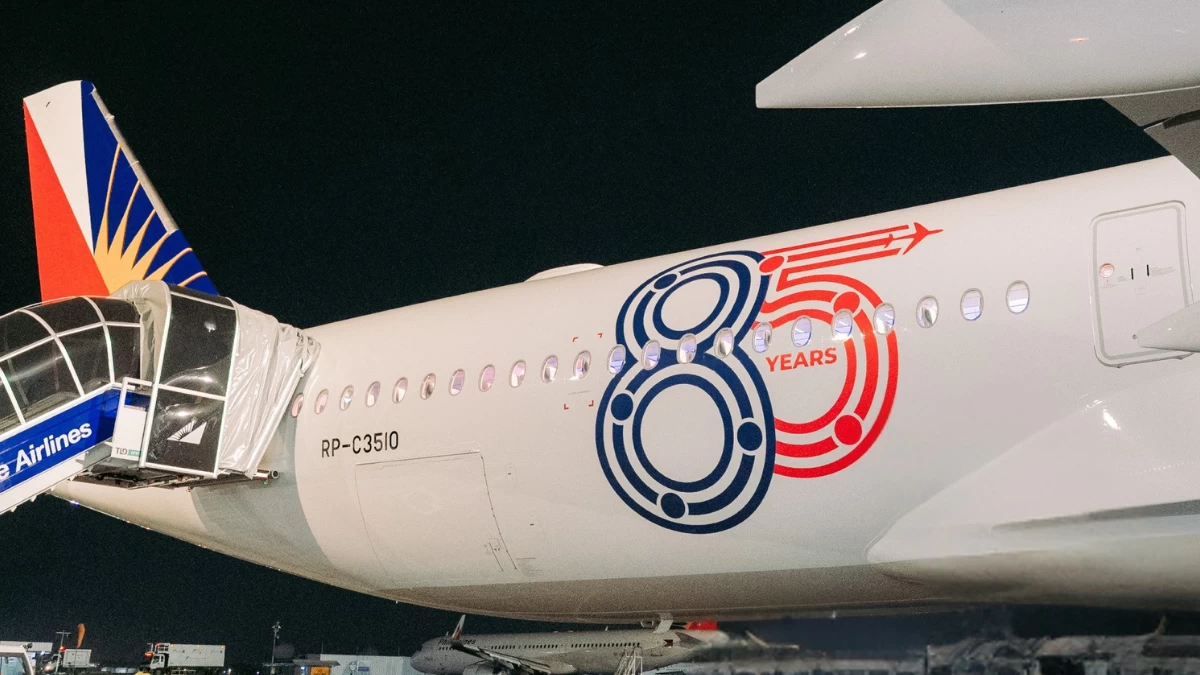
The state-of-the-art Airbus A350-1000, the first of its kind in Southeast Asia, was unveiled as the new symbol of Philippine Airlines' global resurgence.
The arrival of the A350-1000 is a pivot. By operating the world’s most modern widebody aircraft, PAL is targeting the high-yield North American market, where it remains a dominant player for the Filipino diaspora. The new jet offers a 25 percent reduction in fuel burn compared to previous-generation aircraft—an advantage for a carrier sensitive to volatile jet fuel prices and to increasing global pressure to reduce carbon footprints.
“The A350-1000 stands as a powerful symbol of our resurgence,” Tan said. “It represents our confidence to compete globally, while remaining deeply rooted in who we are.”
The investment comes as the Philippines experiences a broader infrastructure boom. President Marcos, speaking at the event, linked the airline’s modernization to his administration’s “Bagong Pilipinas” initiative, which includes a flurry of airport privatizations and upgrades.
“While airlines move people, government ensures those pathways remain strong and clear,” Marcos said, citing ongoing modular terminal constructions in Siargao and Davao, and the high-profile public-private partnership to modernize Ninoy Aquino International Airport (NAIA).
The financial discipline imposed during PAL’s 2021 restructuring appears to be yielding operational dividends. For years, the carrier struggled with a reputation for delays and aging interiors. However, internal data and third-party metrics suggest a shift toward precision.
At the start of 2026, aviation data firm Cirium recognized PAL as the Asia-Pacific’s Most Punctual Airline, with an on-time performance (OTP) of 83.12 percent. It is a startling climb: in 2022, PAL didn’t even crack the top 10. By 2023, it was eighth; by 2024, seventh; and finally, the top spot in 2025.
“This achievement did not happen overnight,” Tan noted, emphasizing that the improvement occurred despite the “infrastructure constraints” of Manila’s notoriously congested airspace.
For investors, the OTP metric is a proxy for management efficiency. A punctual airline burns less fuel in holding patterns, utilizes its crew more effectively, and—crucially—retains high-value business travelers.
A dynasty in transition
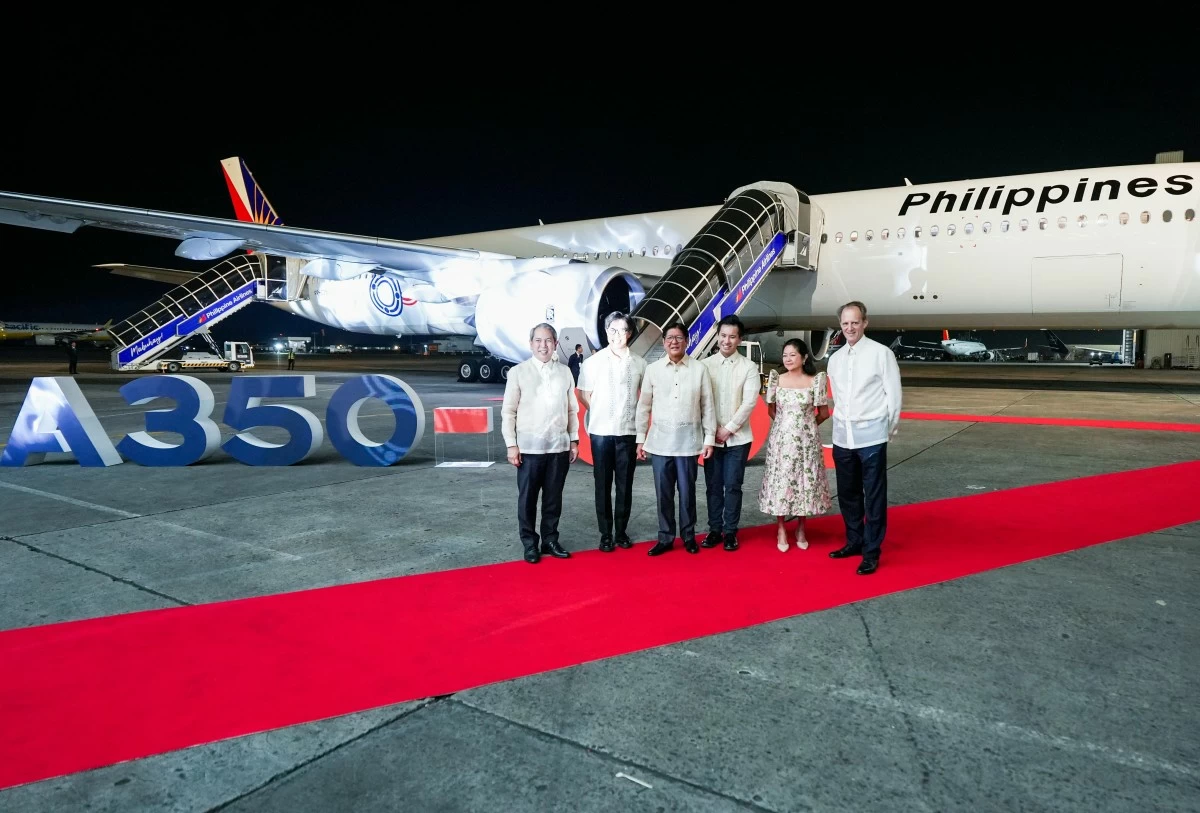
President Ferdinand Marcos Jr. and First Lady Louise Araneta-Marcos join PAL Holdings Inc. President Lucio Tan III and the airline’s executives; behind them stands the new Airbus A350-1000.
The 85th-anniversary celebration also served as an unofficial coming-out party for the younger Tan, who took the helm of the family’s sprawling empire following the passing of his father, Lucio “Bong” Tan Jr., and under the guidance of his grandfather.
The elder Tan’s decision to keep PAL flying during the darkest days of 2020—even as mounting losses threatened the wider LT Group—is now framed as a masterstroke of national loyalty that preserved the brand’s “social license” to operate.
“Guided by my grandparents’ directions, we made a deliberate choice: to keep flying,” Tan III recalled. “Amidst our mounting financial losses, the decision was not an easy one, but it was certainly the right thing to do.”

President Ferdinand Marcos Jr. and First Lady Louise Araneta-Marcos, guided by PAL Holdings Inc. President Lucio Tan III and airline executives, inspect the interior of the new Airbus A350-1000.
This “national service” approach aligns the airline closely with the Marcos administration’s priorities. The president praised the airline’s recent marketing efforts, including a viral safety video that highlights Philippine landscapes through a “telenovela” lens, calling it “so Pinoy” and a vital tool for the country’s tourism goals.
The headwinds ahead
Despite the celebratory atmosphere, PAL faces a complex horizon as the global aviation supply chain remains brittle, with delays in engine parts and aircraft deliveries affecting carriers worldwide. Regional competition is also intensifying, as low-cost carriers like Cebu Air Inc. expand their mid-haul reach and Singapore Airlines continues to dominate the premium transit space.
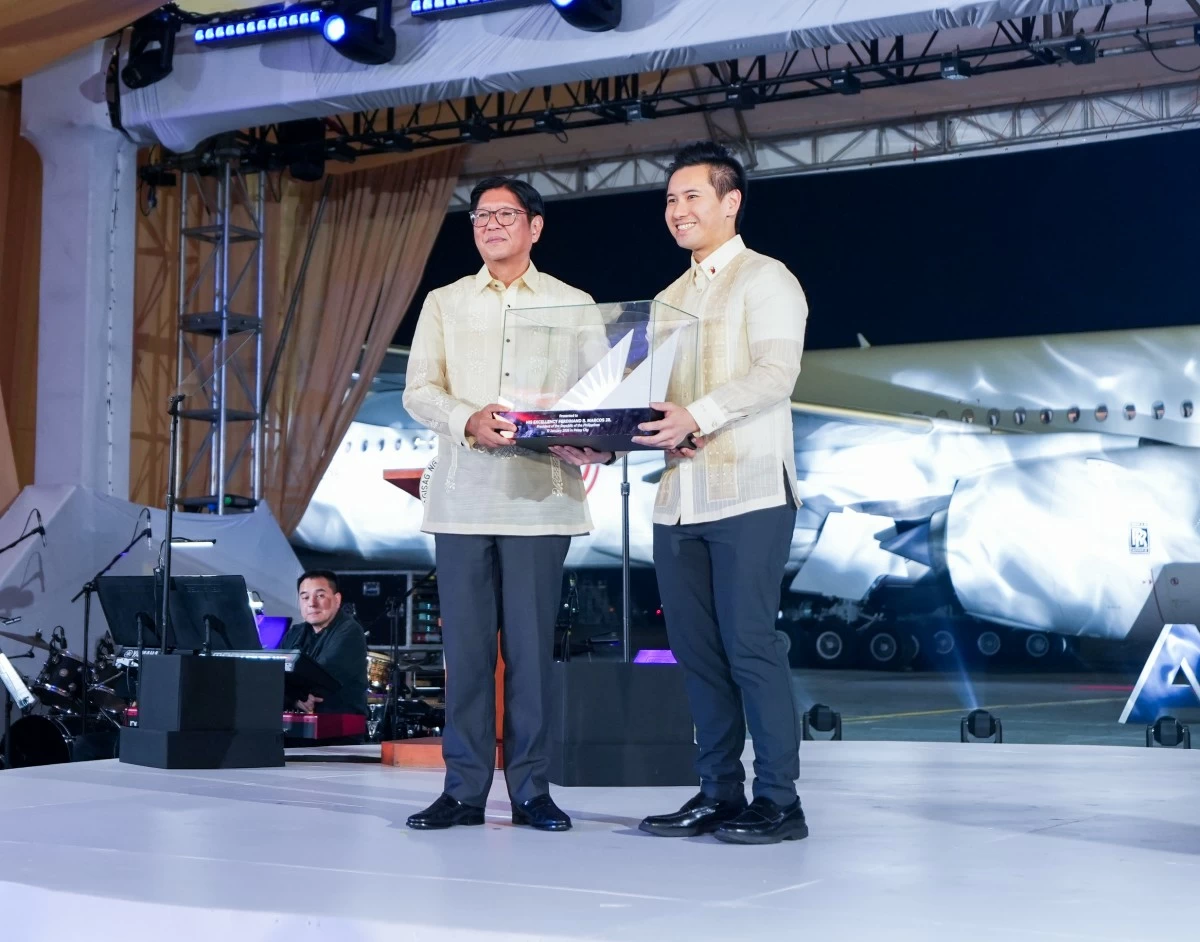
PAL Holdings President Lucio Tan III presents a token of appreciation to President Ferdinand Marcos Jr. following the debut of the airline’s new flagship aircraft.
PAL’s strategy is to avoid a price war in the low-cost segment, focusing instead on its status as the country’s only full-service, four-star carrier. The A350-1000 is the anchor of this premium push, designed to offer a superior passenger experience on the 15-hour hauls to Los Angeles, San Francisco, and New York.
“Our role as the flag carrier is not simply commercial,” Tan said. “We exist to connect people, support livelihoods, and contribute meaningfully to the country’s development.”
As the evening concluded, the rhetoric remained focused on the symbiosis between the company and the state—a classic theme in Philippine business. “The Philippines is Philippine Airlines, and Philippine Airlines is the Philippines,” Tan declared.
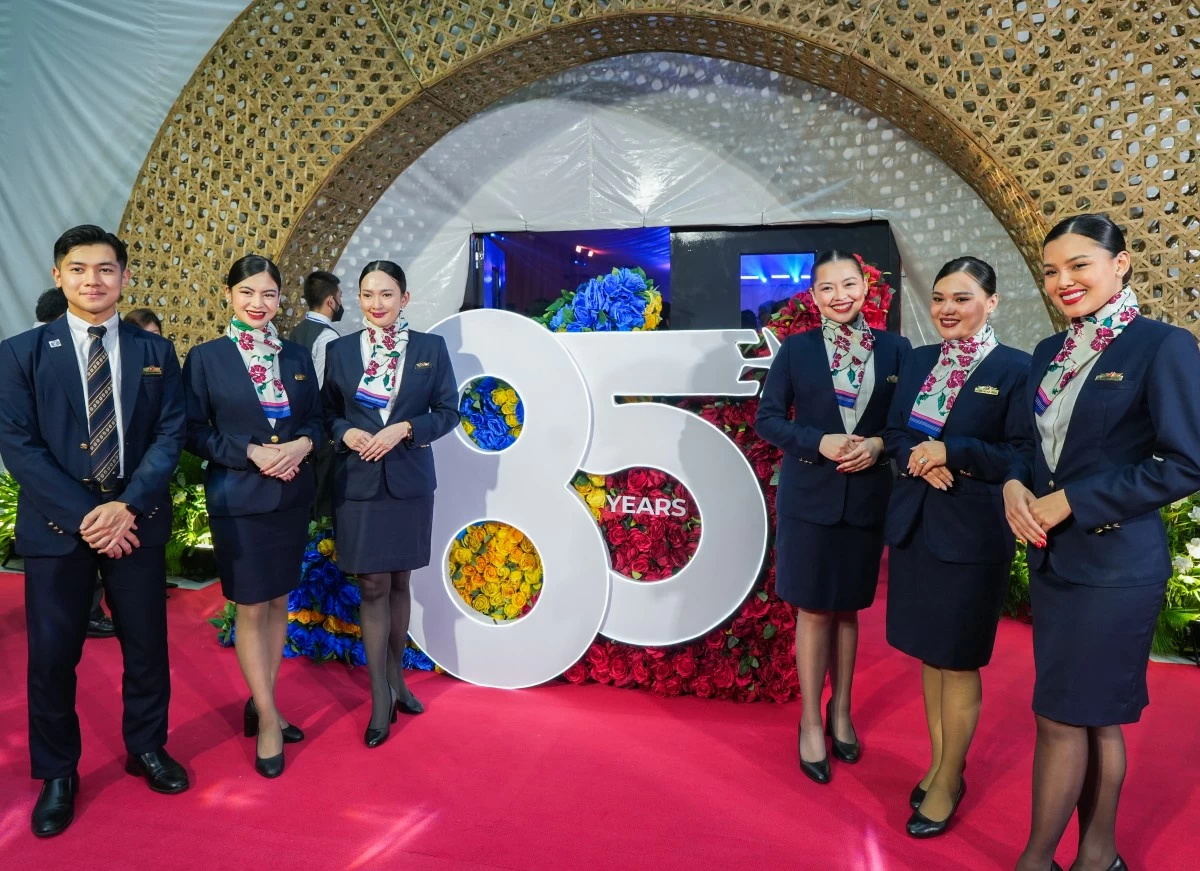
Members of the Philippine Airlines cabin crew represent the “Heart of the Filipino” during the carrier’s 85th-anniversary gala.
With a modernized fleet and a rare streak of operational excellence, the 85-year-old carrier is betting that its most profitable years are no longer in the rearview mirror, but somewhere over the Pacific.