






Manila Bulletin
 Philippines
Metro Manila
Manila Rep. Valeriano files cyberlibel case vs. Cavite Rep. Barzaga over bribery claims
Philippines
Metro Manila
Manila Rep. Valeriano files cyberlibel case vs. Cavite Rep. Barzaga over bribery claims
Philippines
Metro Manila
Manila Rep. Valeriano files cyberlibel case vs. Cavite Rep. Barzaga over bribery claims
Manila Rep. Valeriano files cyberlibel case vs. Cavite Rep. Barzaga over bribery claims
Published Jan 21, 2026 09:37 am


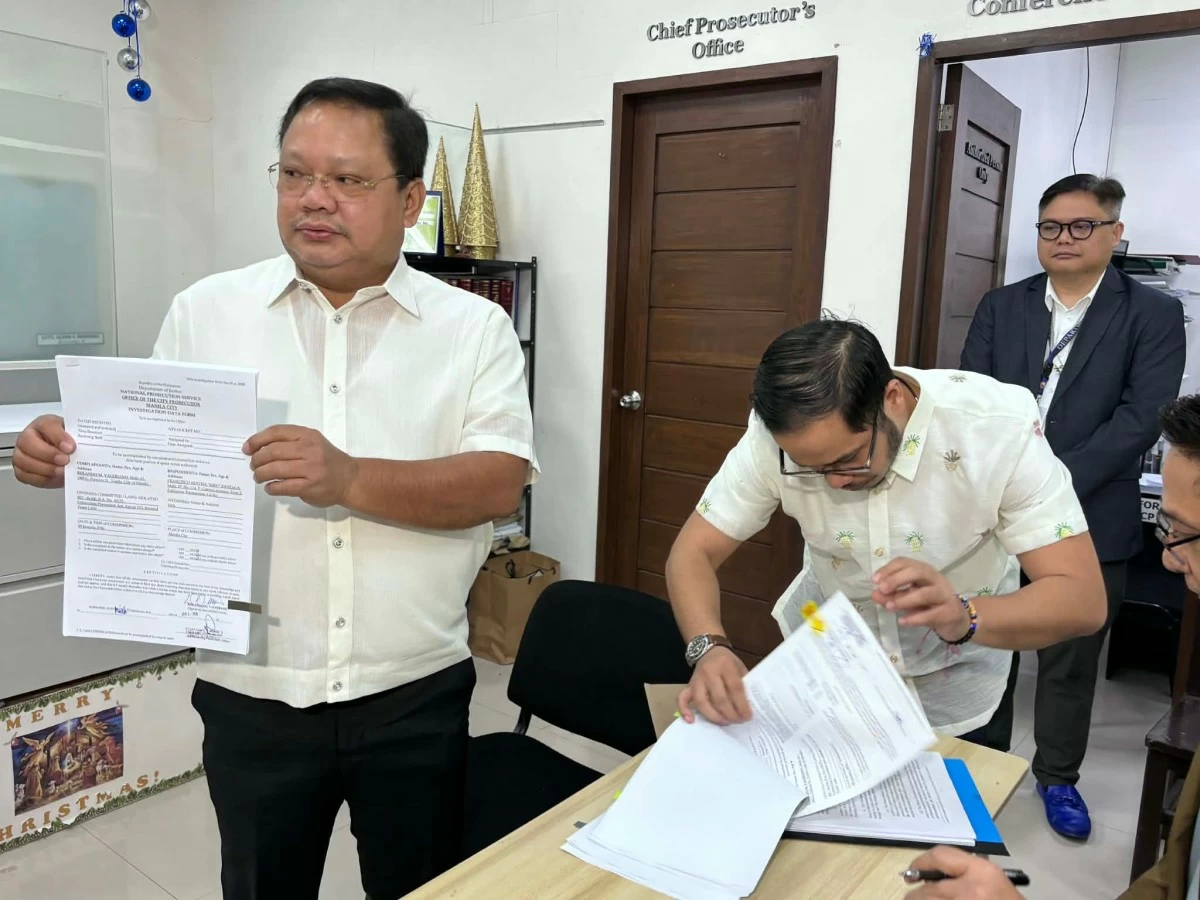
Manila 2nd District Rep. Rolando Valeriano files a cyberlibel complaint against Cavite Rep. Francisco “Kiko” Barzaga over alleged bribery claims made in a viral social media post.
Manila 2nd District Representative Rolando M. Valeriano, a member of the National Unity Party (NUP), has filed a criminal complaint for cyberlibel against Cavite Representative Francisco “Kiko” A. Barzaga following a viral social media post alleging that NUP lawmakers accepted bribes in exchange for political support.
In his post, Barzaga claimed that NUP congressmen allegedly received bribes from businessman Enrique Razon during gatherings held at Solaire prior to the 2025 elections, purportedly in exchange for backing the re-election bid of House Speaker Martin Romualdez.
Valeriano’s complaint specifically cites Barzaga’s assertion that “NUP Congressmen received bribes from Enrique Razon in various gatherings in Solaire prior to the 2025 elections in exchange for supporting Speaker Martin Romualdez.”
The Manila lawmaker argued that the statement constitutes a direct and public accusation of bribery against an identifiable group of legislators, amounting to the imputation of a serious crime made without evidence and disseminated through a widely accessible social media platform.
The filing maintains that the post was widely circulated online and further amplified by social media pages and online news platforms, thereby maximizing reputational damage and public suspicion against members of the NUP.
Valeriano said the act gives rise to Cyber Libel, punishable under Section 4(c)(4) of Republic Act No. 10175, or the Cybercrime Prevention Act of 2012, in relation to Articles 353 and 355 of the Revised Penal Code on libel.
He stressed that the public and online dissemination of the allegation significantly expanded its reach and harmful impact.
The complaint further asserts that the post was made maliciously and with reckless disregard for the truth, noting that no evidence was presented to support the bribery claims.
Valeriano emphasized that sweeping allegations of criminal conduct, when presented online as established fact, are especially damaging at a time when public officials are working to rebuild trust in government institutions.
“Baseless accusations of bribery are not harmless political commentary,” Valeriano said.
“They are accusations of criminal conduct, broadcast to the public as if they were established fact. If you claim that legislators were bribed, then you have the duty to prove it. Otherwise, it is a malicious attack designed to destroy our reputations.”
Valeriano underscored that the accusation was not directed at a single individual but against a defined and identifiable group, members of the NUP in the House of Representatives, making the attack institutional in nature.
“This is an affront to the entire NUP, not just to one Member,” he said.
“It was intended to stain a whole bloc of legislators through one sweeping allegation, without evidence, without verification, and without accountability.”
The Manila lawmaker noted that the complaint was filed amid ongoing efforts to safeguard public confidence in democratic institutions.
“When lies are repeated as fact, they do not just malign individuals, they weaken institutions,” Valeriano said.
He added that other NUP members similarly affected by the post are pursuing their own legal remedies, stressing that the party remains united in defending its members and upholding institutional integrity.
The National Unity Party is currently the second-largest political party in the House of Representatives.