






Manila Bulletin
 Business
Banking & Finance
JICA releases ₱3.7-billion emergency loan for Philippine typhoon recovery
Business
Banking & Finance
JICA releases ₱3.7-billion emergency loan for Philippine typhoon recovery
Business
Banking & Finance
JICA releases ₱3.7-billion emergency loan for Philippine typhoon recovery
JICA releases ₱3.7-billion emergency loan for Philippine typhoon recovery
Published Jan 21, 2026 10:29 am


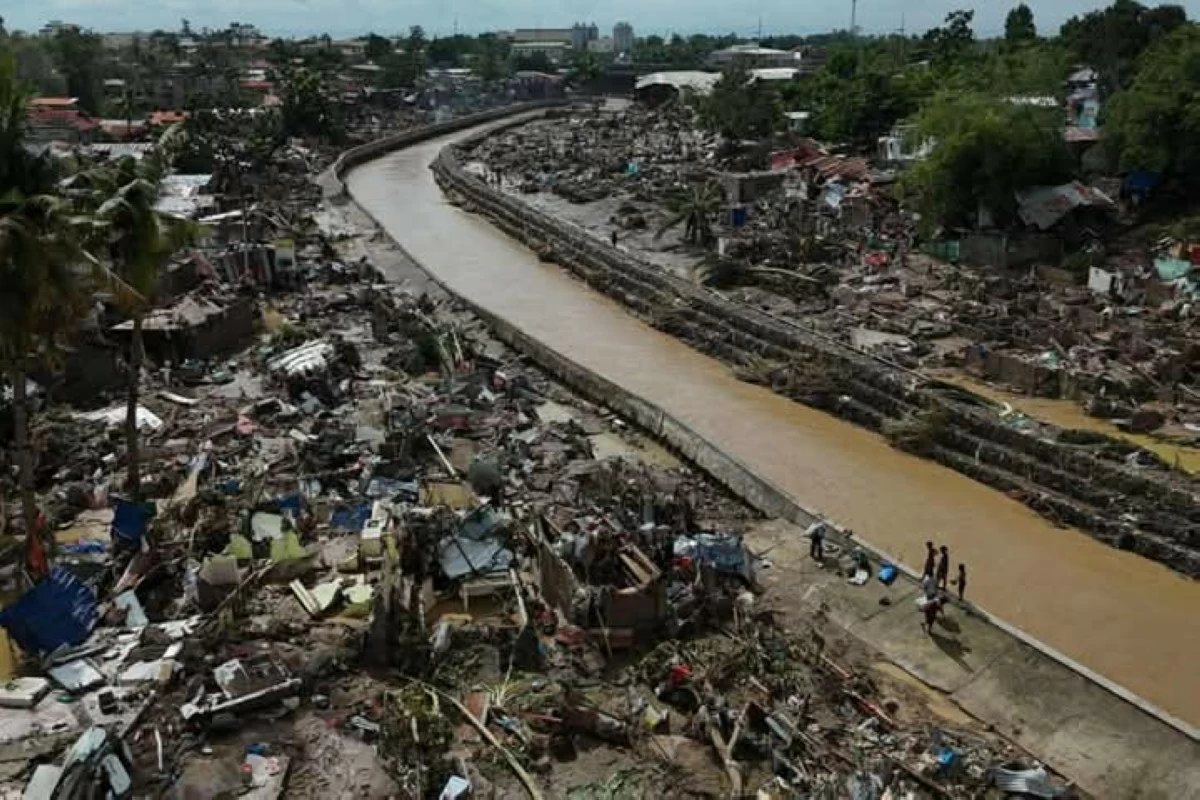
Residents return to what remains of their homes along the Mananga River in Talisay City, Cebu province on November 5, 2025, after Typhoon Kalmaegi (locally Tino) caused widespread devastation. (AP Photo/Jacqueline Hernandez)
The Philippines has secured 10 billion yen (approximately ₱3.7 billion) in emergency financing from the Japan International Cooperation Agency (JICA) to support post-typhoon response and recovery following the devastation caused by Typhoon “Tino.”
In a statement released Tuesday, Jan. 20, JICA Philippines said the funds represent the first tranche of the Post-Disaster Standby Loan Phase 3 (PDSL3), which will be used to support the government’s relief, rehabilitation, and reconstruction efforts in areas affected by the storm.
JICA highlighted that the release of funds followed a request from the Department of Finance (DOF) after the government declared a state of national calamity over the typhoon’s impact.
“The PDSL3 is a financing facility that allows the Philippine government to swiftly mobilize funds to meet urgent post-disaster needs and manage financial pressures during periods of crisis,” JICA said.
“This mechanism is particularly important for the Philippines, one of the world’s most disaster-prone countries, where extreme weather events regularly place sudden and substantial demands on government resources,” it added.
JICA noted that “Tino” hit several parts of the country in November 2025, bringing heavy rains that triggered flooding and landslides. It added that consolidated reports from the National Disaster Risk Reduction and Management Council (NDRRMC) showed that hundreds of thousands of families across multiple regions were affected.
JICA Philippines chief representative Takashi Baba stressed the humanitarian and economic strain disasters continue to impose on vulnerable communities.
“By making critical funds available, the PDSL3 enables the Philippine government to sustain response operations, ensure the continuity of vital public services, and transition into early recovery and reconstruction,” Baba added.
The PDSL3 forms part of a 30-billion-yen loan facility signed in August 2023 to support rapid recovery following natural disasters. Earlier phases of the PDSL were activated in 2013 after Super-Typhoon “Yolanda” and in 2020 to help the government address fiscal challenges brought about by the Covid-19 pandemic and other natural disasters.
In addition to the PDSL, JICA supplied emergency relief items through the Department of Social Welfare and Development (DSWD) to families affected by the 6.9-magnitude earthquake in Cebu on Sept. 30, 2025.
“JICA continues to stand with the Philippines as a steadfast partner in recovery and rehabilitation,” it said.