







China, PH hope to accelerate South China Sea talks this year
Published Jan 21, 2026 10:35 am
|
Updated Jan 21, 2026 03:33 pm


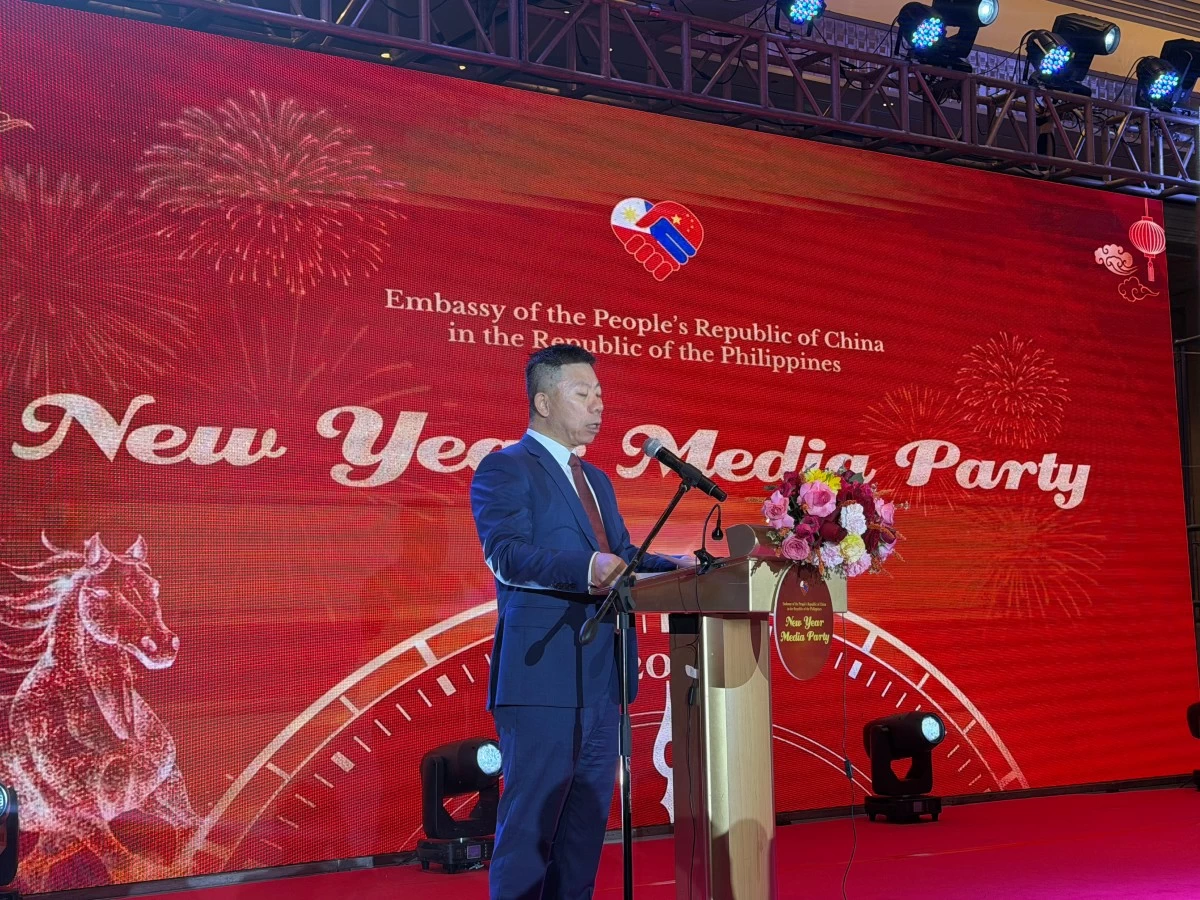
China and the Philippines are hoping to accelerate talks on the Code of Conduct in the South China Sea (COC)—an agreement that will prevent future conflict and confrontations at sea among claimant nations—especially as the Philippines is chairing the Association of Southeast Asian Nations (ASEAN) this year.
China's new ambassador to the Philippines, Jing Quan, made the remark on Tuesday, Jan. 20, in a media debut that came at a time the embassy, under his leadership, had become more assertive in its claim over the entire South China Sea by engaging in word wars with Philippine government officials.
The envoy said both countries "have the ability and wisdom to properly manage our differences," and "the best option" for the maritime disputes between the countries that he observed to have become "more pronounced" in recent years, "is to sit down for talks and solutions in a diplomatic way."
Just like with the Philippines, China has border disputes with India, Vietnam, and Japan. But Jing said they found solutions, or we managed the tensions through dialogue.
Jing bared that diplomats of both sides "are working toward this goal, and have already reached a preliminary consensus on a roadmap for the next stage of dialogue and negotiation."
"This year, the Philippines is chairing the ASEAN. Both sides hope to accelerate negotiations on the Code of Conduct in the South China Sea," he said.
Members of ASEAN and China have been negotiating for years on a future COC in a desire to enhance conditions for a peaceful and durable solution of differences and disputes among the countries concerned.
"To this end, consultations are becoming more frequent and more intensive," he added.
But even if China and the Philippines will not be able to reach solutions quickly, he said, it is essential for both to keep communication channels open, refrain from provocative or confrontational actions, and prevent tensions from escalating.
"The South China Sea issue is only one portion of China–Philippines relations. We still need to have the bigger picture in mind," he said.
"As President Marcos said, 'let us not allow these differences to define our relationship.' 'Our differences should be the exception in our ties rather than the norm,'" he added.
Chinese investments lag behind other ASEAN members
Meanwhile, Jing also highlighted China's trade relations with the Philippines. In fact, over the past decade, he added, China is the Philippines' "largest trading partner and largest source of imports."
"China never seeks a trade imbalance. Instead, we welcome the Philippines exporting more to China, especially high-quality agricultural goods such as durian, mangoes, and bananas," he said.
Jing particularly cited the growing number of Chinese hybrid vehicles in the country, the presence of many Chinese phones and other electronic devices, and other Chinese high-technologies, such as solar, new energy, environmental protection, and the digital economy.
"Recently, we have been discussing garbage-to-energy cooperation with local business community and governments... Last month, the China-aided Bucana Bridge over the Davao River was successfully completed and opened to traffic... In addition, Chinese companies are currently building one bridge in Manila and another in Davao," he said.
"There are many such kind examples, and the potential for China-Philippines cooperation is enormous," he added.
Despite this, Jing said, Chinese investment in the Philippines still lagged far behind that in other ASEAN countries, exceeding only that in Brunei.
"I hope as our political relations improve, trade and investment will also see substantial growth," he added, noting that "sound economic and trade relations require stable political relations and a more favorable business environment."
Jing said that China regards the Philippines as a friend and a neighbor, and it offers sincere assistance without seeking anything in return.
"China’s development is not a threat to the Philippines; it is an opportunity," he added.