

ADVERTISEMENT

BOC gets tough on "haoshiaos," chasing credibility and collections

Published Jan 21, 2026 11:40 am

At A Glance

  • Bureau of Customs (BOC) Commissioner Ariel F. Nepomuceno warned that "haoshiaos"—fixers operating inside Customs premises—are strictly prohibited, and employees who engage with them may face dismissal from government service.
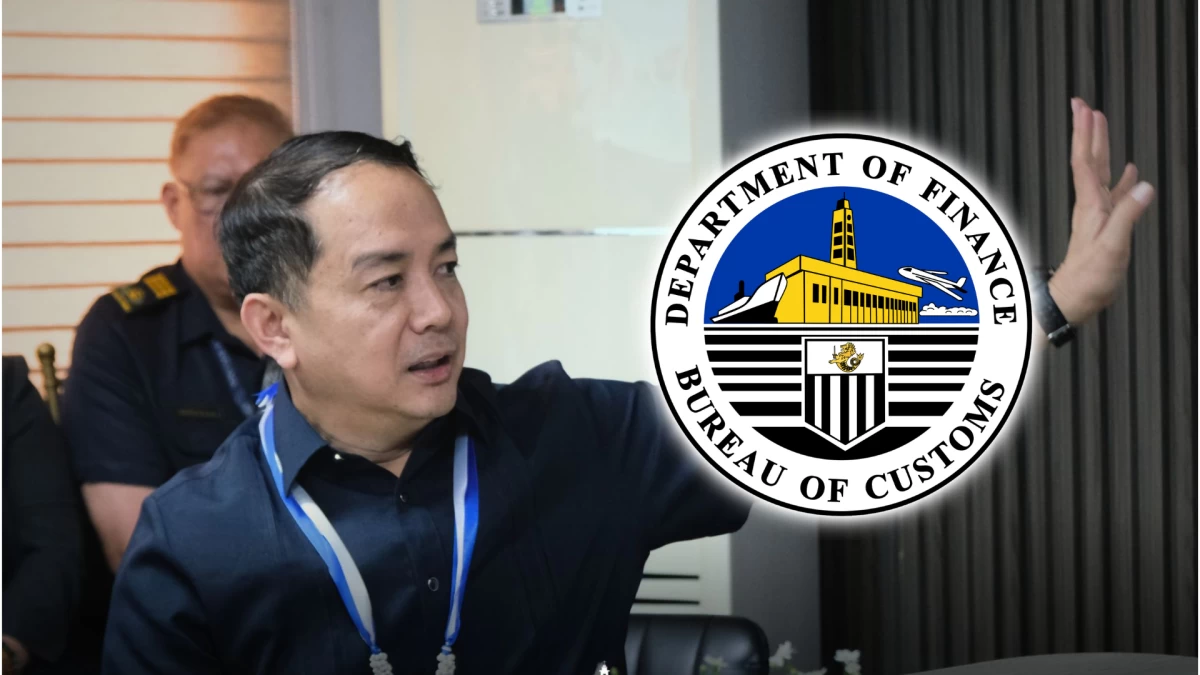
Bureau of Customs (BOC) Commissioner Ariel F. Nepomuceno has made it clear that “haoshiaos”—fixers who operate inside Customs premises—are officially on notice: personnel caught dealing with them risk serious consequences, including dismissal from government service. The warning came in a Jan. 20 memorandum coming from Nepomuceno’s own office, which stressed that Customs staff must not engage with haoshiaos in any capacity, in line with the Bureau’s code of conduct on public and working relations.

According to the BOC, haoshiaos are outsiders who perform sensitive Customs tasks meant only for regular personnel, despite having no official contract or employment documents. Their presence exposes the country’s second-biggest tax-collection agency to corruption risks and undermines the integrity of frontline operations.

Under the latest directive, penalties escalate sharply. First offenders will be reprimanded, second offenders may be suspended for up to one month, and third offenders risk outright dismissal from government service.

BOC Deputy Commissioner for enforcement Nolasco K. Bathan was tasked to oversee compliance and must submit an initial report within 10 working days. The tight deadline signals the top management’s intent to turn the directive into immediate, visible action rather than another reminder lost in bureaucracy.

Nepomuceno’s order, however, is not entirely new. The prohibition on haoshiaos dates back to 2017 under former BOC chief Isidro S. Lapeña during the Duterte administration, and was later reiterated by commissioners Yogi Filemon L. Ruiz and Bienvenido Y. Rubio during the current Marcos Jr. administration. By reviving and tightening the rule, Nepomuceno is aligning his leadership with a line of predecessors who viewed fixers as a core institutional threat—while signaling that enforcement this time will be more aggressive.

The renewed crackdown comes as the BOC continues its push to shed its long-standing image as one of the country’s most corruption-prone agencies. In recent months, the Bureau has rolled out reforms aimed at tightening oversight, standardizing procedures, and reducing opportunities for informal dealings.

Pressure has also mounted after the agency missed its 2025 revenue goal. While collections rose to ₱934.4 billion last year, the figure fell short of the ₱958.7-billion target, fueling calls within government for stricter controls, deeper reforms, and better performance monitoring.

Finance Secretary Frederick D. Go, whose Department of Finance (DOF) oversees the BOC, has since signaled tighter oversight, backing internal restructuring and the creation of strategic units to improve analytics, risk management, and accountability—moves meant to strengthen both revenue generation and institutional credibility.

At the same time, Nepomuceno has been vocal about using digital reforms to drive a rebound. Automation, paperless transactions, and reduced face-to-face dealings are being pushed as tools not only to speed up trade, but also to limit the human discretion that fixers traditionally exploit.

Within this context, the renewed ban on haoshiaos reads as both symbolic and strategic. It targets a visible manifestation of corruption while reinforcing a broader narrative: that the BOC is trying to professionalize its ranks and close the backdoors long associated with the agency.

For employees, the message is blunt. Engaging fixers is no longer a tolerated gray area but a punishable offense with career-ending consequences.

For stakeholders and the public, the order is another test of whether the Bureau’s reform drive can translate into lasting institutional change—measured not just in collections, but in credibility.

As the BOC eyes a historic first trillion-peso year in 2026, the success of that ambition may hinge as much on internal discipline as on trade volumes. And for Nepomuceno, stamping out the fixer culture appears to be one of the lines he is determined to draw early and hard.

ADVERTISEMENT
.most-popular .layout-ratio{ padding-bottom: 79.13%; } @media (min-width: 768px) and (max-width: 1024px) { .widget-title { font-size: 15px !important; } }

{{ articles_filter_1561_widget.title }}

.most-popular .layout-ratio{ padding-bottom: 79.13%; } @media (min-width: 768px) and (max-width: 1024px) { .widget-title { font-size: 15px !important; } }

{{ articles_filter_1562_widget.title }}

.most-popular .layout-ratio{ padding-bottom: 79.13%; } @media (min-width: 768px) and (max-width: 1024px) { .widget-title { font-size: 15px !important; } }

{{ articles_filter_1563_widget.title }}

{{ articles_filter_1564_widget.title }}

.mb-article-details { position: relative; } .mb-article-details .article-body-preview, .mb-article-details .article-body-summary{ font-size: 17px; line-height: 30px; font-family: "Libre Caslon Text", serif; color: #000; } .mb-article-details .article-body-preview iframe , .mb-article-details .article-body-summary iframe{ width: 100%; margin: auto; } .read-more-background { background: linear-gradient(180deg, color(display-p3 1.000 1.000 1.000 / 0) 13.75%, color(display-p3 1.000 1.000 1.000 / 0.8) 30.79%, color(display-p3 1.000 1.000 1.000) 72.5%); position: absolute; height: 200px; width: 100%; bottom: 0; display: flex; justify-content: center; align-items: center; padding: 0; } .read-more-background a{ color: #000; } .read-more-btn { padding: 17px 45px; font-family: Inter; font-weight: 700; font-size: 18px; line-height: 16px; text-align: center; vertical-align: middle; border: 1px solid black; background-color: white; } .hidden { display: none; }
function initializeAllSwipers() { // Get all hidden inputs with cms_article_id document.querySelectorAll('[id^="cms_article_id_"]').forEach(function (input) { const cmsArticleId = input.value; const articleSelector = '#article-' + cmsArticleId + ' .body_images'; const swiperElement = document.querySelector(articleSelector); if (swiperElement && !swiperElement.classList.contains('swiper-initialized')) { new Swiper(articleSelector, { loop: true, pagination: false, navigation: { nextEl: '#article-' + cmsArticleId + ' .swiper-button-next', prevEl: '#article-' + cmsArticleId + ' .swiper-button-prev', }, }); } }); } setTimeout(initializeAllSwipers, 3000); const intersectionObserver = new IntersectionObserver( (entries) => { entries.forEach((entry) => { if (entry.isIntersecting) { const newUrl = entry.target.getAttribute("data-url"); if (newUrl) { history.pushState(null, null, newUrl); let article = entry.target; // Extract metadata const author = article.querySelector('.author-section').textContent.replace('By', '').trim(); const section = article.querySelector('.section-info ').textContent.replace(' ', ' '); const title = article.querySelector('.article-title h1').textContent; // Parse URL for Chartbeat path format const parsedUrl = new URL(newUrl, window.location.origin); const cleanUrl = parsedUrl.host + parsedUrl.pathname; // Update Chartbeat configuration if (typeof window._sf_async_config !== 'undefined') { window._sf_async_config.path = cleanUrl; window._sf_async_config.sections = section; window._sf_async_config.authors = author; } // Track virtual page view with Chartbeat if (typeof pSUPERFLY !== 'undefined' && typeof pSUPERFLY.virtualPage === 'function') { try { pSUPERFLY.virtualPage({ path: cleanUrl, title: title, sections: section, authors: author }); } catch (error) { console.error('ping error', error); } } // Optional: Update document title if (title && title !== document.title) { document.title = title; } } } }); }, { threshold: 0.1 } ); function showArticleBody(button) { const article = button.closest("article"); const summary = article.querySelector(".article-body-summary"); const body = article.querySelector(".article-body-preview"); const readMoreSection = article.querySelector(".read-more-background"); // Hide summary and read-more section summary.style.display = "none"; readMoreSection.style.display = "none"; // Show the full article body body.classList.remove("hidden"); } document.addEventListener("DOMContentLoaded", () => { let loadCount = 0; // Track how many times articles are loaded const offset = [1, 2, 3, 4, 5, 6, 7, 8, 9, 10]; // Offset values const currentUrl = window.location.pathname.substring(1); let isLoading = false; // Prevent multiple calls if (!currentUrl) { console.log("Current URL is invalid."); return; } const sentinel = document.getElementById("load-more-sentinel"); if (!sentinel) { console.log("Sentinel element not found."); return; } function isSentinelVisible() { const rect = sentinel.getBoundingClientRect(); return ( rect.top < window.innerHeight && rect.bottom >= 0 ); } function onScroll() { if (isLoading) return; if (isSentinelVisible()) { if (loadCount >= offset.length) { console.log("Maximum load attempts reached."); window.removeEventListener("scroll", onScroll); return; } isLoading = true; const currentOffset = offset[loadCount]; window.loadMoreItems().then(() => { let article = document.querySelector('#widget_1690 > div:nth-last-of-type(2) article'); intersectionObserver.observe(article) loadCount++; }).catch(error => { console.error("Error loading more items:", error); }).finally(() => { isLoading = false; }); } } window.addEventListener("scroll", onScroll); });

Sign up by email to receive news.