







PH-Japan people-to-people relations are 'woven in trust'
Published Jan 20, 2026 12:05 am
|
Updated Jan 19, 2026 06:14 pm


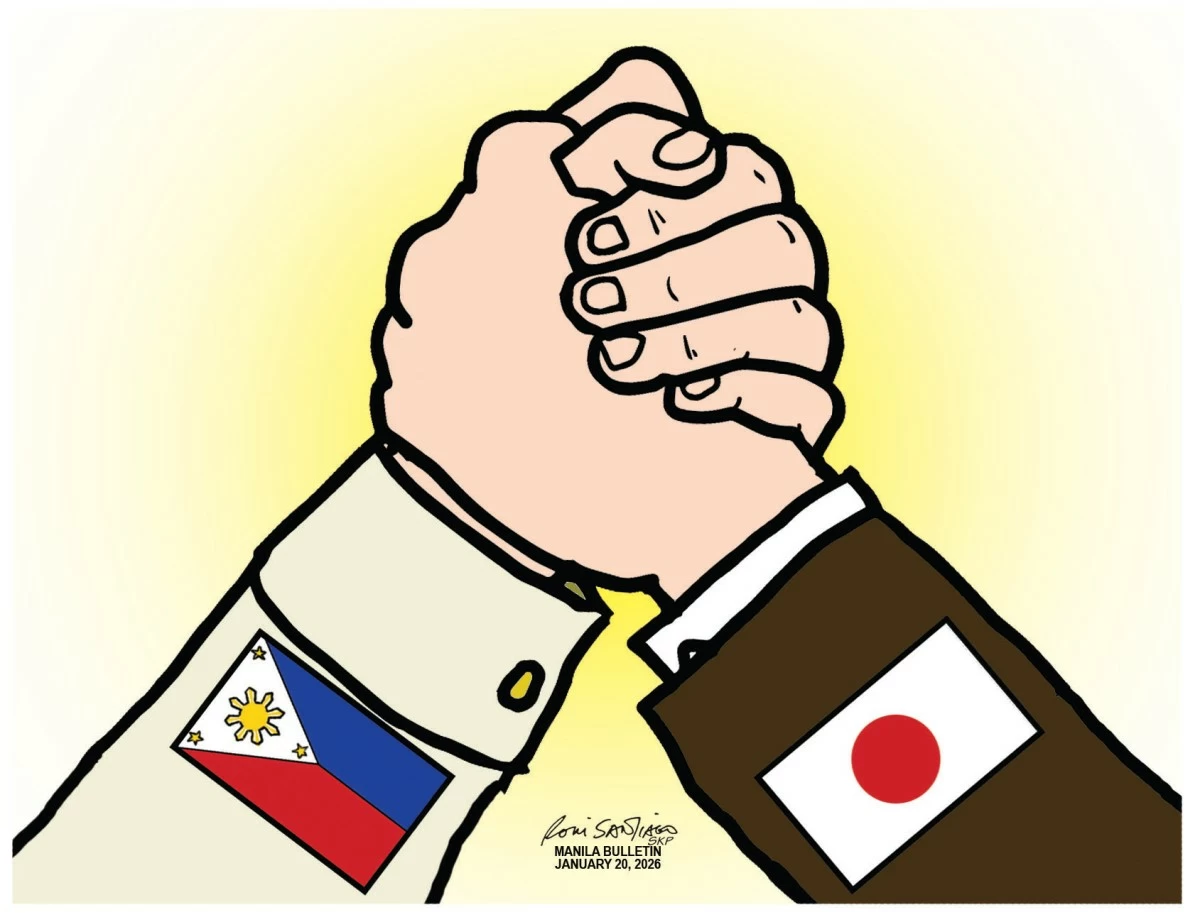
As the Philippines and Japan jointly mark 70 years of what both nations aptly describe as “relations woven in trust,” the signing of the Access and Servicing Agreement (ACSA) stands out as a milestone that both reflects the depth of the partnership and signals its strategic direction for the decades ahead. Beyond symbolism, the ACSA underscores how Manila and Tokyo continue to adapt their long-standing friendship to the realities of a rapidly evolving regional and global security environment.
The ACSA, signed last week by Japanese Foreign Minister Motegi Toshimitsu and Philippine Foreign Affairs Secretary Maria Theresa Lazaro, complements the Reciprocal Access Agreements forged by both countries in mid-2024. Together, these frameworks provide the legal and logistical foundations for closer defense cooperation, including the provision of supplies, services, and support during joint exercises; humanitarian assistance; disaster response, and other cooperative activities. Importantly, they enhance interoperability while respecting national sovereignty, a balance that is essential in a region marked by both opportunity and uncertainty.
This latest agreement did not emerge overnight. It was agreed upon in principle by President Ferdinand R. Marcos, Jr. and Japanese Prime Minister Sanae Takaichi during their bilateral talks on the sidelines of the ASEAN Summit in Malaysia in October 2025. That moment reflected a shared recognition: that peace, stability, and prosperity in the Asia-Pacific are best preserved through partnerships anchored on international law, mutual respect, and collective responsibility.
In reaffirming their countries’ commitments, both foreign ministers emphasized that the ACSA is not directed against any nation. Rather, it is part of a broader effort to strengthen a rules-based regional order, ensure freedom of navigation, and build the capacity of like-minded states to respond effectively to both traditional and non-traditional security challenges. For the Philippines—one of the world’s most disaster-prone countries—the value of such agreements is also measured in lives saved, faster response times, and enhanced resilience during humanitarian crises.
Yet the strength of Philippine-Japanese relations has never rested solely on security cooperation. Japan’s role as the Philippines’ leading provider of official development assistance remains proof positive of its abiding commitment to the country’s long-term growth. From critical transport infrastructure and flood control systems to health, education, and disaster risk reduction, Japanese assistance has left an indelible imprint on national development. These investments have not only spurred economic activity but have also strengthened institutional capacity and community resilience across the archipelago.
Equally important are the people-to-people ties that continue to flourish between the two nations. Millions of Filipinos have found opportunities in Japan as skilled workers, caregivers, and professionals, while Japanese businesses have long viewed the Philippines as a trusted partner and investment destination. Cultural exchanges, tourism, and educational cooperation further reinforce mutual understanding—arguably the most durable foundation of any bilateral relationship.
At a time when geopolitical tensions test alliances and partnerships worldwide, the Philippines-Japan relationship offers a compelling example of how trust, nurtured over decades, can evolve into strategic cooperation without losing its human dimension. The ACSA is thus not merely a defense agreement; it is a reaffirmation of shared values and a forward-looking investment in regional stability.
Seventy years on, relations woven in trust continue to hold—and, with agreements such as the ACSA, they are being strengthened to meet the demands of a more complex future.